+1 (954) 787-2570

Email: hello@eurastechnology.com


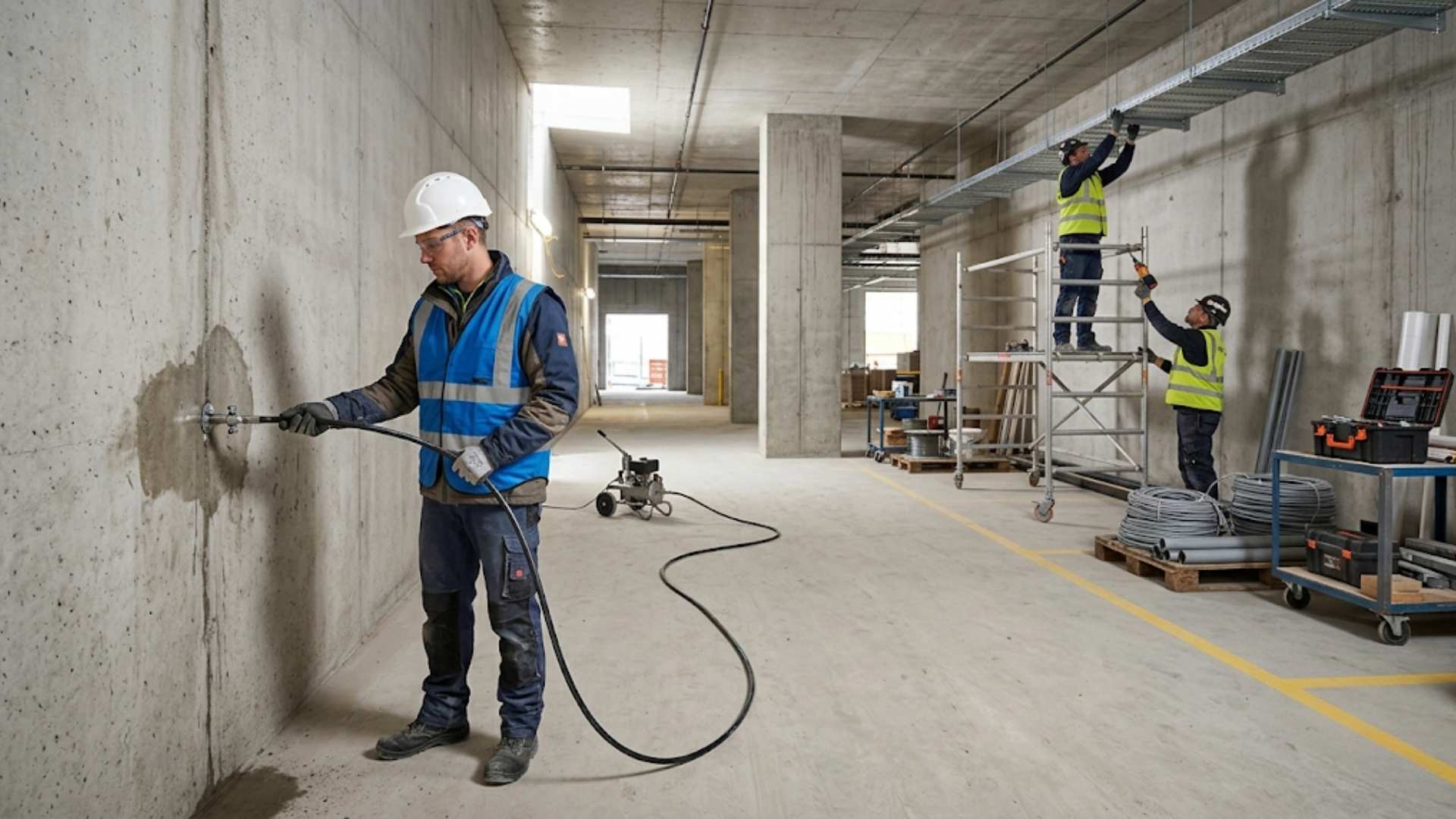
Yes — on the vast majority of sites, injection waterproofing can proceed while other trades are working. The question is not whether it can be done, but how to coordinate it to avoid the specific situations where conflicts arise.
This article answers the question directly for programme managers and contractors, identifies the genuine constraints, and explains what coordination is needed to keep the injection programme running in parallel with other site activity.
Injection waterproofing is a localised, low-disruption activity that can run in parallel with most other trades.
Waterproofing problems on construction sites rarely occur at a convenient time. When water ingress is discovered, there are almost always other trades at work — concrete crews, M&E first fix, screeding, finishing trades. The instinct is to stop work and wait until the leak is fixed before resuming. In most cases, that instinct is wrong and costs unnecessary programme time — even a one-day hold on a multi-trade underground floor can generate significant standdown cost for finishing and M&E crews.
Understanding the genuine constraints on parallel working allows the site programme manager to make the right call: where injection and other trades can co-exist, they should. Where there is a genuine conflict (typically: fresh concrete pours in the same zone), a short-duration sequencing solution can be planned rather than a full-site hold.
For guidance on pre-qualifying a specialist before water ingress occurs, see what a specialist injection subcontractor does and when to use one.
The injection team's physical requirements are smaller than most programme managers assume:
Space requirements:
Material requirements:
Utility requirements:
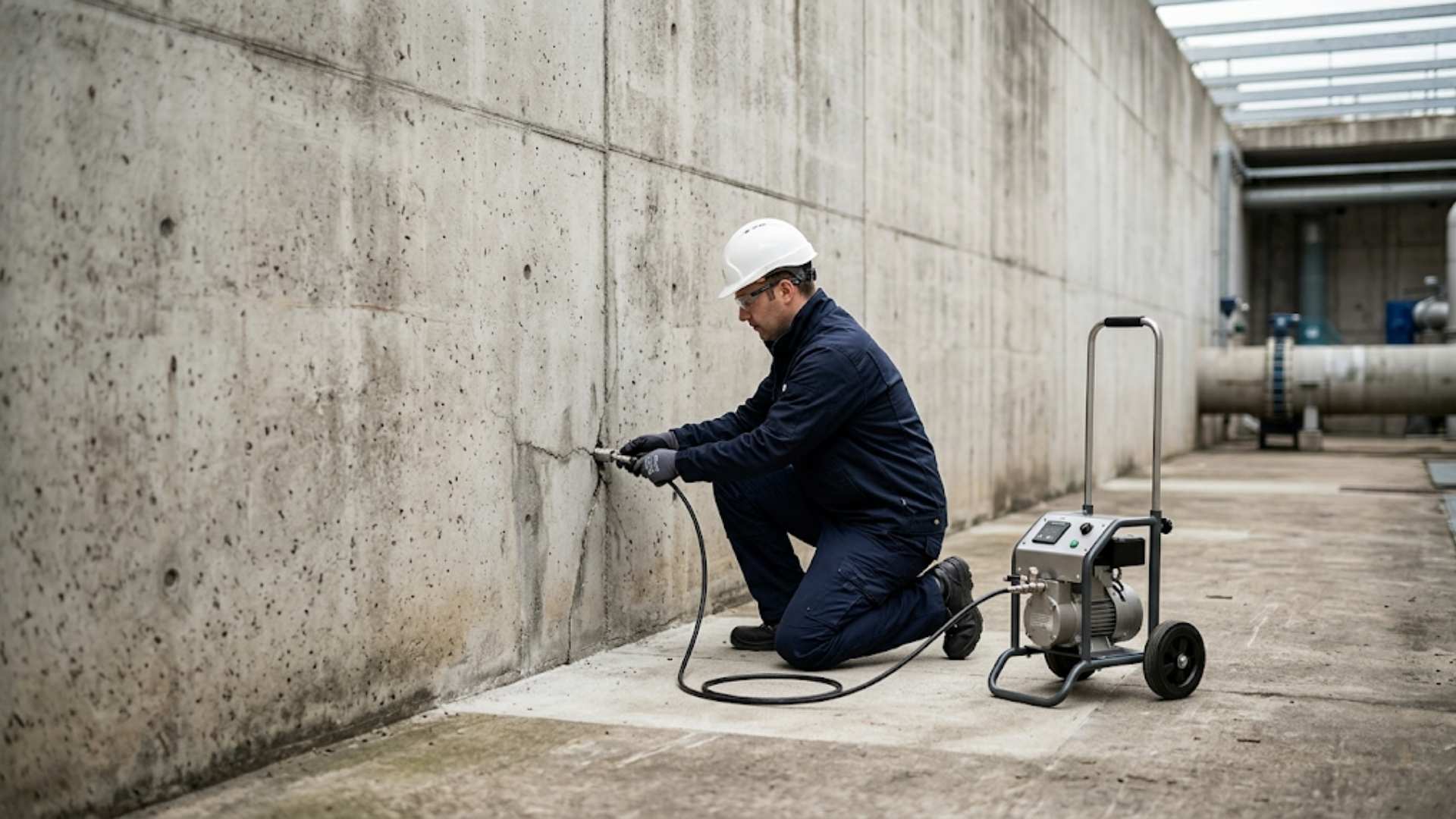
There are four situations where injection work and other trades need active coordination rather than simple co-location:
If injection is being performed on a slab soffit (injecting upward into the ceiling of an underground space), operatives and machinery directly below the injection point must have a brief exclusion while the injection port is under pressure. Gel and water can exit adjacent ports under pressure during injection. This is a short-duration event — typically 10–30 seconds per port — and can be coordinated with adjacent trades as a brief "clear the bay" rather than a sustained hold.
Drilling injection ports creates sustained noise at approximately 85–95 dB at the drill location. Trades performing activities that require accurate measurement, precise communication, or concentration should be informed when drilling is scheduled. This is a simple advance notice requirement — not a hold. Noise levels at 10 metres from the drill are typically within standard site working conditions.
Concrete dust from drilling is localised and settles quickly. Dust sheets or exclusion zones for sensitive finishes (particularly screeded floors near completion) should be planned with the finishing trades.
This is the one genuine programme constraint. Vibration from concrete compaction equipment (poker vibrators, external vibrators) transmitted through a continuous structural element can disturb EURAS® Gel during its early curing period — typically the first 2–6 hours after injection (as a practical operational guide, not a published standard). The risk is not proximity in open space, but mechanical connection through the same continuous pour zone or structural element.
The practical solution: sequence injection ahead of fresh pours in the same structural element, with a minimum 12-hour gap before compaction equipment operates in that zone. Alternatively, inject after the concrete has reached initial set. Pours in adjacent bays separated by a movement or day joint do not usually present a conflict. Confirm the specific sequencing requirements with the injection specialist at the site survey stage.
If M&E trades are running conduit, ductwork, or pipe runs in the same wall or slab area being injected, access to the concrete surface behind the M&E runs is needed for drilling. The sequence should be: injection first, M&E second. If M&E is already partially installed in the injection zone, the injection team can work around services in most cases — confirm with the injection specialist at the site survey stage.
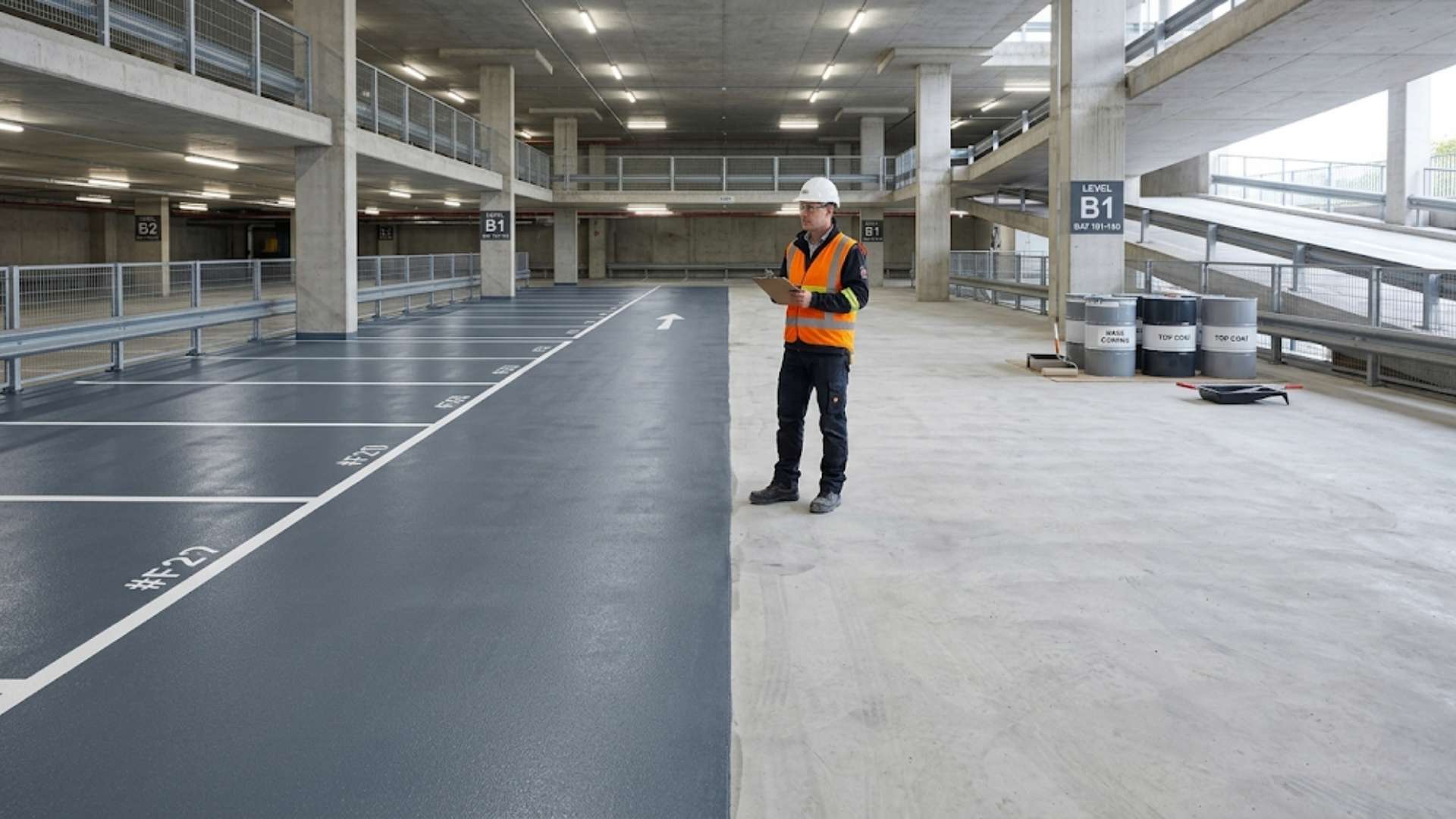
In occupied underground structures — car parks, basement facilities, tunnels in service — injection waterproofing is routinely performed without operational disruption. EURAS® methodology has been applied in occupied underground car parks continuing normal operations, in railway tunnel maintenance possessions (including work at the Neuer Kaiser Wilhelm Tunnel in Germany), and in active power plant cooling galleries — in each case without shutdown of the host operations.
The Marina Limassol underground parking garage in Cyprus — a large-scale project involving over 12,000 kg of EURAS® Gel Type B injected into slab and wall cavities — was completed with minimal disruption to the marina development's commercial and residential operations. The scale of the project required coordinated scheduling across multiple bays, but the injection programme was planned so that operations in completed bays resumed progressively as work advanced.
EURAS Technology specialises in injection waterproofing for critical infrastructure — occupied car parks, active industrial facilities, tunnels in service, and construction sites. Our EU-patented mineral gel has been applied in parallel with live operations for over 25 years, across Europe, the Middle East, and North Africa.
For more on how we work in occupied industrial and commercial environments, see our industrial waterproofing service.
EURAS structures the injection sequence to minimise disruption from the outset — the method statement will specify the phased bay-by-bay approach, exclusion zone requirements, and sequencing relative to other trade activities, before work begins.
If your site programme needs injection to run alongside other active trades, our specialists can advise on sequencing and coordination before mobilisation begins. Talk to our team about programme planning
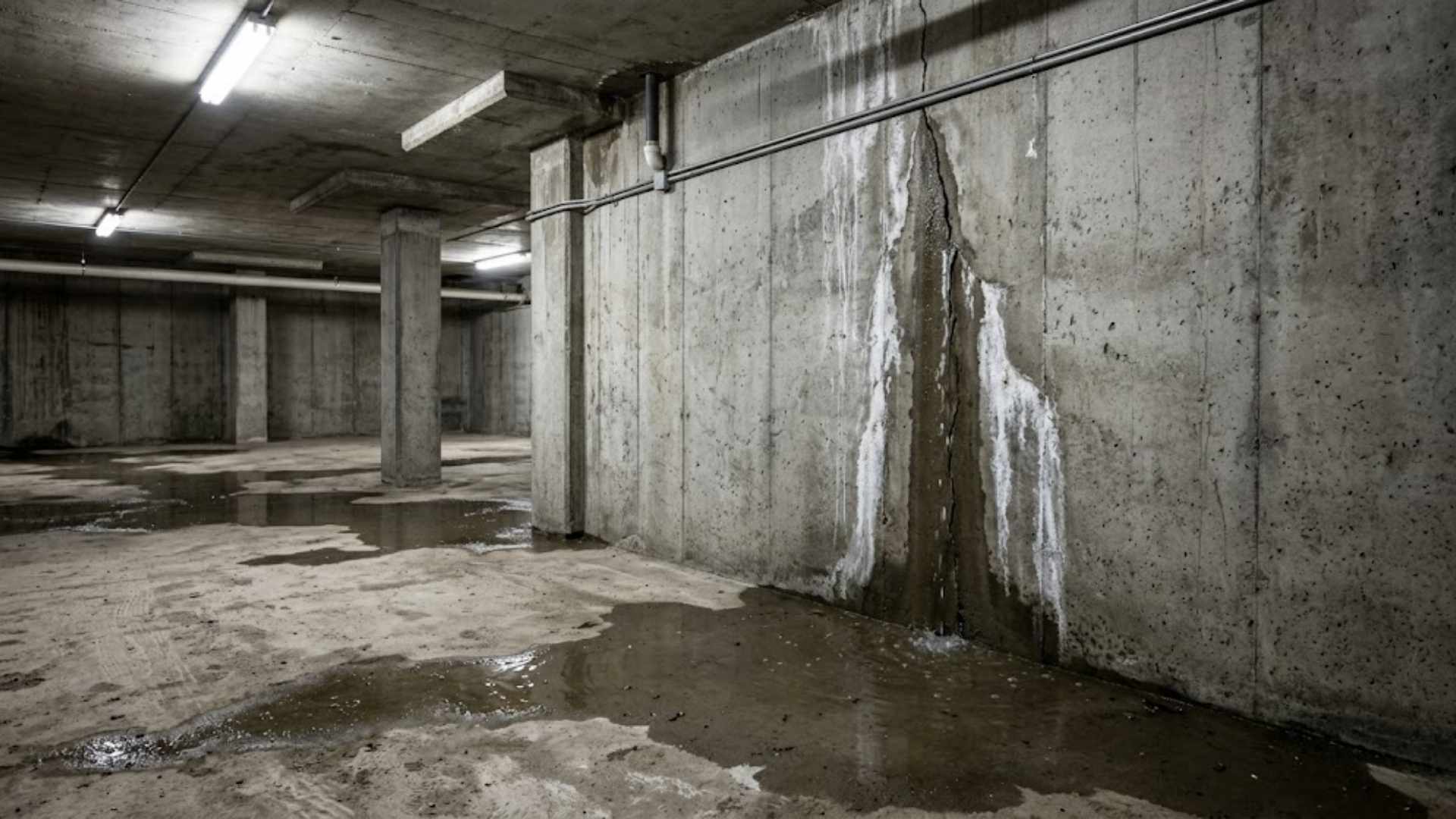
If the active leak is of sufficient volume and the water pooling represents a slip or electrical hazard for other trades working in the same space, a temporary hold in that zone may be appropriate — not for the injection programme, but for the other trades' safety.
In this case, the correct sequence is:
This is a temporary, localised hold — not a whole-site programme event. The injection team should be given priority access to achieve flow stoppage as fast as possible so other trades can resume.
Emergency flow-stopping injection can typically be completed within hours of mobilisation. Learn about our emergency leak repair service.
Will the injection pump create noise that affects noise-sensitive neighbouring properties?
The pump motor is relatively low noise (approximately 70 dB at 1 metre — estimate only; larger units may read higher). Drilling is the primary noise source. For inner-city sites near occupied properties, early morning drilling should be avoided — standard UK site hours apply.
Can injection work proceed during a concrete pour in an adjacent bay?
Yes — injection in one bay and pouring in an adjacent bay (not the same element) are compatible activities. The two activities do not interfere with each other.
Do other trades need to stop when the injection pump is pressurising a port?
No. Only a brief local exclusion at the active port position is required during pressurisation. Other trades can continue working anywhere outside the 1–2 metre exclusion zone.
Is there any smell from injection gel materials that could affect occupied spaces?
EURAS® Gel Type B is effectively odourless. It is water-based, non-toxic, and non-flammable. It does not require workers in adjacent areas to wear respiratory protection.
Can injection proceed if there is standing water in the structure?
Yes — injection waterproofing is designed for wet conditions. However, standing water creates slip hazards for all trades. Pumping out standing water before injection is standard practice and benefits all trades in the space.
Does injection require a hot works permit?
No. Injection waterproofing involves no heat or flame. No hot works permit is required for EURAS® Gel Type B injection.
Is a formal site coordination plan required before injection begins?
A written method statement and risk assessment are normal; many sites also expect a short coordination note for the programme manager covering exclusion zones, drilling windows, and any holds. Agree the format with your principal contractor — the injection specialist should supply the technical inputs.
How long after injection is completed before the repaired area can be used by other trades?
Immediately for light-duty access (foot traffic, cable runs). 12–24 hours before heavy vehicle access (for car parks and similar) to allow full gel cure and maximum seal strength. Confirm with the injection specialist for specific conditions.
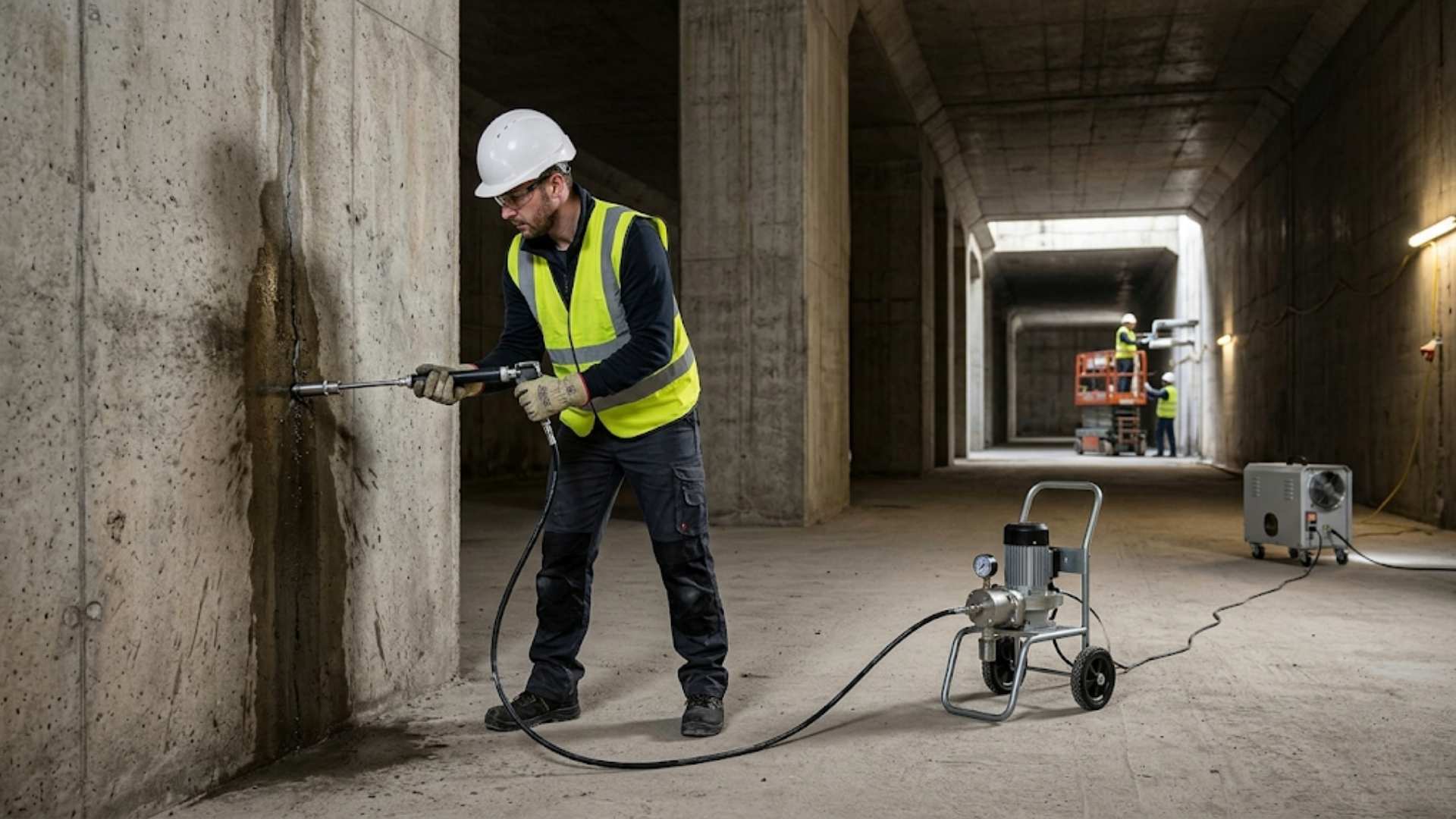
Injection waterproofing is designed for parallel working. Its small footprint, non-hazardous materials, and localised access requirements mean that in almost every site situation, injection can proceed alongside other trades with straightforward coordination. The four coordination points in this article — overhead exclusions, drilling noise, fresh concrete sequencing, and M&E access — are manageable with advance planning, not programme holds.
Next step: If your site programme needs injection waterproofing integrated with other live activities, request a no-obligation site survey — we will align the injection sequence with your programme and trade interfaces.
Request a site survey | Industrial waterproofing service | How quickly injection can be mobilised