PROJECT ARCHIVE
Source: supplied project archive. The intervention and outcomes below are reported for this project. Supporting records can be discussed with Euras.
The challenge
Persistent Leakage in Historic Railway Tunnel
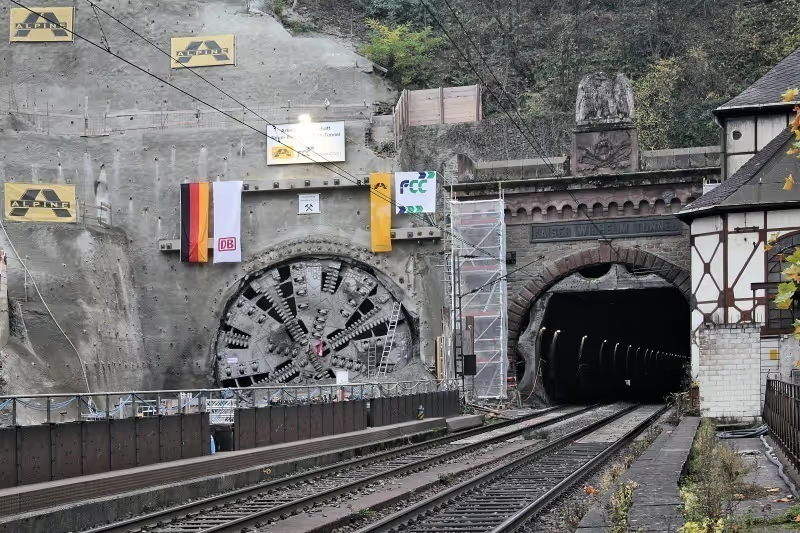
The Neuer Kaiser Wilhelm Tunnel—over 4.2 km long—is a critical railway corridor along the Moselle River, connecting the Cochem region to Germany’s wider transport network. Despite modern rehabilitation, sections of the tunnel developed persistent water ingress, especially:
- Along construction joints in the invert and walls
- At interfaces between old and new lining structures
- In microcracks resulting from settlement and seasonal movement
The leaks caused:
- Standing water on the track bed, risking safety and compliance issues
- Increased maintenance costs and drainage pump operation
- Degradation of concrete and corrosion of steel fixtures
- Operational challenges due to the high-traffic nature of the tunnel
Standard cement grouting had limited success sealing dynamic, saturated cracks without impacting train service.
The solution
EURAS® Gel Type B – Flexible Waterproofing for Transport Tunnels
After thorough evaluation, EURAS® Gel Type B was specified due to its:
- Self-penetrating hydroscopic action, displacing water in live leaks
- Compatibility with wet and variable-thickness concrete linings
- Elasticity to accommodate ongoing settlement and movement
- High-pressure injection capability for deep crack sealing
Execution methodology
The project was performed in scheduled night closures to avoid disrupting rail traffic:
- Mapping and marking infiltration areas using moisture detection and borehole cameras
- Installation of injection packers along walls and invert joints
- High-pressure injection of EURAS Gel Type B up to 180 bar to saturate cracks and cavities
- Monitoring gel flow and back-pressure for confirmation of fill
- Final watertightness verification before reopening to traffic