+1 (954) 787-2570

Email: hello@eurastechnology.com


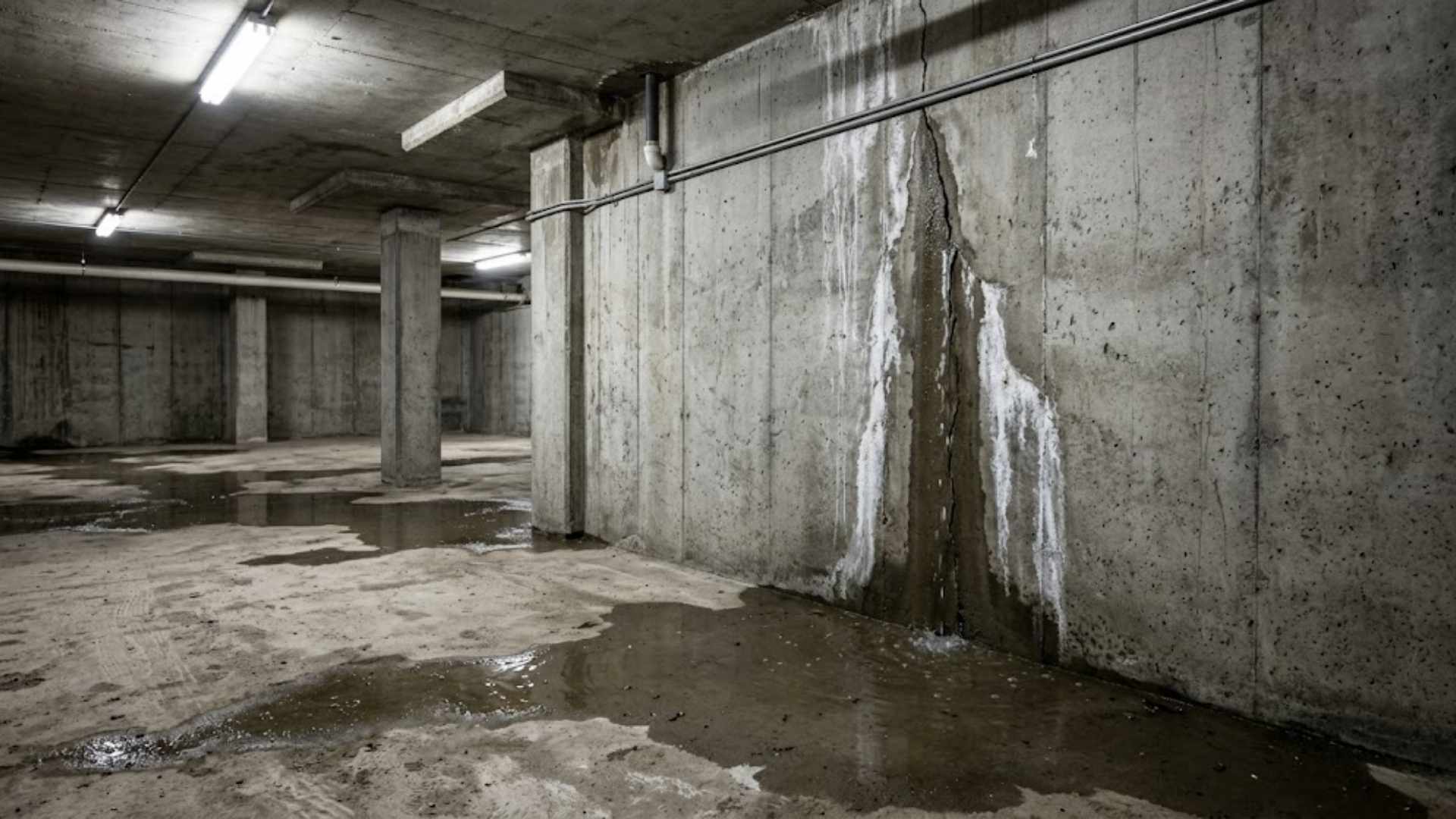
Both crystalline waterproofing and high-pressure gel injection are used to protect underground concrete from water ingress. Both penetrate the concrete rather than coating the surface. Both are specified for repair of existing structures with water ingress problems. Beyond these surface-level similarities, the mechanisms, performance envelopes, and application conditions differ fundamentally — and choosing the wrong one for a given condition produces predictable and expensive failure. This article provides a technical basis for specifiers to make the right choice.
Crystalline waterproofing and injection gel address different aspects of the water ingress problem and are best understood as complementary rather than competing technologies.
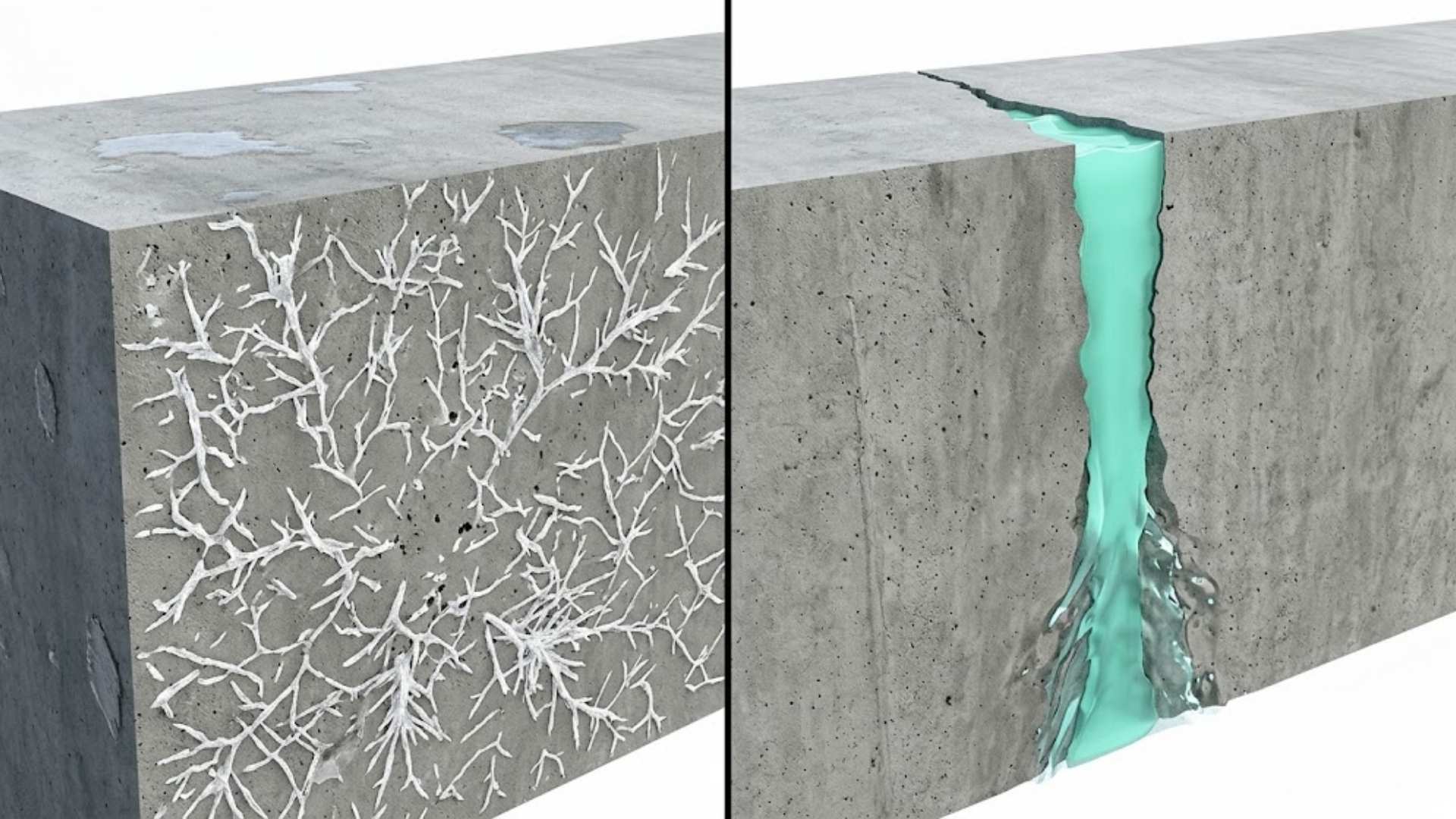
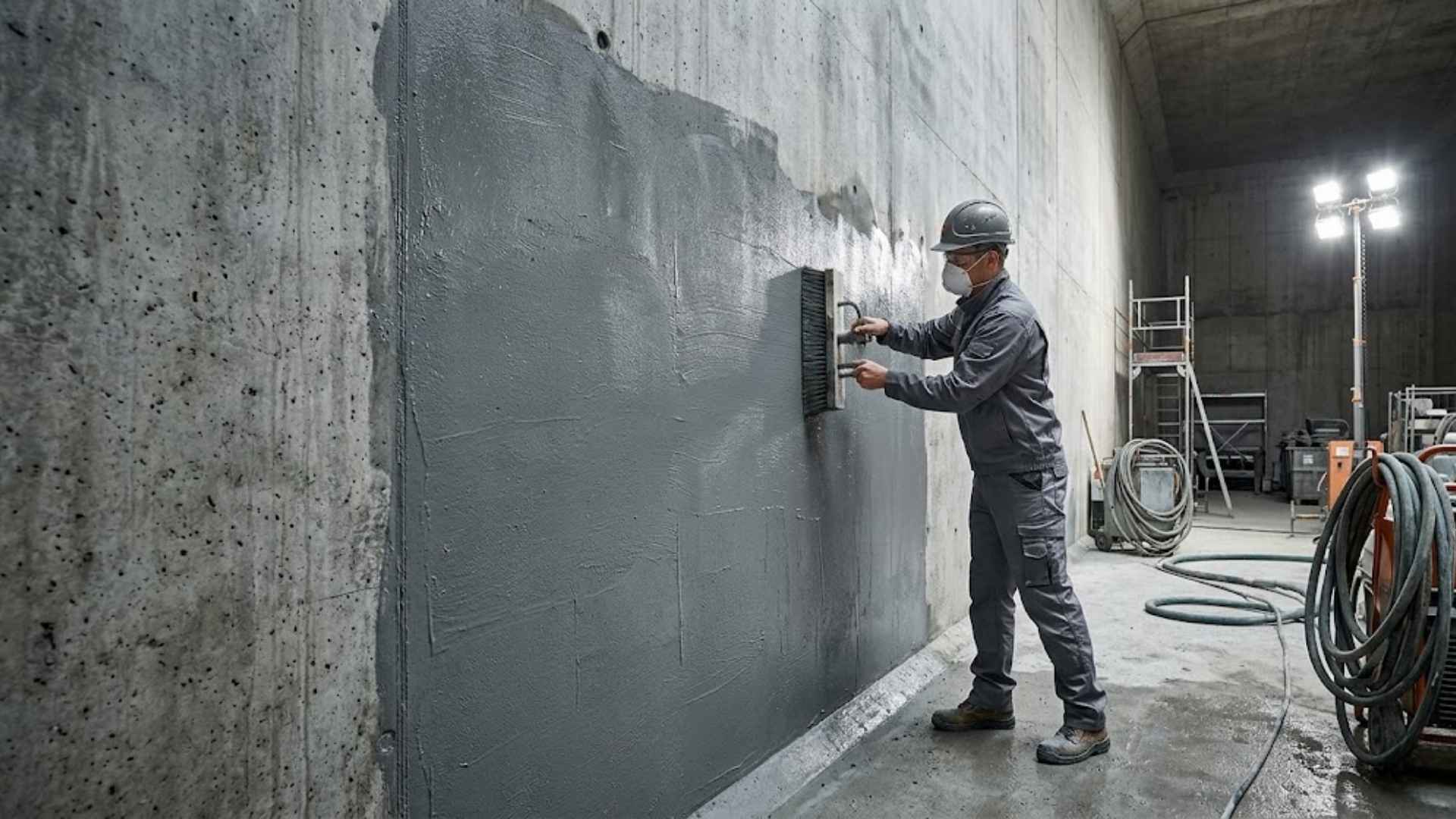
Crystalline waterproofing systems are based on Portland cement plus silica sand plus active chemical compounds — typically proprietary blends of reactive silicates and other chemicals. When applied to a wet concrete surface as a slurry, or incorporated into fresh concrete as an admixture, the active chemicals migrate into the concrete matrix via capillary transport.
Once inside the concrete, the active chemicals react with the by-products of cement hydration — specifically calcium hydroxide and water — to form insoluble calcium silicate hydrate crystals. These crystals grow to fill the capillary pores and micro-cracks within the concrete, creating a network of crystalline material that is physically impermeable to water.
The key advantage of well-engineered crystalline systems is their self-healing capacity: if new micro-cracks form after treatment (due to movement or additional shrinkage), dormant active chemicals within the treated concrete can reactivate in the presence of new moisture and water, growing additional crystals to seal the new crack. This property gives crystalline-treated concrete a degree of ongoing passive protection that other applied systems do not provide.
Performance characteristics:
High-pressure mineral gel injection is a physical repair method. A mineral-based gel (in EURAS® Gel Type B, this is a bentonite-based hydrophilic formulation) is pumped under high pressure — typically 20 to 200 bar — through ports drilled into the concrete at calculated positions, directly into the crack, joint, or void network.
The gel fills the crack from within the concrete mass. It is hydrophilic — it absorbs water rather than being repelled by it — which allows it to displace active water flow from the crack as it advances. Once in place, the gel swells to fill the crack cavity completely and permanently seals the pathway.
Unlike crystalline treatment, gel injection does not depend on a cement reaction. It works in old, carbonated concrete where crystalline systems may have limited active chemical available. It works in saturated and wet conditions. And critically, it works against active water flow — something crystalline systems fundamentally cannot do.
Performance characteristics:
Rather than a simple either-or, the correct specification decision uses the hydraulic condition and concrete substrate state as primary decision drivers:
Cost anchor (for programme budgeting): For large-area distributed seepage on sound concrete, crystalline surface treatment is usually far more cost-effective per square metre than blanket injection. For discrete cracks, joints, and voids — especially under flow — injection is the technically correct method; comparing “price per m²” against crystalline is misleading because the unit of success is the sealed pathway, not wall area.
The combined approach: In many underground structures, both conditions co-exist. Construction joints produce active flow (injection gel required); surrounding slab concrete shows distributed capillary seepage (crystalline surface treatment appropriate). In these cases, specify injection gel for the joints and a crystalline surface slurry or crystalline-enhanced concrete mix for the surrounding areas. This is a recognised combined-system approach under BS 8102:2022. For how that classification interacts with Type B integral protection, see Type B waterproofing and injection under BS 8102:2022 and the Concrete Centre overview of watertight concrete structures to BS 8102:2022.
Crystalline systems perform well under hydrostatic pressure in one specific scenario: when the concrete substrate is sound (no macroscopic cracks), Portland cement content is adequate, and the pressure is transmitted through the capillary network — not through a defined crack or joint gap. In this condition, the crystal growth fills the pressure pathway progressively.
Crystalline systems do not perform well under sustained high hydrostatic pressure applied to a defined crack or joint. The pressure head prevents the surface-applied slurry from migrating into the crack against the water flow direction.
Mineral gel injection is specifically engineered for high hydrostatic pressure scenarios. The injection pump pressure exceeds the hydrostatic pressure at the injection point, allowing the gel to advance against the water head and fill the crack completely. EURAS® Gel Type B has been injected at up to 200 bar — comfortably exceeding the hydrostatic heads encountered in any building basement or underground structure.
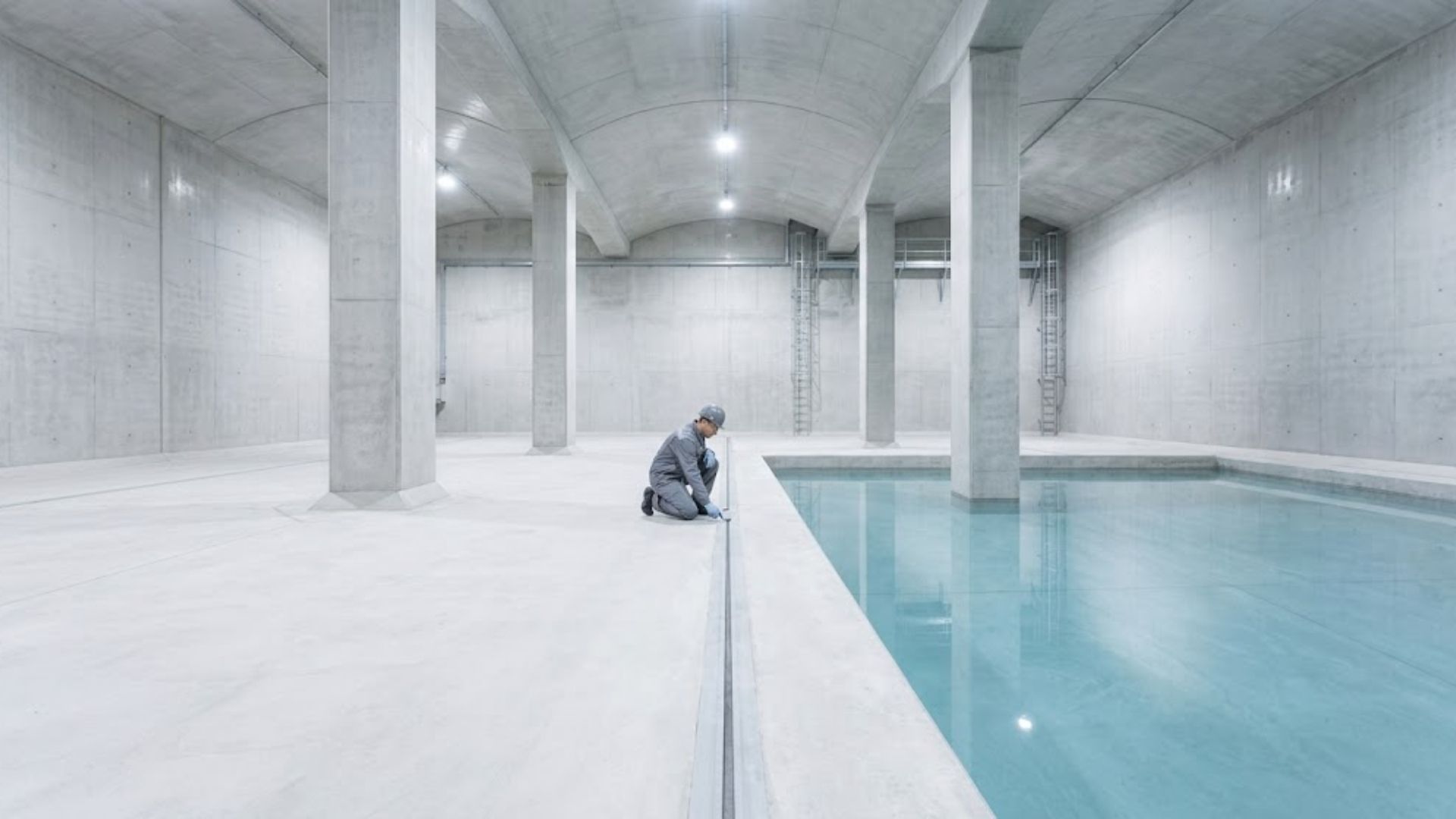
Both crystalline systems and EURAS® Gel Type B can be specified for potable water contact structures — but with different approval considerations:
Crystalline waterproofing has a long history of approval for potable water contact. Many systems hold UK DWI (Drinking Water Inspectorate) listing. The chemistry is based on calcium silicate hydrate — the same mineral that constitutes normal cement hydration product — so the risk profile is well established.
EURAS® Gel Type B is a bentonite-based mineral gel — natural, non-toxic, and approved for potable water contact. It has been specified at drinking water reservoirs (including the Hoch-Behälter potable water reservoir in Usingen, Germany) and at desalination facilities including the Episkopi Desalination Plant in Cyprus, where it was injected into underground galleries treating saline process water.
For potable water structures, confirm DWI or equivalent regulatory approval for the specific product lot — not just the system designation.
Crystalline systems are theoretically indefinitely durable — the crystals become part of the concrete matrix and do not shrink, creep, or degrade in the presence of water. However, their durability assumes:
Mineral gel injection durability depends on the stability of the crack or joint being sealed. If the structure continues to move and the crack widens beyond the range the gel's swelling capacity can accommodate, re-injection may be required. This is why accurately assessing whether structural movement is ongoing — and selecting a gel system with appropriate swelling range — is a critical part of injection specification.
At the Episkopi Desalination Plant in Cyprus — a critical facility providing potable water to the coastal region — EURAS addressed chronic leakage in underground service galleries and slab interfaces. The facility presented both conditions: active leaks at construction joints in the gallery linings, and generalised seepage through the gallery wall concrete.
The specification used injection gel for the construction joint active leaks — displacing saline water under pressure and sealing the joints permanently. For the gallery concrete seepage, the treatment plan incorporated crystalline-based surface application to the gallery walls, utilising the Portland cement content in the relatively sound concrete mass to support crystal growth through the capillary network.
Both approaches were required. Neither alone would have been sufficient. The injection gel could not address distributed capillary seepage across a large wall area; the crystalline system could not seal active flow at the construction joints. The plant continued operating through the intervention, and the sealed galleries have remained free of recurrence at the treated joints and seepage zones — the outcome that matters for a desalination asset.
EURAS Technology applies this combined-system thinking to every specification — starting from the hydraulic condition present, not from a preferred product. If you are specifying repair for an underground concrete structure with water ingress, our technical team can advise on the correct combination for your specific site conditions. Talk to a technical specialist
Error 1: Specifying crystalline to "stop" an active leak Crystalline systems cannot seal active water flow. This is a fundamental misunderstanding of the mechanism. If this is specified, the crystalline material will be washed away from the active leak point before it can react with the concrete chemistry.
Error 2: Specifying injection gel for a potable water structure without checking DWI approval Both gel and crystalline systems can be approved for potable water, but approval must be confirmed for the specific product at the specific site. Not all injection gels have DWI listing — confirm before specifying.
Error 3: Using injection gel for distributed capillary seepage without joints or discrete cracks Injection gel fills defined pathways. If there is no discrete crack or joint to fill, injection will not address distributed capillary porosity across the concrete mass. Crystalline surface treatment or crystalline admixture in a concrete repair overlay is correct for this condition.
Error 4: Assuming crystalline self-healing means no maintenance is required indefinitely Crystalline systems are low-maintenance, not zero-maintenance. If the concrete substrate cracks beyond micro-scale due to movement or loading, the self-healing capacity is exceeded. Structural integrity of the substrate must be maintained.
Can I use crystalline waterproofing and injection gel in the same structure?
Yes — this is frequently the correct specification. Use injection gel at construction joints and discrete cracks; use crystalline surface treatment for distributed concrete seepage zones.
Crystalline systems claim to self-heal. Does this mean I never need injection?
Self-healing applies to micro-cracks up to approximately 0.4–0.5 mm width. For larger cracks, construction joint gaps, or active flow, self-healing is insufficient and injection is required.
Can injection gel be applied in a potable water reservoir that is in service?
Yes, provided the gel formulation is approved for potable water contact (EURAS® Gel Type B is) and injection is performed with the reservoir at a controlled level in the repair zone. Refer to DWI guidance for the specific jurisdiction.
How do I measure whether the concrete has adequate Portland cement content for crystalline treatment?
Core extraction and petrographic analysis. For structures over 20 years old, carbonation depth testing will indicate how much of the concrete's Portland cement has already carbonated and is no longer available to support crystal formation.
Can crystalline systems be injection-applied rather than surface-applied?
Yes — some crystalline products are formulated for injection under pressure into the capillary network. This is typically used for distributed seepage zones in relatively sound concrete where surface application access is limited.
Does injection gel have a colour that would be visible in a water supply structure?
EURAS® Gel Type B is a translucent to slightly off-white gel in situ. It does not impart colour to water in contact with the sealed surface.
Which system is more expensive per m²?
Crystalline surface application is generally lower per m² for large area treatment. Injection gel is higher cost per linear metre of crack treated, but is the only system that works for discrete cracks and joints — so per successfully sealed crack, injection is the relevant metric.
Who should be on the design team when combining systems under BS 8102:2022?
The 2022 revision expects a suitably qualified waterproofing specialist to contribute to the design and specification. In practice that means involving someone with demonstrable structural waterproofing competence (for example CSSW-qualified surveyors in the UK market) alongside the structural engineer — not delegating waterproofing to the contractor’s first-pass guess.
Crystalline waterproofing and injection gel are complementary technologies, not direct alternatives. The correct choice depends entirely on the hydraulic condition present — active flow or seepage, discrete crack or distributed porosity, high or low hydrostatic head. For most underground structures with existing water ingress, a combined specification using both technologies at the appropriate locations is the technically correct and most durable approach. Once injection is the right family of solution, mineral gel vs polyurethane injection — which to specify explains how resin systems differ under pressure and movement.
To get a technical recommendation for your specific structure, request a pre-injection site survey.
Request a site survey | Learn about our crystalline waterproofing service | Learn about EURAS® Gel Type B