+1 (954) 787-2570

Email: hello@eurastechnology.com


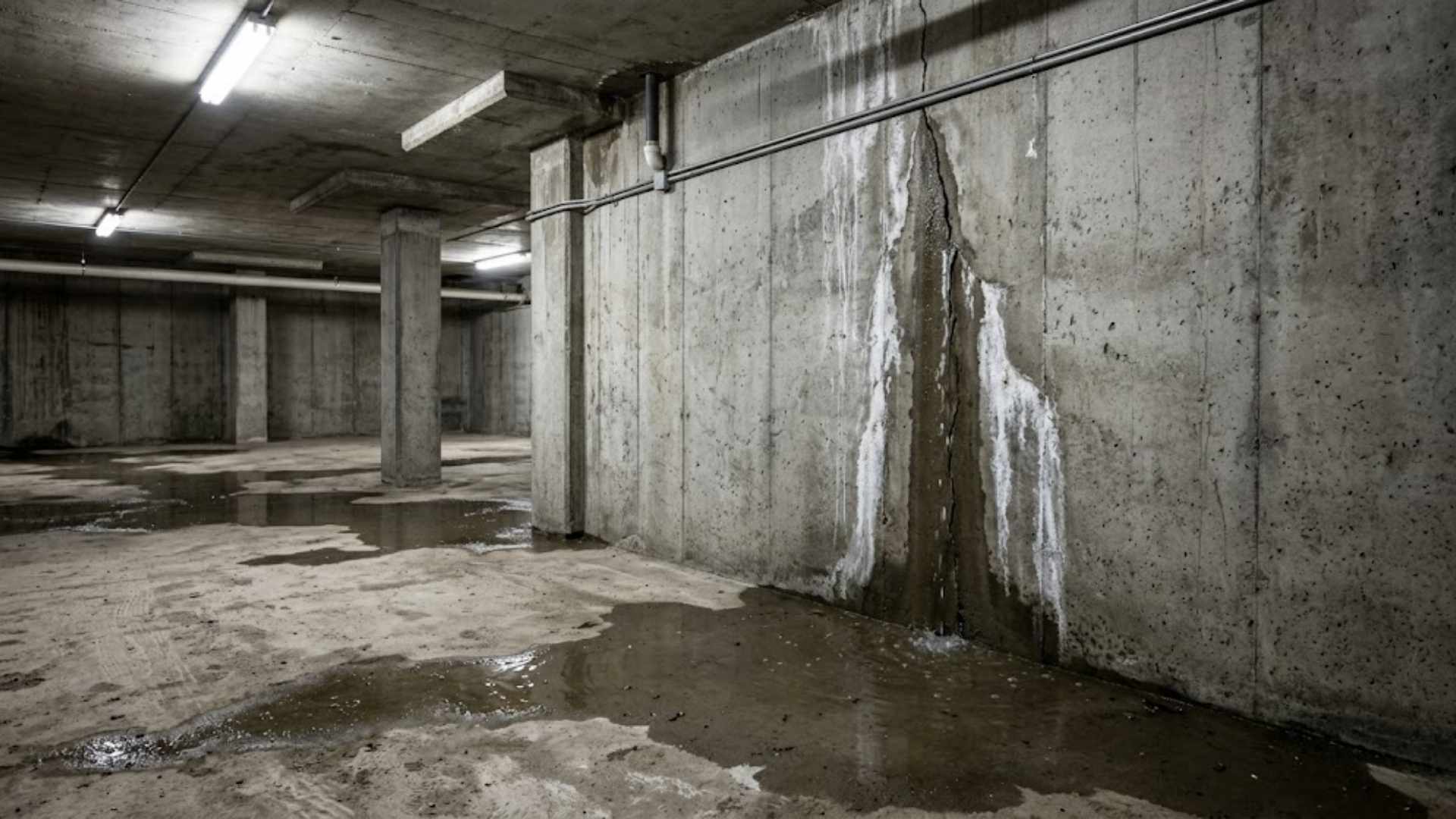
BS 8102:2022 — Protection of below-ground structures against water ingress — is the British Standard that governs waterproofing specification for underground structures. Its classification of waterproofing into three system types (Type A, B, and C) is the framework most engineers use to structure their repair or remediation specification.
Type B — structurally integral waterproofing — is where injection waterproofing belongs. Understanding what that classification means in practice, what conditions it addresses, and when it should be combined with other system types is essential for engineers producing durable below-ground waterproofing specifications.
BS 8102:2022 classifies below-ground waterproofing into three types, and injection waterproofing sits within Type B with specific characteristics.
BS 8102:2022 defines four environmental grades for below-ground structures: 1a, 1b, 2, and 3. Grade 3 is the highest performance level — no water ingress and no damp areas are acceptable, with finished environments typically requiring ventilation or dehumidification as appropriate. Grade 1a allows seepage where it does not impact the intended use; Grade 1b requires no seepage but allows damp from internal or external sources where tolerable; Grade 2 allows no seepage, with damp from internal condensation only tolerable. The standard expects the grade to be agreed with the client against their performance expectations — not inferred from building type alone.
Below-ground structures are often specified to Grade 2 or Grade 3 depending on use, asset owner expectations, and internal finishes — but the grade must be explicitly agreed.
The 2022 revision also expects a waterproofing specialist with appropriate competence to contribute to the design and specification (in the UK market this commonly means involving CSSW-qualified surveyors and specialist contractors early — not treating waterproofing as a late trade package).
The three system types are not mutually exclusive — they describe the mechanism of waterproofing protection and can be combined:
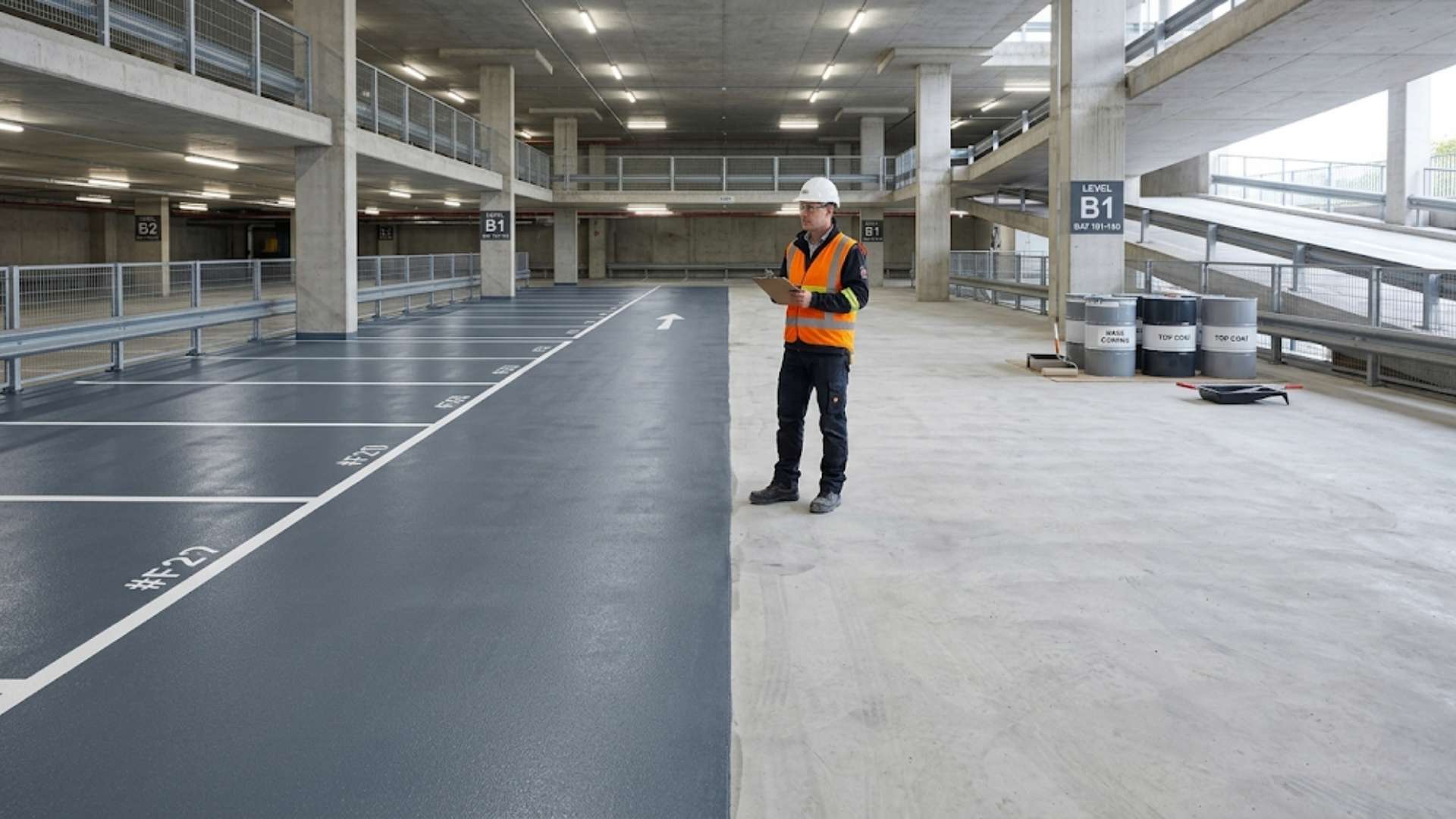
Applied to the external or internal surface of the structure. Examples: bituminous membranes, cementitious tanking, polyurethane liquid membranes. Type A relies on the continuity of the applied layer — any breach provides a direct pathway for water ingress.
Limitation relevant to repair: A Type A system applied internally to an existing structure is working against the direction of hydrostatic pressure (negative side). If water pressure builds behind the Type A barrier, it can delaminate from the concrete surface. This is why tanking applied to an existing wet structure frequently fails.
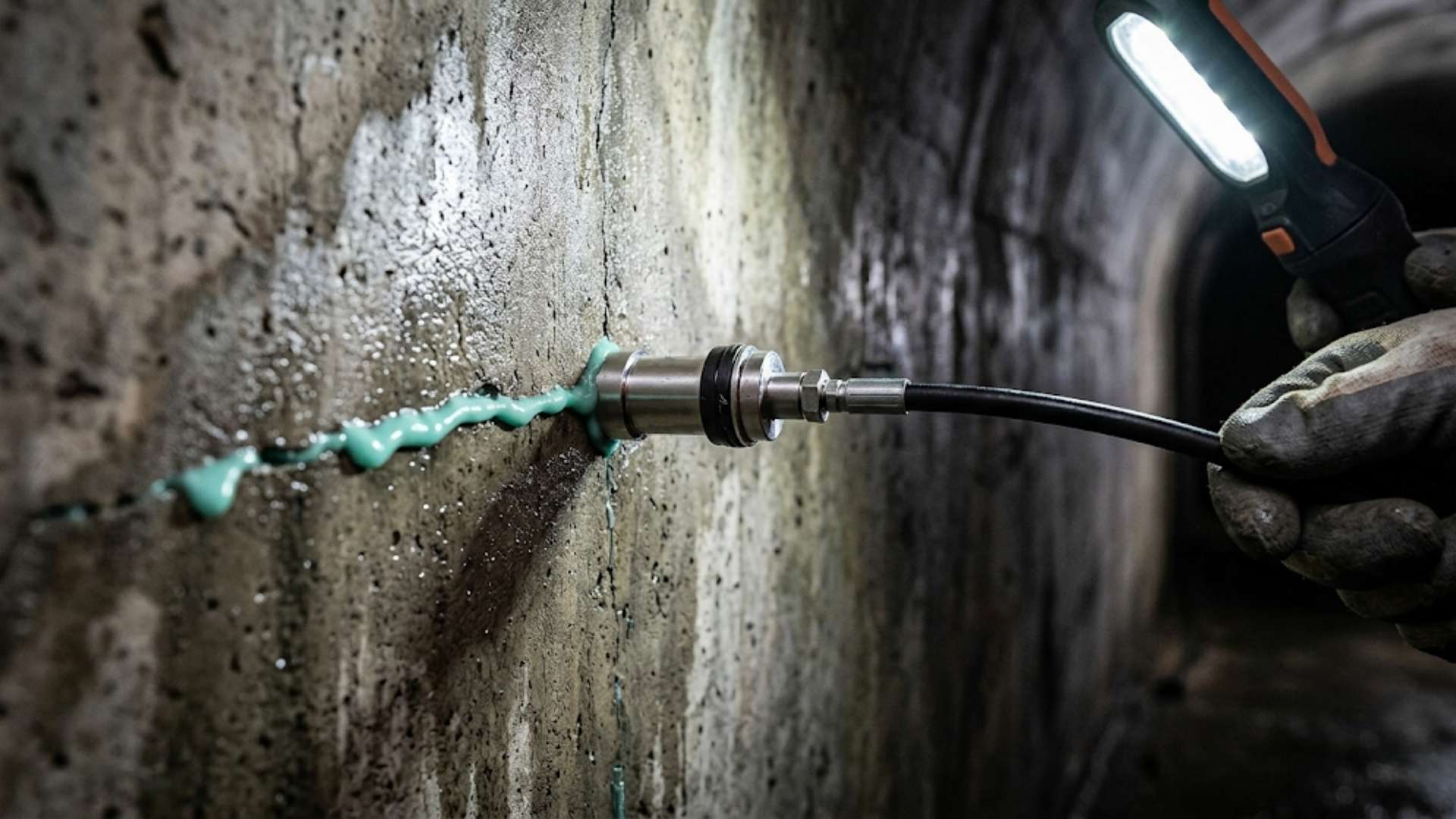
The waterproofing becomes part of the concrete structural element itself. In new construction: crystalline waterproofing admixtures added to the concrete mix, or concrete designed to a watertight specification with controlled crack widths. In repair: injection of gel materials into the concrete crack and joint network — the gel fills the pathways within the fabric of the structure rather than on the surface. EURAS® Gel Type B is a high-pressure hydrophilic mineral gel engineered for this integral, negative-side repair context.
Key characteristic: Type B protection cannot be delaminated by hydrostatic pressure in the way that Type A surface coatings can. The waterproofing medium is within the concrete, so the concrete itself provides confinement.
Water that enters the structure is collected and drained away via a managed cavity drainage system — typically a studded membrane attached to the wall or floor, draining to a sump pump. Type C does not prevent water from entering — it manages the water once it has entered.
Appropriate use: Type C is appropriate for Grade 1a where some seepage can be tolerated without impacting use, and as a secondary layer in combined systems where higher grades require redundant management of residual moisture.
The defining characteristic of Type B is that the waterproofing protection is within the structural fabric, not on its surface. High-pressure gel injection satisfies this definition:
This distinguishes injection from Type A systems: a Type A surface coating applied internally is on the wrong side of the pressure direction. Injection gel is within the concrete, making the direction of pressure irrelevant — the concrete is the confinement vessel.
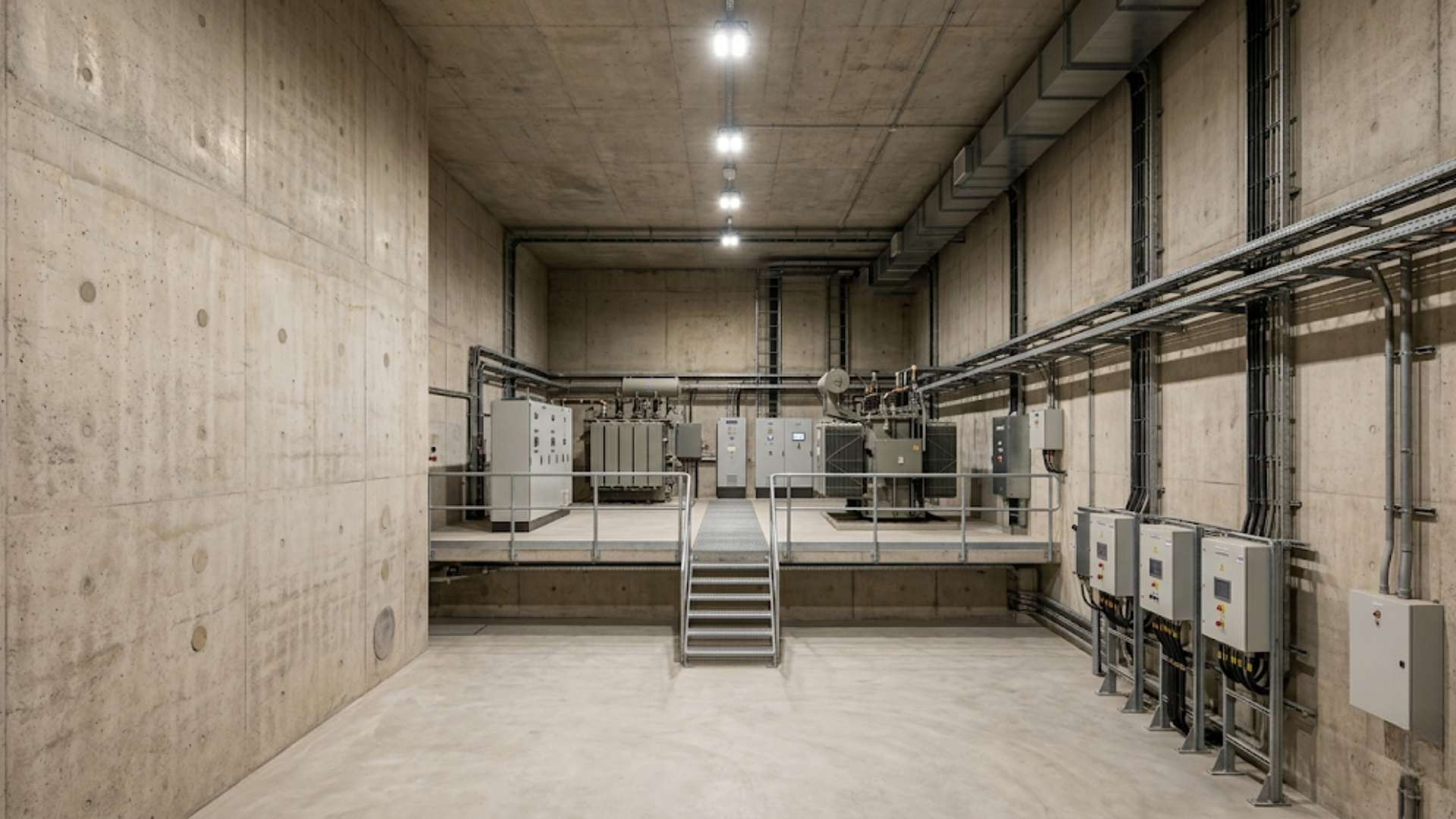
Specifying Type B injection as the primary — and potentially sole — waterproofing system is appropriate when:
Condition 1: The structure has discrete, identifiable ingress pathways
If the water ingress is through defined construction joints, shrinkage cracks, or expansion joints — not through the concrete matrix itself — injection addresses the pathway directly. There is no distributed concrete porosity issue requiring Type A surface treatment.
Condition 2: The structure is of adequate construction quality
BS 8102:2022 notes that Type B structurally integral protection presupposes a concrete structure of adequate quality — correctly specified mix, adequate cover, controlled crack widths. If the concrete is significantly deteriorated or honeycombed, concurrent structural concrete repair may be required before or alongside injection.
Condition 3: Grade 2 or 3 performance is required and conditions are stable
For structures targeted at Grade 2 or Grade 3, with known and stable ingress points (not expanding crack patterns, not ongoing structural movement), Type B injection often provides the core integral protection. For Grade 3 — the highest grade, where no water ingress or damp areas are acceptable — BS 8102:2022’s combined-system recommendations usually apply: expect Type B plus Type C and/or Type A elements, with clear verification and maintenance provisions.
Condition 4: Negative-side access only
Where excavation for Type A external membrane work is not possible, Type B injection from the interior is the only technically viable approach that provides integral protection.
BS 8102:2022 explicitly recommends that for Grade 3 — where no water ingress or damp areas are acceptable — relying on a single system is often insufficient; combined protection is the norm. The combined-system patterns most relevant to repair specification are:
An applied surface coating or membrane (Type A) on the exterior, combined with injection waterproofing within the structure (Type B). This is the standard for new construction in high-grade below-ground structures, and can be achieved in repair contexts where exterior access is available.
In repair practice: injection gel seals the active ingress pathways within the structure; a crystalline surface treatment applied to the internal faces after injection provides additional protection against future micro-crack development.
Injection waterproofing (Type B) reduces ingress to near-zero; a managed drainage system (Type C) provides a secondary layer to capture any residual moisture and prevent it from reaching interior finishes. This is appropriate for Grade 3 structures where the owner requires belt-and-braces assurance and a visible drainage system is acceptable.
Common in new construction for cost-efficiency. Does not include Type B integral protection — relies on the membrane remaining intact and drainage managing any breach. Not recommended for repair of structures with established ingress, as the breach is already known to exist.
BS 8102:2022 addresses below-ground concrete design in conjunction with BS EN 1992-3 (Eurocode 2 Part 3 — liquid-retaining and containment structures). For new construction, a central design approach is crack width control — limiting designed crack widths to 0.2 mm or 0.3 mm depending on the waterproofing grade, using reinforcement layout and concrete mix specification.
For existing structures with established cracks, these design limits no longer apply — the cracks exist and are already exceeding the designed limits. The remediation task is to close the existing crack pathways. Injection gel physically fills cracks of any aperture where the injection pressure can be maintained — it is not limited by the 0.2 mm design crack width threshold.
Importantly, specifying crack width control alone (through structural repairs that close or reduce the width of existing cracks) is not a waterproofing solution. Crack width reduction does not prevent capillary transport through a reduced crack. Injection waterproofing is required to fill the pathway with a waterproofing medium, regardless of crack width.
For practical guidance on existing below-ground structures — verification, combinations, and maintenance expectations — the PCA Code of Practice — Waterproofing of Existing Below Ground Structures (2022) is a useful companion to BS 8102:2022 on live projects.
The performance grade determines what the structure must achieve — and therefore how conservatively the injection specification should be written:
At Kissir Dam in Jijel, Algeria — infrastructure operated by the Agence Nationale des Barrages et Transferts — persistent leakage was occurring through galleries and construction joints below the waterline, under continuous high hydrostatic head from the reservoir above. The specification required a Type B approach: integral protection within the dam's concrete structure, not surface-applied coatings that would be overwhelmed by the reservoir pressure.
EURAS® Gel Type B was injected at pressures up to 200 bar — exceeding the hydrostatic head — through ports targeting the joint and crack network within the gallery lining. The gel penetrated the full depth of the joints and solidified within the concrete mass, creating an integral waterproof barrier that the reservoir pressure acts against the concrete to confine, rather than to delaminate.
The repair was completed without lowering reservoir levels or interrupting dam operations. The gel's performance under sustained high hydrostatic pressure — maintaining seal integrity against a continuous pressure load — is precisely what Type B integral protection is designed to deliver, and what Type A surface coatings cannot.
EURAS Technology provides Type B injection waterproofing for the full range of below-ground structures covered by BS 8102:2022. If you are specifying repair for a structure with a defined Grade requirement, our technical team can advise on whether Type B injection alone, or a combined system, is the appropriate specification for your conditions. Talk to a technical specialist
For engineers writing a waterproofing repair specification, the Type B injection section should address:
Material specification:
Execution specification:
Verification:
Warranty:
Does BS 8102:2022 specify which injection materials are acceptable for Type B systems?
BS 8102:2022 sets performance criteria rather than naming specific products. The specification should reference the material's compliance with relevant product standards (e.g. EN 1504 series for concrete repair products) and the contractor's responsibility to demonstrate compliance.
Can I specify injection waterproofing for a structure without a formal Grade designation?
Yes — the Grade framework is a specification tool, not a mandatory classification. If the owner can describe the acceptable performance outcome (e.g. "no visible water ingress on the finished surface"), the specification can be written to that performance criteria without formal grading.
Is injection waterproofing in scope for a Section 278/104 adoption agreement for below-ground structures?
Adoption agreements vary. For structures being adopted by water companies or highways authorities, confirm the specification requirements with the adopting authority — injection repair may need to be supplemented with other system types to meet their adoption standard.
If I specify Type B injection and it is completed correctly, what maintenance is required?
A: For completed injection repair in a stable structure: visual inspection annually and after any unusual events (nearby construction, seismic activity, significant flood). If the structure continues to move, periodic re-injection of isolated re-opening crack sections may be required.
Is there a BS 8102 requirement for post-injection testing?
BS 8102 does not prescribe specific test methods for completed injection repair, but it does emphasise the need for verification of performance. Post-injection moisture mapping and pressure testing are industry-standard verification approaches.
Does BS 8102:2022 require a waterproofing specialist on the design team?
Yes — the 2022 revision formalises the expectation that someone with appropriate waterproofing expertise contributes to the design. On UK projects that typically means engaging CSSW-qualified specialists and experienced specialist contractors, not only the structural engineer.
How does injection interact with combined-system requirements at Grade 3?
At Grade 3, injection (Type B) usually seals the primary pathways through the concrete, while Type C drainage and/or Type A barriers provide redundancy and manage residual risk. The combination should be designed as a system — not specified as injection alone unless the client’s agreed grade and verification evidence genuinely allow it.
Can Type B injection be applied as a preventive measure before ingress occurs?
Not in the conventional sense — injection is a repair technique that fills existing pathways. Preventive measures (crystalline admixtures, integral waterproofing concrete specification) are the Type B approach for new construction.
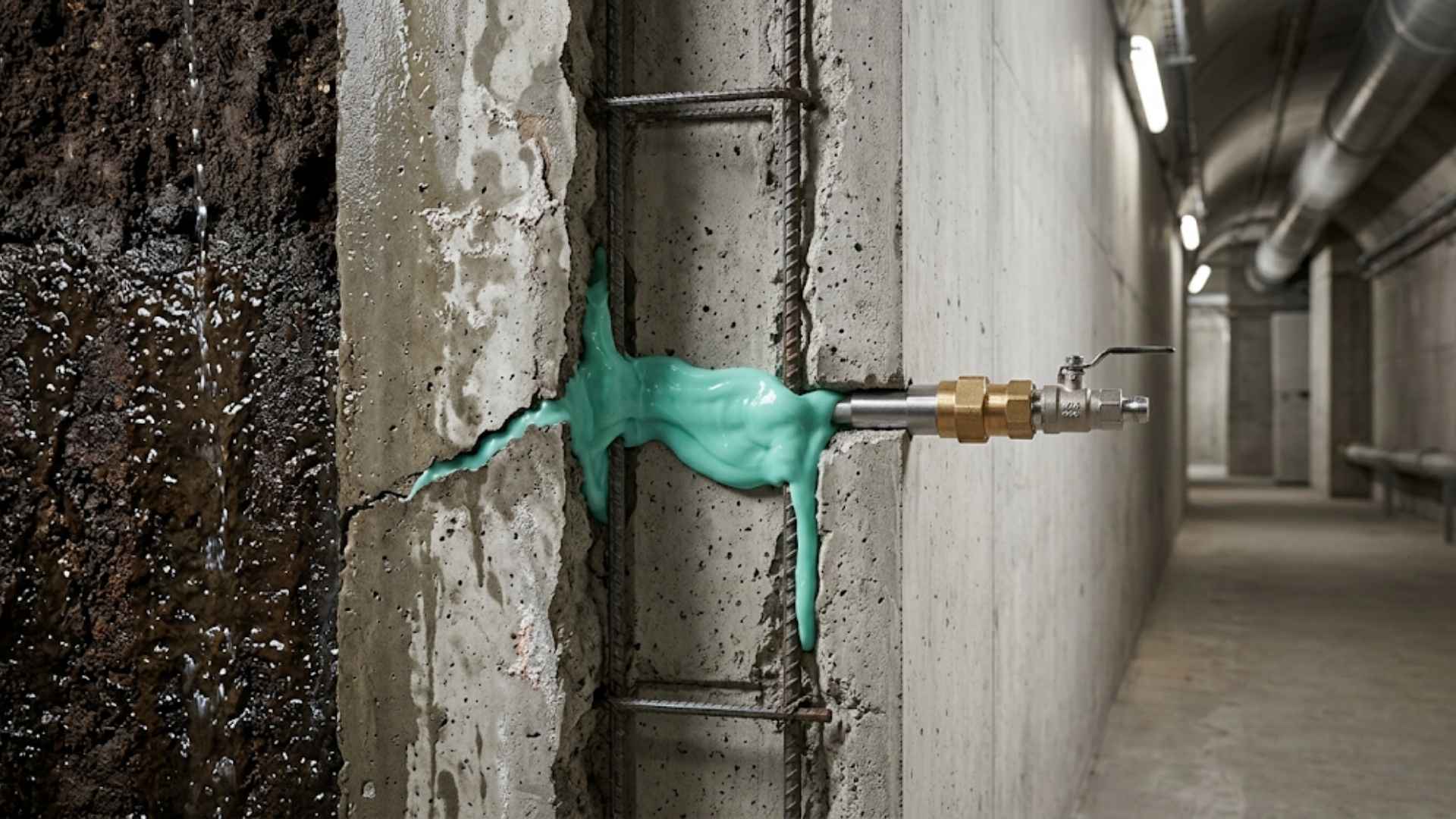
Type B waterproofing under BS 8102:2022 — structurally integral protection — is the classification under which high-pressure gel injection sits for repair applications. Understanding what this means enables engineers to write specifications that correctly distinguish injection from surface-applied coatings, correctly combine system types for grade-appropriate protection, and correctly verify performance after completion.
For repair of existing structures with established ingress through cracks and joints, Type B injection is the technically correct primary system. Whether it is sufficient alone, or should be combined with Type A or Type C elements, depends on the agreed environmental grade (1a, 1b, 2, or 3) and the specific hydraulic conditions present. For how injection compares with crystalline treatment at the repair stage, see crystalline waterproofing vs injection gel; for classifying flow before you specify, see active water flow vs damp seepage.
To get a Type B injection specification drafted for your specific structure and grade requirement, contact EURAS.
Request a site survey | Learn about our dam concrete repair service