+1 (954) 787-2570

Email: hello@eurastechnology.com


.png)
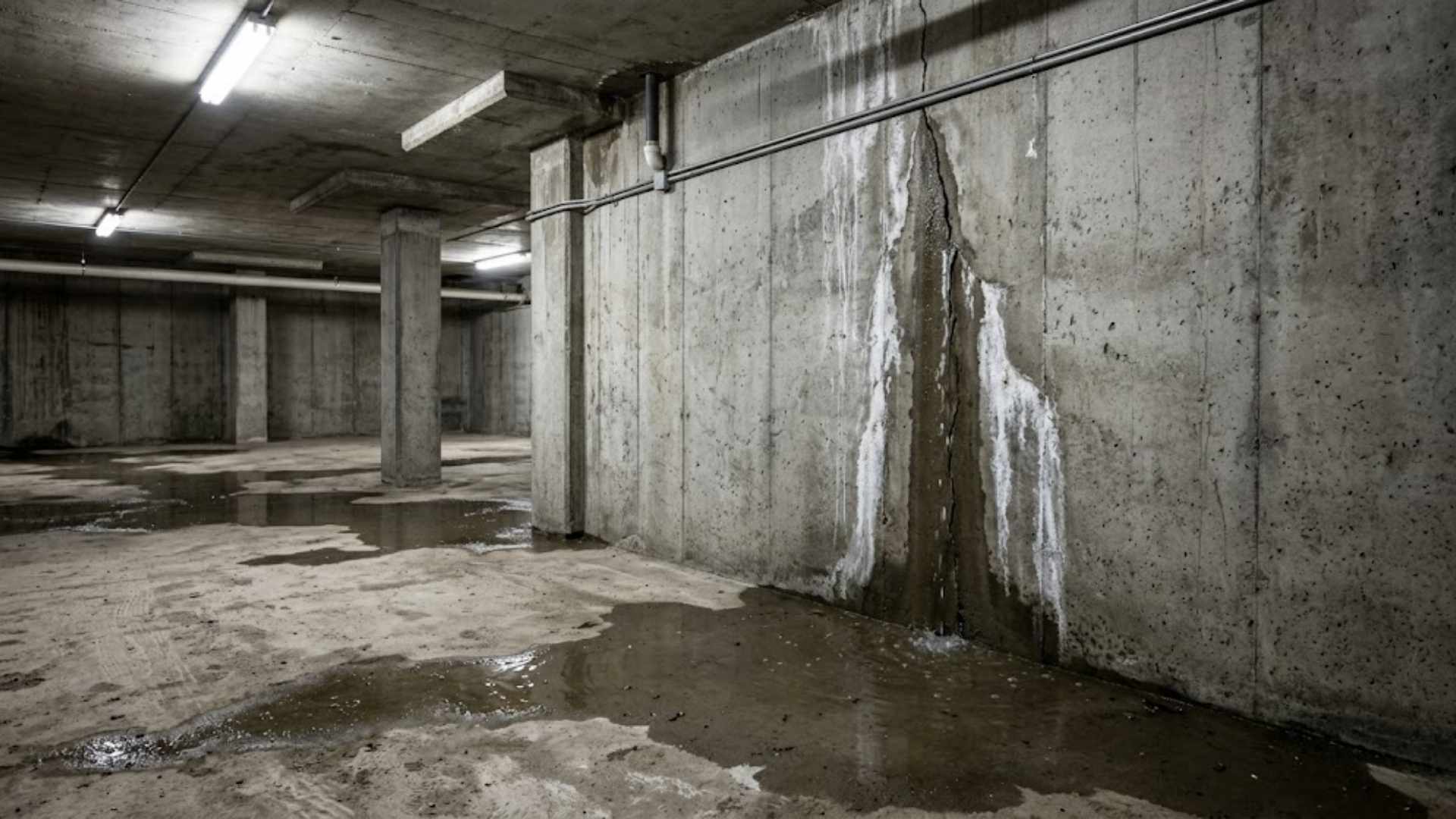
Water ingress in an underground car park is almost always caused by one of five things: failing expansion joints, construction joint deterioration, cracked concrete slabs, hydrostatic pressure from surrounding groundwater, or breakdown of the original waterproofing membrane. If you are seeing damp patches, rust staining, white deposits, or active drips in your car park, the underlying cause is structural — and it will not resolve itself.
This guide explains why underground car parks are particularly vulnerable to water ingress, what the risks are if it goes untreated, and how specialist injection waterproofing fixes the problem permanently without closing the facility. Whether you manage a commercial car park, a residential development with underground parking, or a mixed-use structure, understanding the causes is the foundation of an effective repair strategy.
Key takeaways:
Quick Summary: Water Ingress in Underground Car Parks
Underground car parks sit below the water table, surrounded by groundwater, and are subject to constant movement from vehicle loads. These conditions stress every waterproofing system over time. When water enters — through joints, cracks, or membrane failures — it damages concrete, corrodes steel reinforcement, and creates safety and liability risks for building owners and operators.
The most common causes:
Compared to most underground structures, car parks face an unusually demanding combination of stresses:
Dynamic loading. Vehicle movements apply repeated cyclic loads to slabs and walls. Over time, this accelerates micro-cracking — particularly at construction joints and slab edges — creating pathways for groundwater to enter.
Thermal cycling. The difference between winter and summer temperatures causes concrete to expand and contract. Over years, this movement opens up expansion joints and causes previously sound concrete interfaces to fail.
Long span slabs. Car park slabs typically span greater distances than in other building types. Longer spans mean more deflection, more cracking risk, and higher susceptibility to differential settlement.
Age of waterproofing. Many underground car parks were built in the 1970s through 1990s with bituminous membranes that have now reached or exceeded their design life. Membrane failure after 20–30 years is not a defect — it is expected. The question is what replaces it.
Proximity to groundwater. Car parks in urban areas are often located within the groundwater zone. Any crack, joint failure, or membrane deterioration creates an immediate entry point for water under pressure. Understanding the causes of water ingress in underground structures more broadly provides useful context for why this happens.
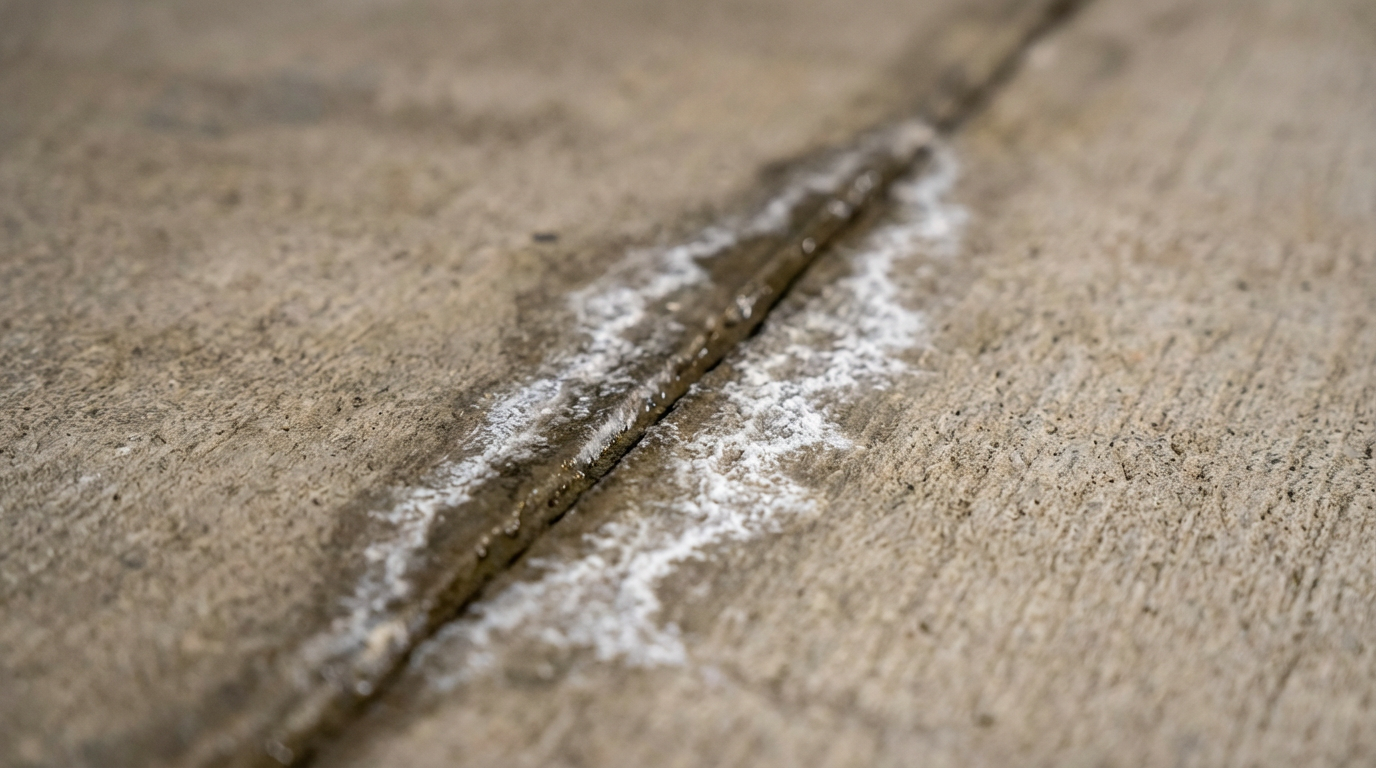
Expansion joints are designed to accommodate structural movement. But the sealants and waterstops used to make them watertight have a finite lifespan. Once they degrade — through UV exposure, thermal cycling, or material fatigue — they create a direct pathway for groundwater entry. Expansion joint failures account for a disproportionate share of car park leaks because they run the full length and width of the structure.
Construction joints — where one concrete pour meets another — are inherently weaker than the surrounding concrete. Without continuous maintenance, these interfaces develop micro-cracks and voids that allow water infiltration. In car parks with multiple levels, every floor-to-wall junction and slab-to-column connection is a potential entry point.
Shrinkage during curing, settlement, vehicle loads, and ground movement all create cracks in concrete slabs and retaining walls. Hairline cracks become active leaks when groundwater pressure is sufficient to force water through — which it invariably is in below-ground structures.
External membranes applied during original construction rely on physical continuity to work. Any penetration, tear, or adhesion failure creates an entry point. Once water gets behind a membrane, it travels laterally and may emerge far from where it entered — making the source difficult to trace without specialist investigation.
Concrete is not inherently watertight. In the absence of a functioning membrane, hydrostatic pressure from surrounding groundwater forces moisture through the concrete matrix itself — particularly in older structures where concrete quality was lower or where carbonation has opened up the pore structure.
The consequences of ignoring water ingress in a car park compound over time. Recognising the warning signs of serious water ingress early is the most effective way to contain costs.
Reinforcement corrosion. Water carries chlorides and oxygen to steel reinforcement. Once corrosion begins, the expanding rust fractures the surrounding concrete from the inside — causing spalling and, eventually, structural section loss. Repairing spalled concrete with exposed steel costs multiples of what sealing the original water pathway would have.
Slab and wall structural weakening. Sustained water ingress softens the concrete over time through leaching of calcium hydroxide. In severe cases, this can affect the load-bearing capacity of slabs and columns — creating structural safety concerns.
Liability and regulatory exposure. Water pooling on car park floors creates slip hazards. Falling concrete from spalling soffits creates overhead hazards. Building owners have a duty to address known structural defects — particularly those creating safety risks for users.
EV charging infrastructure. Since the Building (Amendment) Regulations 2021 required EV charging points in new and renovated car parks, facility managers now face a direct regulatory and safety obligation to address water ingress near charging infrastructure. UK Government fire safety guidance for EVs in covered car parks (OZEV, updated February 2024) explicitly identifies water and drainage as key risk factors in car park EV charging design. Water ingress near electrical infrastructure creates fire, electrocution, and equipment damage risk — facilities installing or planning EV charging should treat active water ingress as an immediate priority.
Operational disruption. If water ingress worsens to the point of requiring major structural remediation, sections of the car park may need to be closed — losing revenue and disrupting tenants or residents.
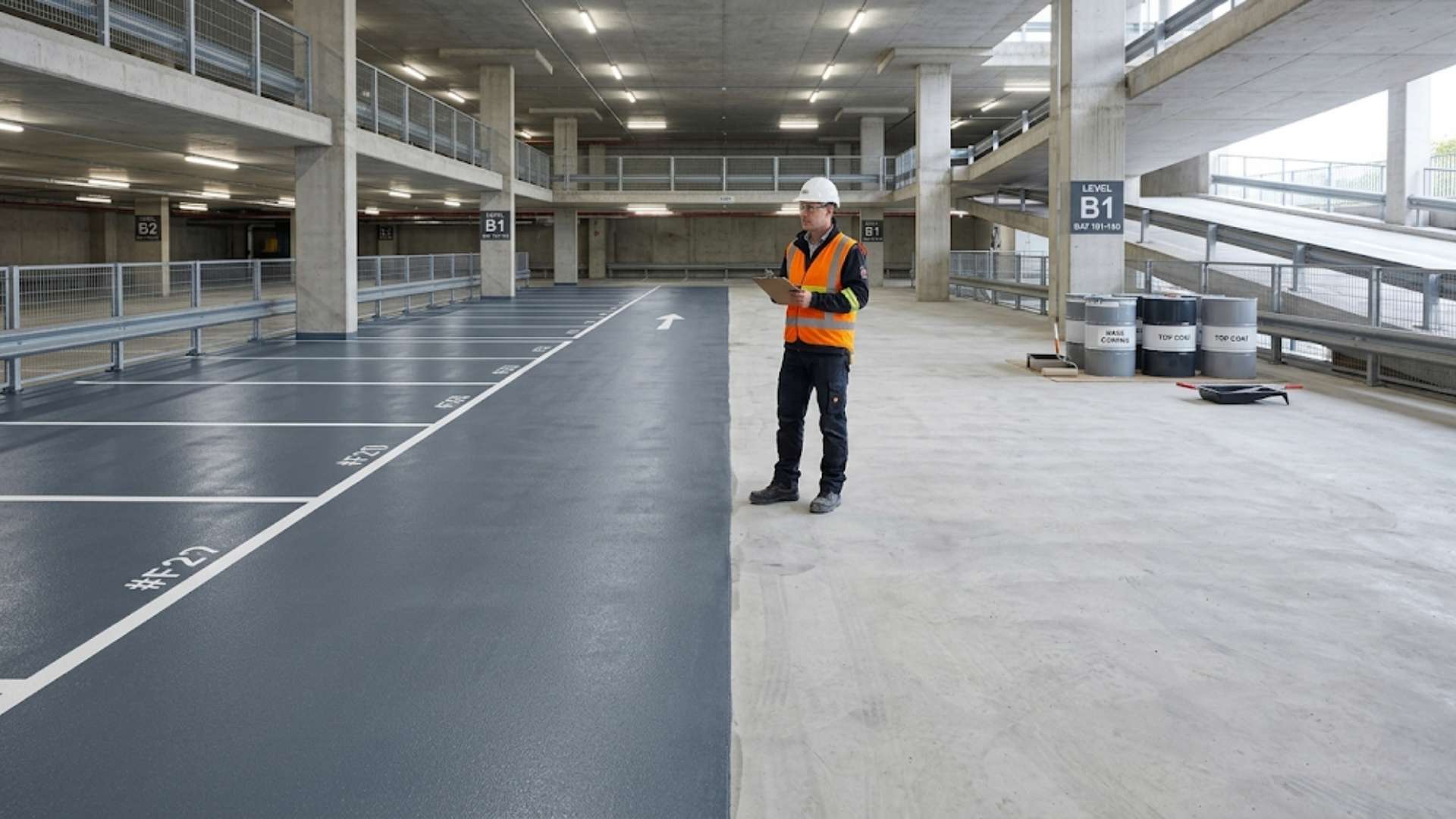
For most underground car parks, injection waterproofing is the preferred remedial method because it is performed from inside the structure, requires no excavation, and can be carried out with the facility operational.
The process involves:
For expansion joint failures, specialist expansion joint sealing using flexible, elastic materials is required — separate from crack injection, and using materials engineered to accommodate ongoing movement. For more on how injection compares to other remedial options, see our guide to injection waterproofing vs tanking.
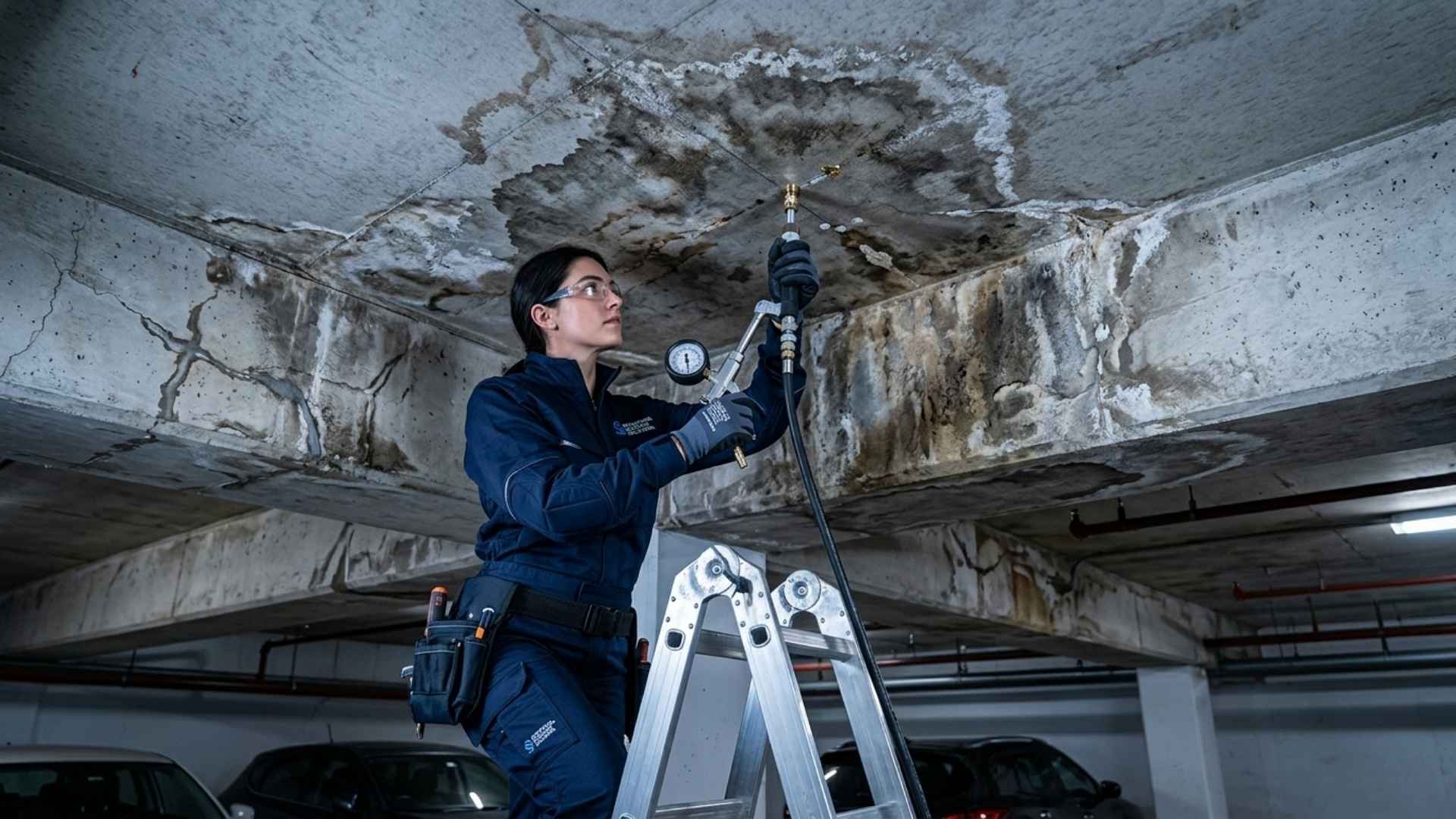
Underground car park waterproofing is one of our most frequent project types. In New Belgrade, a multi-level parking structure adjacent to the Danube had developed persistent water ingress through slab cracks and construction joints, driven by high groundwater pressure in the river-adjacent zone. Previous membrane repairs had repeatedly failed. Our team mapped all active infiltration points and carried out high-pressure gel injection at up to 130 bar — sealing the structure completely without closing it to residents.
At Marina Limassol in Cyprus, a large underground car park adjacent to the sea presented a more extensive challenge: widespread infiltration across the slab and walls, with high chloride content from sea water accelerating reinforcement corrosion. The scale of the problem required over 12,000 kg of EURAS® Gel injection — but again, without closing the facility.
EURAS Technology has been permanently resolving water ingress in underground car parks for 25+ years, across commercial, residential, and marine-adjacent structures in Europe, the Middle East, and North Africa. If your car park is showing signs of water ingress, our specialists can survey the structure and recommend a cost-proportionate repair before the problem advances. Talk to a waterproofing specialist.
What is the most common cause of water ingress in underground car parks? Expansion joint failure is the single most frequent cause. These joints run the full span of the structure and must accommodate continuous movement — the sealants and waterstops within them degrade over time and eventually fail, creating open pathways for groundwater.
Can a leaking car park be fixed without closing it? In most cases, yes. Injection waterproofing is performed from inside using small drill holes. The majority of car park waterproofing projects we carry out are completed with the facility fully or partially operational, with cordoned-off sections where works are in progress.
How long does car park injection waterproofing last? When correctly applied, injection waterproofing using an elastic, hydrophilic gel is a long-term permanent repair. Unlike surface coatings or membrane patches, the injected material fills the crack or void from within. Projects we carried out in the early 2010s — including the New Belgrade garage — have reported no recurrence of treated leaks.
Does my car park need injection or full membrane replacement? If the structure is otherwise sound and the issue is localised leaking at joints and cracks, injection is typically sufficient. If the entire original waterproofing system has failed and the structure has widespread deterioration, a combined approach may be required. A specialist site survey will determine the appropriate scope.
My car park has rust staining on the ceiling — is that structural? Rust staining indicates that water has reached the steel reinforcement and corrosion has started. How serious this is depends on the depth of concrete cover remaining over the steel and how advanced the corrosion is. A non-destructive survey can assess the extent of the problem. Early-stage corrosion can usually be arrested; advanced corrosion with spalling requires more extensive repair.
Does water ingress affect the structural capacity of a car park slab? If left untreated long enough, yes. Progressive concrete deterioration and reinforcement corrosion reduce structural section properties over time. This is why regular inspection and prompt repair of water ingress is important — not just for waterproofing but for structural safety.
How much does it cost to fix water ingress in an underground car park? Costs range from around £3,000–£15,000 for targeted resin injection to seal localised leaks, to £40,000–£100,000+ for comprehensive treatment across a multi-level facility with multiple active leak points. Exact costs depend on structure size, number of injection points, access conditions, and whether structural concrete repair is also required. A site survey is needed for a reliable estimate. For a full breakdown of what drives costs, see our guide to the cost of water ingress repair in underground structures.
Is water ingress in a car park covered by building insurance? Insurance coverage depends on the specific policy and the nature of the event. Sudden damage (e.g., a burst pipe) is more likely to be covered than gradual deterioration. Review your policy terms and seek specialist advice if in doubt. Documenting the defect early — with a specialist survey report — can support a claim where coverage applies. This is general guidance only; for specific insurance matters, consult your policy provider or a specialist adviser.
Water ingress in an underground car park rarely stays contained. What starts as a damp patch at a joint becomes an active drip, then structural staining, then spalling — and each stage is more expensive to fix than the last. The good news is that in the vast majority of cases, a properly executed injection waterproofing programme will resolve the problem permanently, without shutting down the facility.
Next step: If your car park has active leaks, damp patches, rust staining, or visible joint deterioration, request a no-obligation site survey. Our specialists will identify the source of the water ingress and recommend a proportionate, permanent fix.
Request a site survey | Learn about our underground infrastructure repair service