+1 (954) 787-2570

Email: hello@eurastechnology.com


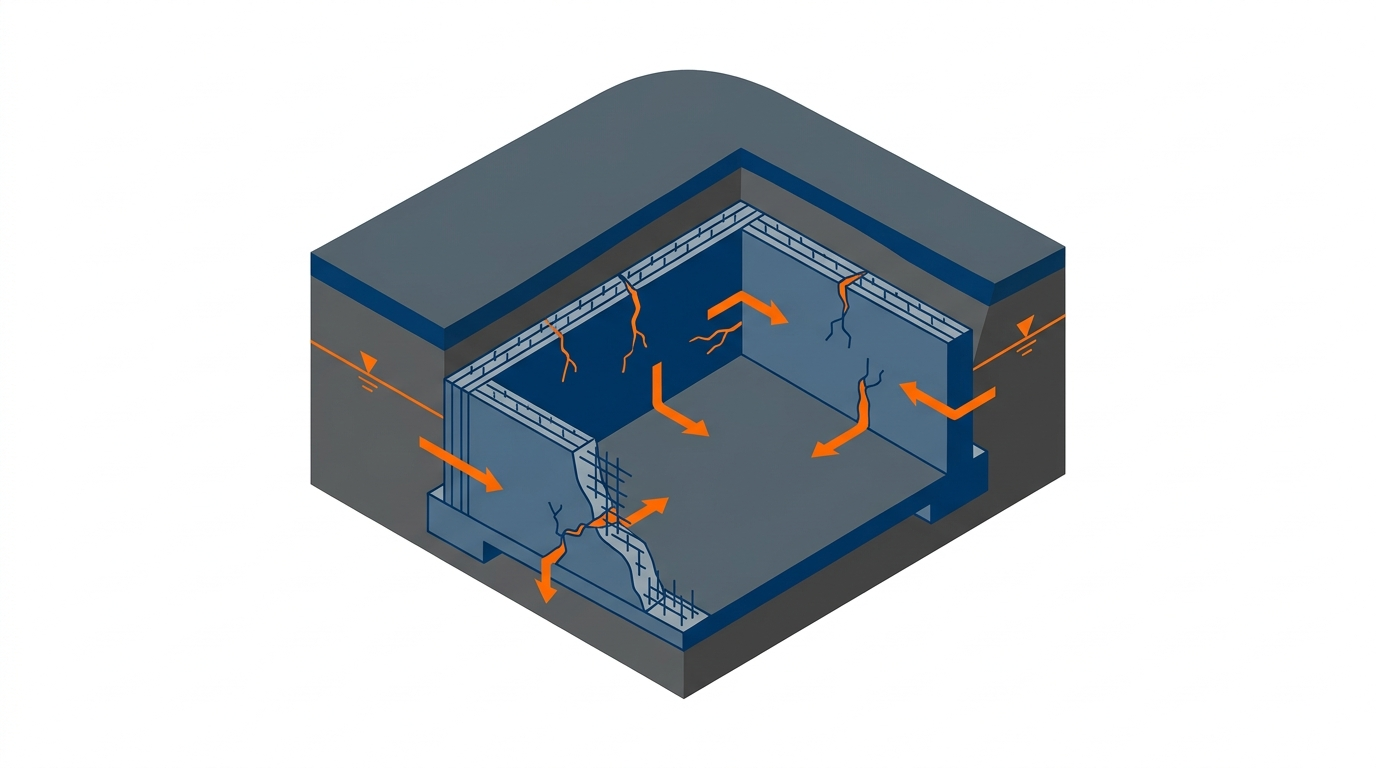
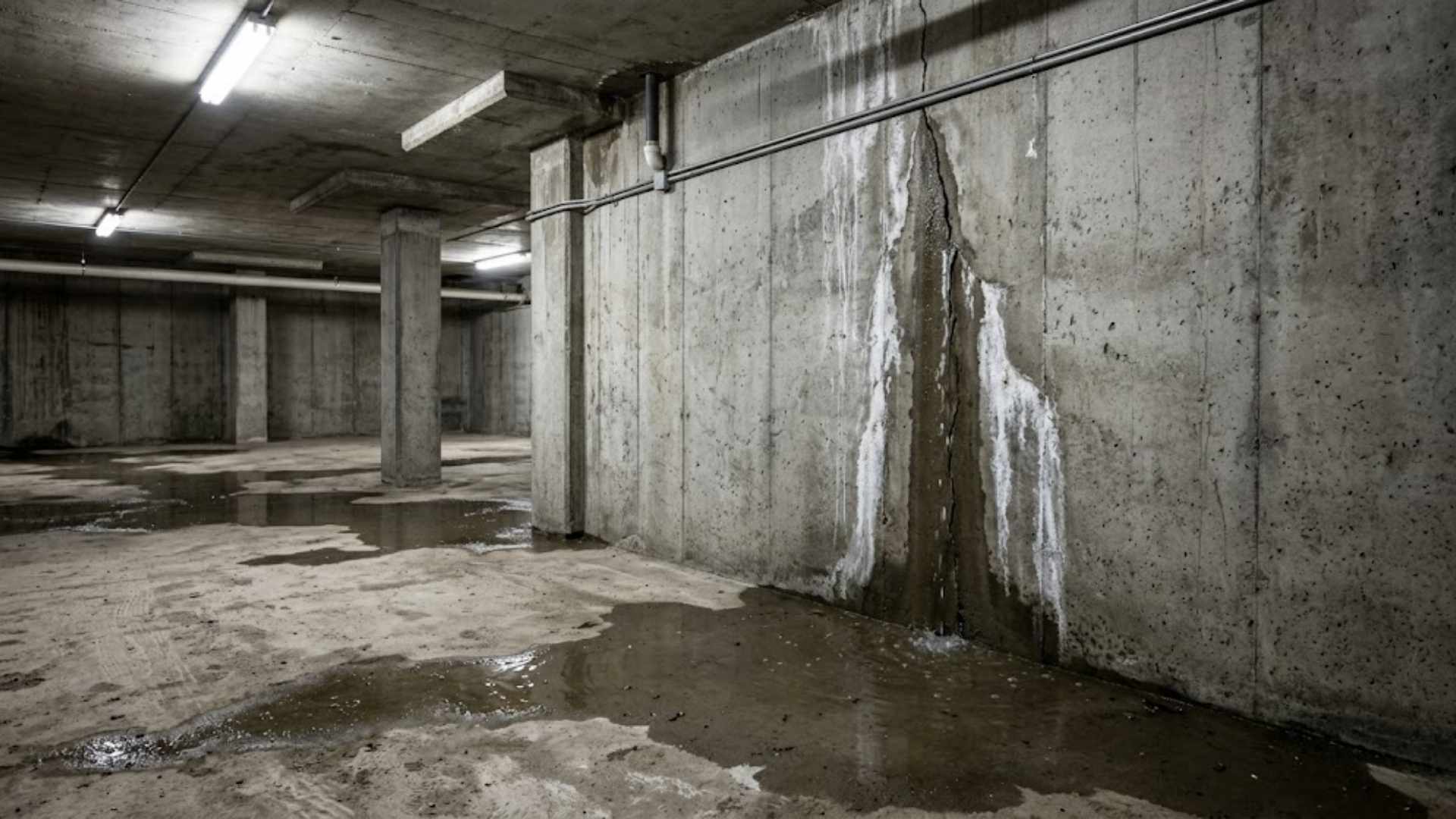
Water ingress in concrete underground structures is caused by hydrostatic pressure forcing groundwater through cracks, construction joints, and deteriorated waterproofing membranes. If you're seeing damp patches, white deposits, or standing water in your basement, car park, or underground facility, the underlying cause is usually a combination of structural defects and external water pressure — and it will get worse without intervention.
This guide explains the main causes of water ingress in underground concrete structures, how to identify the source and understand the progression of damage, and what happens if the problem is left untreated. Whether you manage a commercial basement, underground car park, industrial facility, or critical infrastructure, understanding these causes is the first step toward a permanent solution — and the difference between a targeted repair today and a costly structural remediation programme in two years.
Key takeaways:
Water ingress occurs when water penetrates a concrete structure through defects in the waterproofing system or the concrete itself. In underground structures, groundwater pressure constantly pushes water toward any weakness.
The 5 main causes:
Water ingress is the infiltration of water into a structure through unintended pathways. Unlike surface water that drains away, water ingress into underground structures is driven by continuous hydrostatic pressure — the weight of groundwater in the surrounding soil pressing against your walls and floor slab.
Underground structures sit within the water table or in soil that becomes saturated during wet periods. This creates constant pressure differentials that drive water toward any weakness in the concrete envelope. Unlike above-ground structures, underground facilities cannot "dry out" naturally — the moisture source is permanent.
For facility managers, water ingress represents far more than a maintenance issue:

Groundwater exerts constant pressure against below-ground structures. This pressure increases with depth — a basement 3 metres below ground level experiences significantly higher pressure than one at 1 metre. When this pressure exceeds the resistance of the waterproofing system, water finds a path through. As engineering guidance from Wiss, Janney, Elstner Associates explains, hydrostatic pressure can be permanent (below water table) or intermittent (from precipitation and seasonal changes).
Hydrostatic pressure is relentless. Unlike rain that stops, groundwater pressure is continuous, which is why underground leaks rarely resolve themselves.
Construction joints — the interfaces where one concrete pour meets another — are the single most common source of water ingress. These joints exist at:
Even when waterstops or hydrophilic strips are installed during construction, movement, poor installation, or material degradation can create pathways for water. The BS 8102:2022 code of practice provides guidance on waterproofing grades and joint detailing for below-ground structures.
Cracks develop in concrete for multiple reasons:
Research published in Construction and Building Materials (Kim et al., 2011) found that water permeability increases rapidly for cracks above 50 µm under hydrostatic pressure. Cracks from as little as 0.05mm (50 microns) can allow water passage, and permeability increases significantly once cracks exceed 0.1mm. Once water enters, freeze-thaw cycles and chemical processes widen the cracks progressively.
External waterproofing membranes have finite lifespans. Over 20–30 years, membranes can:
Once a membrane fails, there is no practical way to repair it without excavation — which is often impossible for occupied structures.
Every pipe, cable, and service that passes through the concrete envelope is a potential water entry point. Common failure locations include:
These details are often overlooked during construction and are difficult to remediate afterwards using conventional methods.
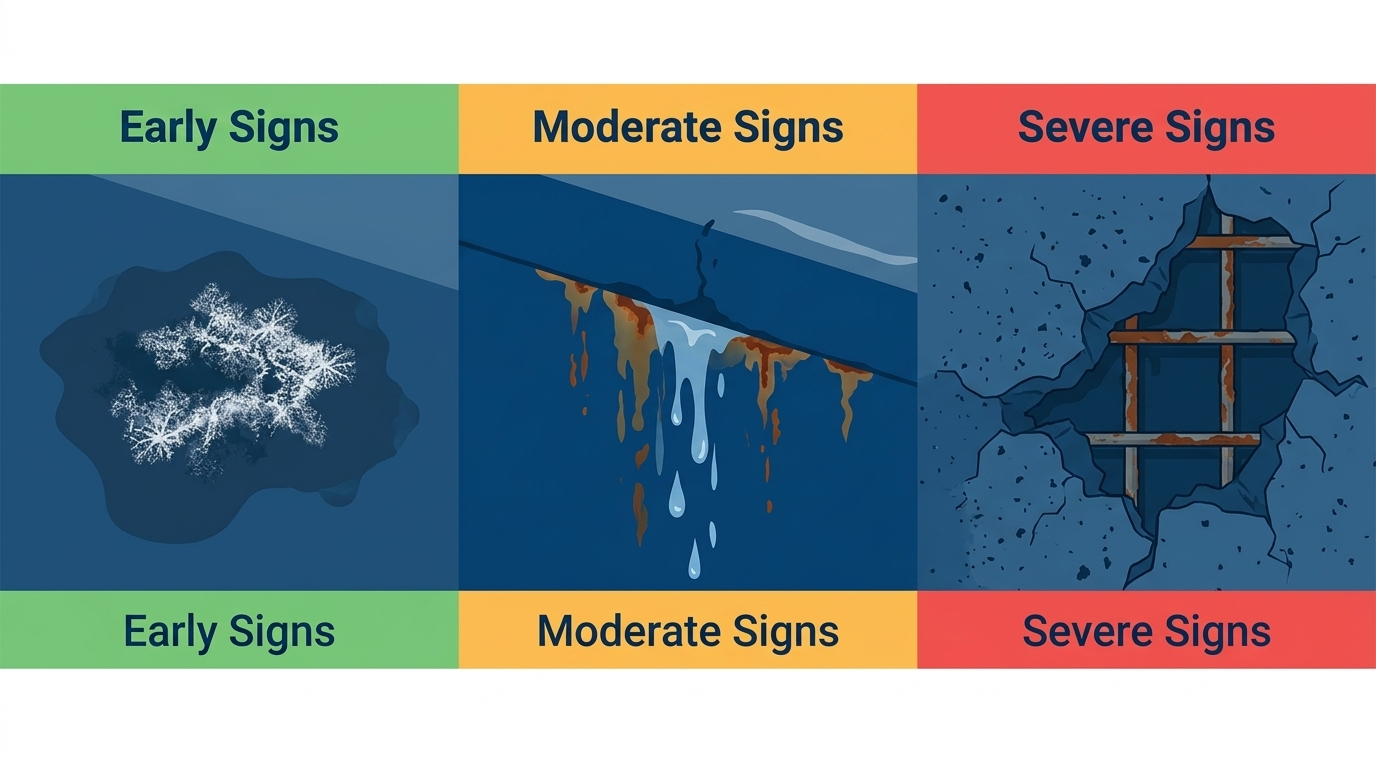
Water ingress rarely remains stable without intervention. Without treatment, the problem progresses through predictable stages. As BRE guidance on diagnosing dampness in buildings explains, moisture-related deterioration in concrete structures is progressive — early indicators are often dismissed, but each stage compounds the next.
If you observe any intermediate or severe signs, specialist assessment is warranted. For a detailed breakdown of what each sign means and how to assess urgency, see our guide to 5 warning signs of serious water ingress. Early-stage signs should be monitored, but if they persist or worsen over 2–3 months, professional investigation will prevent the problem escalating.
The consequences of untreated water ingress compound over time.
Water carries chlorides and oxygen to the steel reinforcement within concrete. This initiates corrosion, which causes the steel to expand — creating internal pressure that cracks and spalls the concrete cover. Research published in RSC Advances confirms that chloride-induced corrosion destroys the passive protective coating around steel reinforcement, leading to loss of rebar strength, concrete cracking, and bond deterioration. Once corrosion begins, it accelerates exponentially.
Repeated wetting and drying cycles, combined with freeze-thaw action in winter, progressively weaken the concrete matrix. Load-bearing capacity diminishes over time.
What begins as a minor nuisance becomes a major operational problem. Areas may need to be closed, equipment relocated, and drainage systems installed as temporary measures.
The cost of remediation increases dramatically as damage progresses:
Cost ranges based on UK commercial market data (MPS Concrete Solutions, 2025–2026). Actual costs vary significantly by structure size, access, and extent of damage. A site survey is required for an accurate estimate. Sources: UK commercial waterproofing cost data; Commercial Basement Waterproofing Cost UK 2026.
The cost data above makes the case plainly — early intervention is not just preferable, it is significantly more economical than responding to advanced structural damage.
If you're weighing up repair options, our comparison of injection waterproofing vs tanking explains when each approach is the right choice.

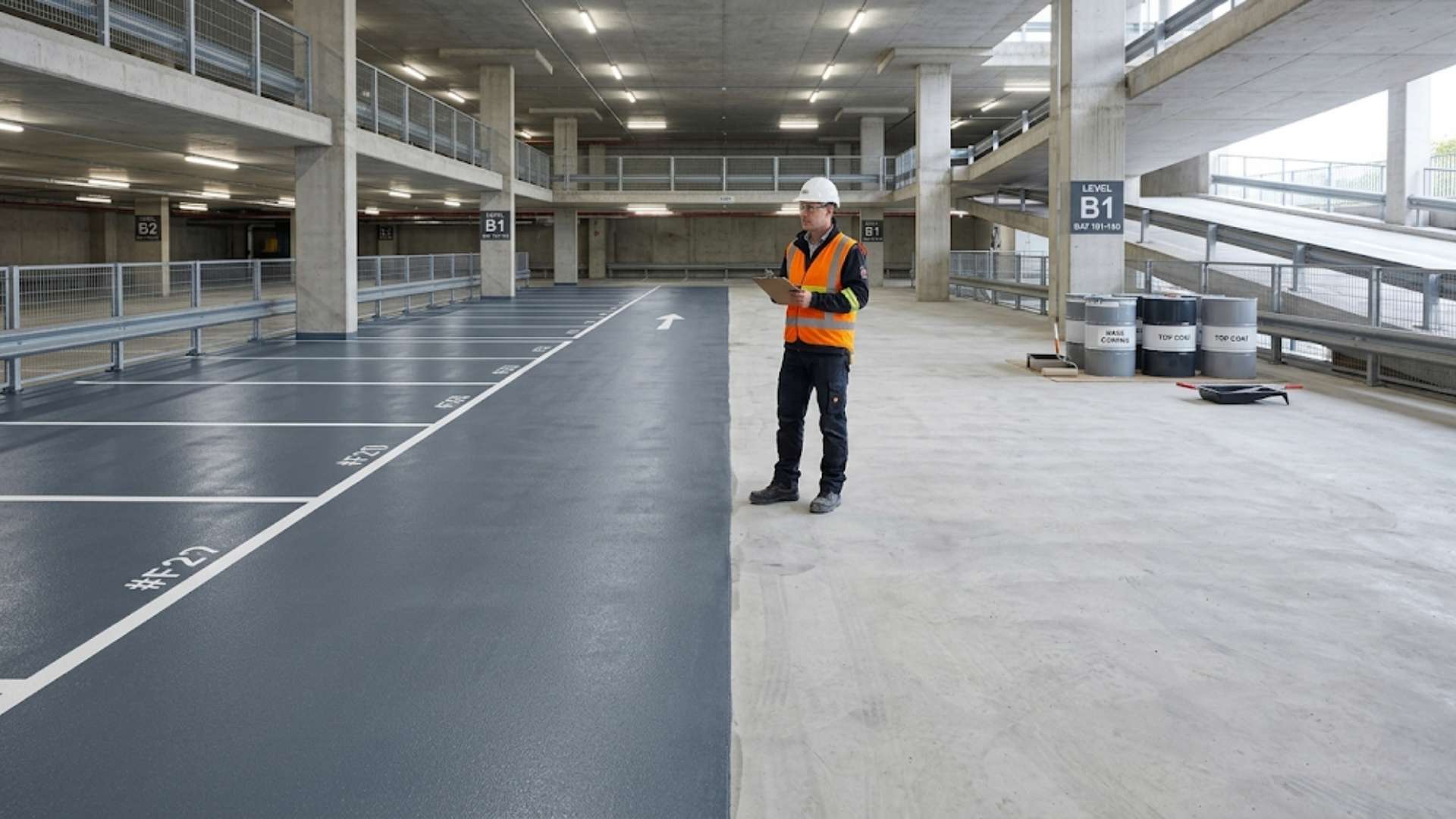
At an underground car park in New Belgrade, we encountered a typical scenario: persistent water ingress through construction joints and slab cracks, caused by high groundwater pressure in a river-adjacent location. Previous membrane repairs had failed, and standing water was affecting tenant satisfaction and creating corrosion risk.
Using high-pressure injection at up to 130 bar, our team sealed all active leak points with EURAS Gel — a mineral-based injection system that works even against flowing water. The work was completed without closing the facility, and the structure has remained dry since.
EURAS Technology has been solving water ingress problems in underground structures for over 25 years. Our projects span dams, tunnels, underground car parks, and industrial facilities across Europe, the Middle East, and North Africa. If your facility is showing signs of water ingress, our specialists can assess your situation and recommend a permanent solution.
No. Rising damp refers to moisture wicking up through masonry from ground level via capillary action. Water ingress is the active penetration of water through cracks, joints, or failed waterproofing, typically driven by hydrostatic pressure in underground structures.
Yes. Water ingress leads to reinforcement corrosion, which causes concrete spalling and reduces structural capacity. In severe cases, load-bearing elements can be compromised.
Groundwater ingress typically worsens after rain or during wet seasons, and often appears at construction joints or cracks. Service leaks tend to be more constant and localised. A specialist survey can identify the source definitively.
This varies by conditions. In structures with high hydrostatic pressure and active cracks, deterioration can be rapid — visible worsening within months. In lower-pressure situations, progression may take years, but it never improves without intervention.
A specialist waterproofing contractor will typically conduct their own survey. However, if you want an independent assessment first, a structural engineer or damp specialist can provide an initial diagnosis. Our non-destructive testing service uses moisture mapping and half-cell potential surveys to pinpoint water pathways without opening up the structure.
Yes. Modern injection waterproofing can seal active leaks from the inside of a structure — without excavation. This approach, called negative-side waterproofing, is often the only practical option for occupied underground structures.
A specialist inspection typically includes visual assessment, moisture mapping, identification of water pathways, and in some cases, exploratory drilling or endoscopy to assess conditions behind the concrete surface.
In most cases, yes. Injection waterproofing is conducted from inside the structure and requires no excavation or dewatering. Our team has sealed active leaks in occupied underground car parks and operational facilities without requiring closures — as demonstrated at our New Belgrade underground car park project.
Costs vary significantly by severity and structure size. For commercial underground structures, targeted resin injection to seal active leak points typically ranges from £3,000–£15,000 (MPS Concrete Solutions, 2026). Structures with extensive reinforcement corrosion and spalling can require combined structural repair and waterproofing at £50,000–£250,000+. Early intervention is always significantly more economical.
If water ingress is affecting your underground structure, acting early prevents exponential cost increases and structural damage. Request a no-obligation site survey — our team will assess the source and severity of the problem and recommend a permanent solution.