+1 (954) 787-2570

Email: hello@eurastechnology.com


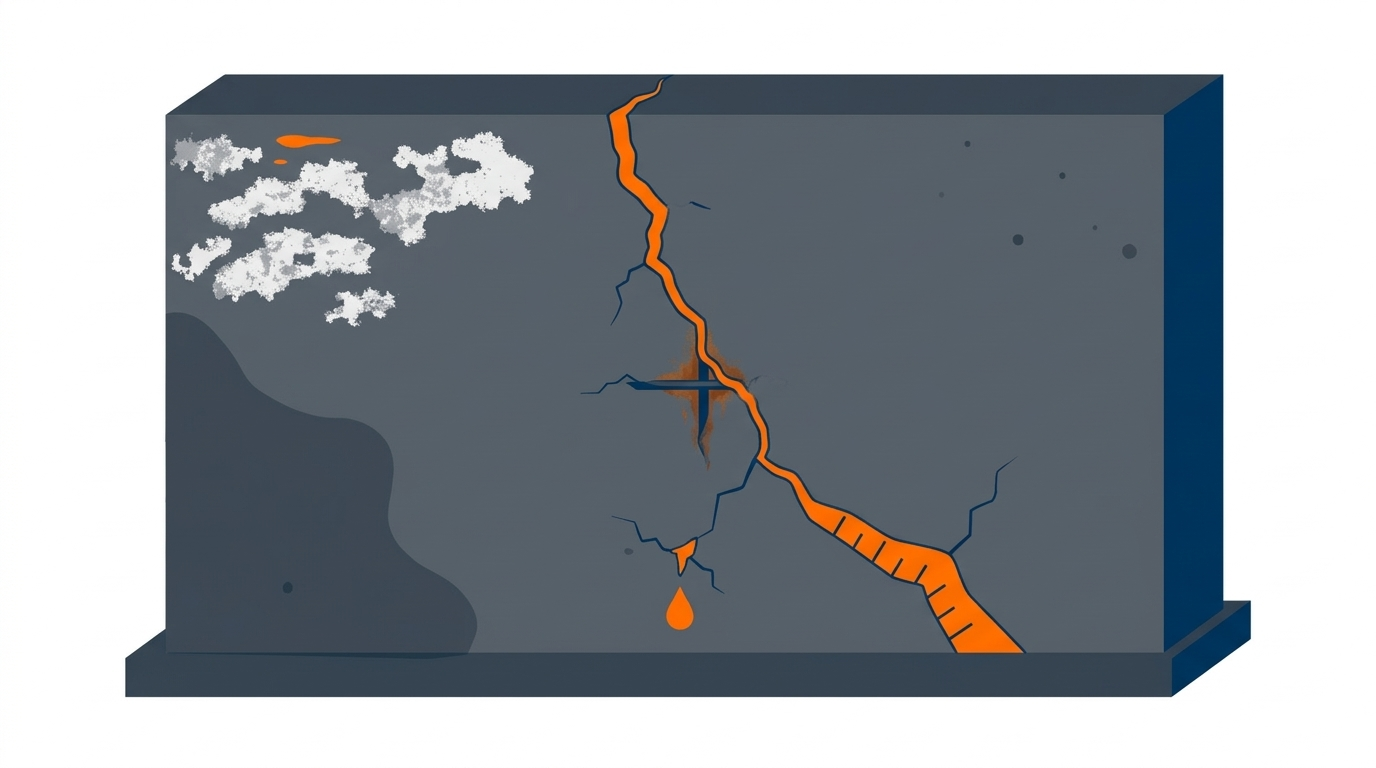
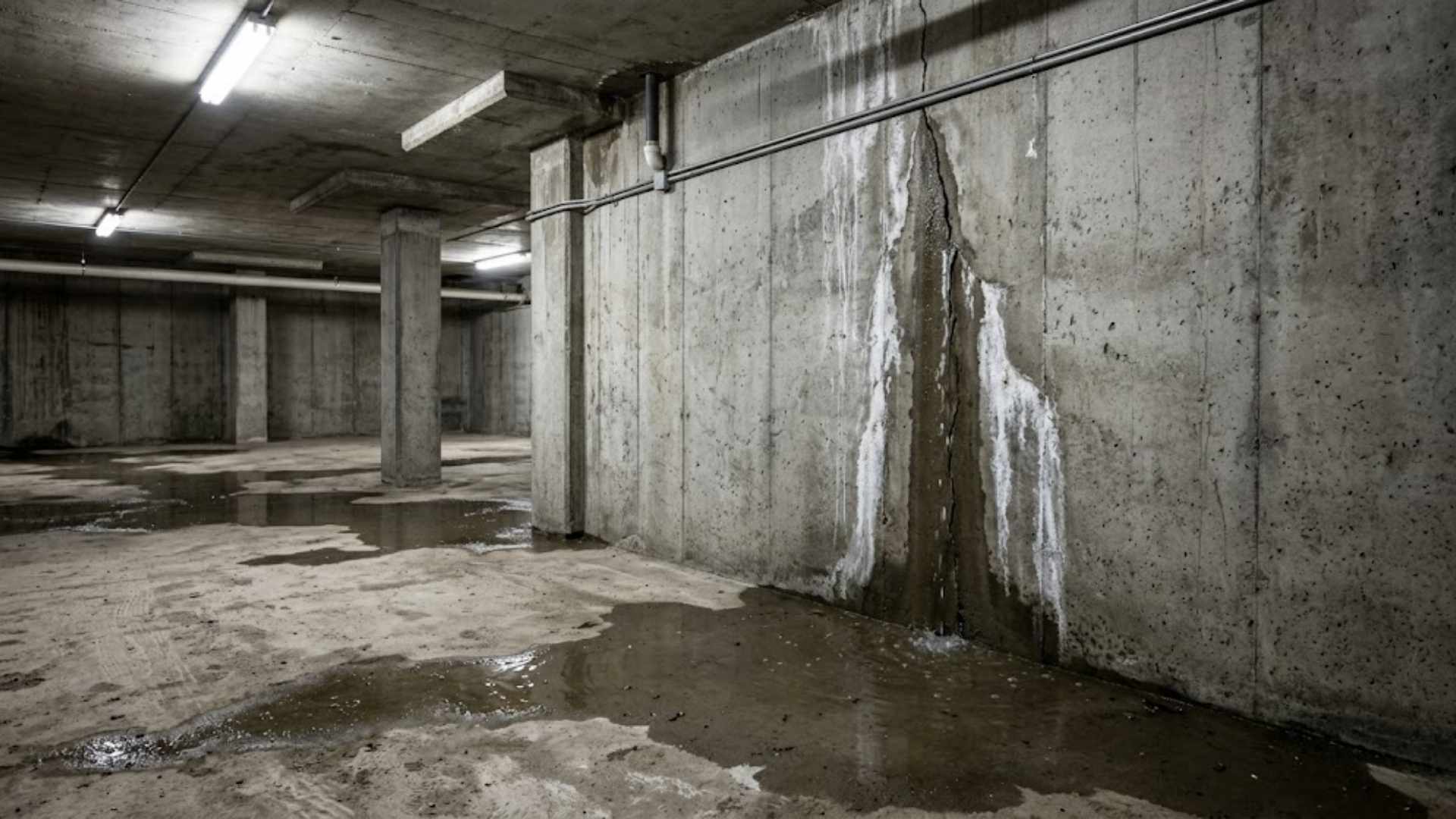
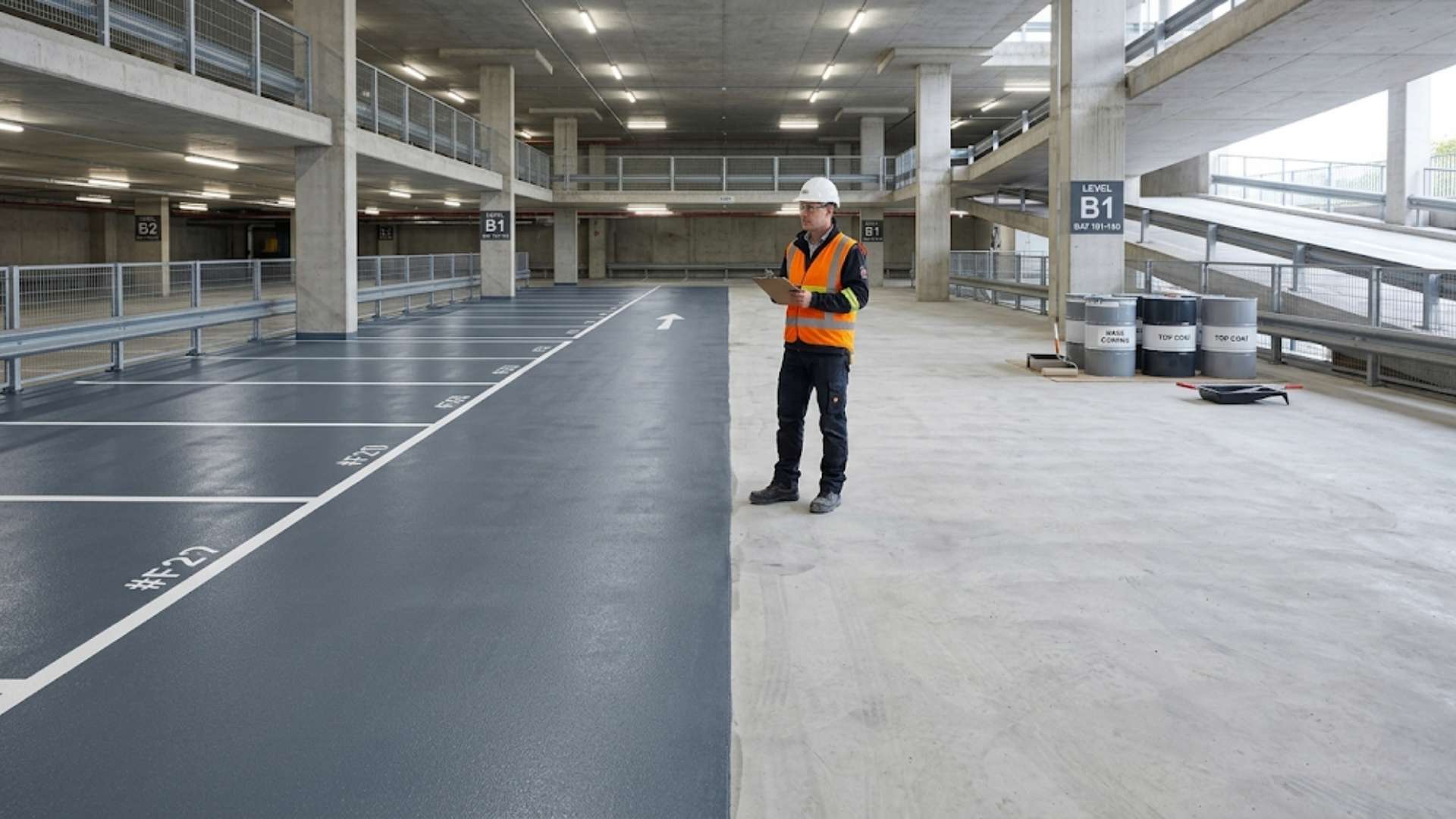
If you're seeing white deposits on your basement walls, persistent damp patches, or rust staining on concrete, your underground structure likely has a water ingress problem that's already progressing. These aren't cosmetic issues — they indicate active water penetration that will worsen without intervention.
This guide covers the 5 warning signs that indicate serious water ingress, explains what each sign means structurally, and helps you determine whether your situation requires immediate attention or monitoring. Whether you manage a commercial basement, underground car park, or critical facility, the difference between a minor repair and a major structural programme often comes down to how quickly you act on what you see.
Key takeaways:
Serious water ingress in underground structures shows these progressive warning signs:
If you observe signs 3, 4, or 5, specialist assessment is recommended promptly. Signs 1 and 2 should be monitored — if they persist beyond 2–3 months or worsen, professional investigation is warranted.
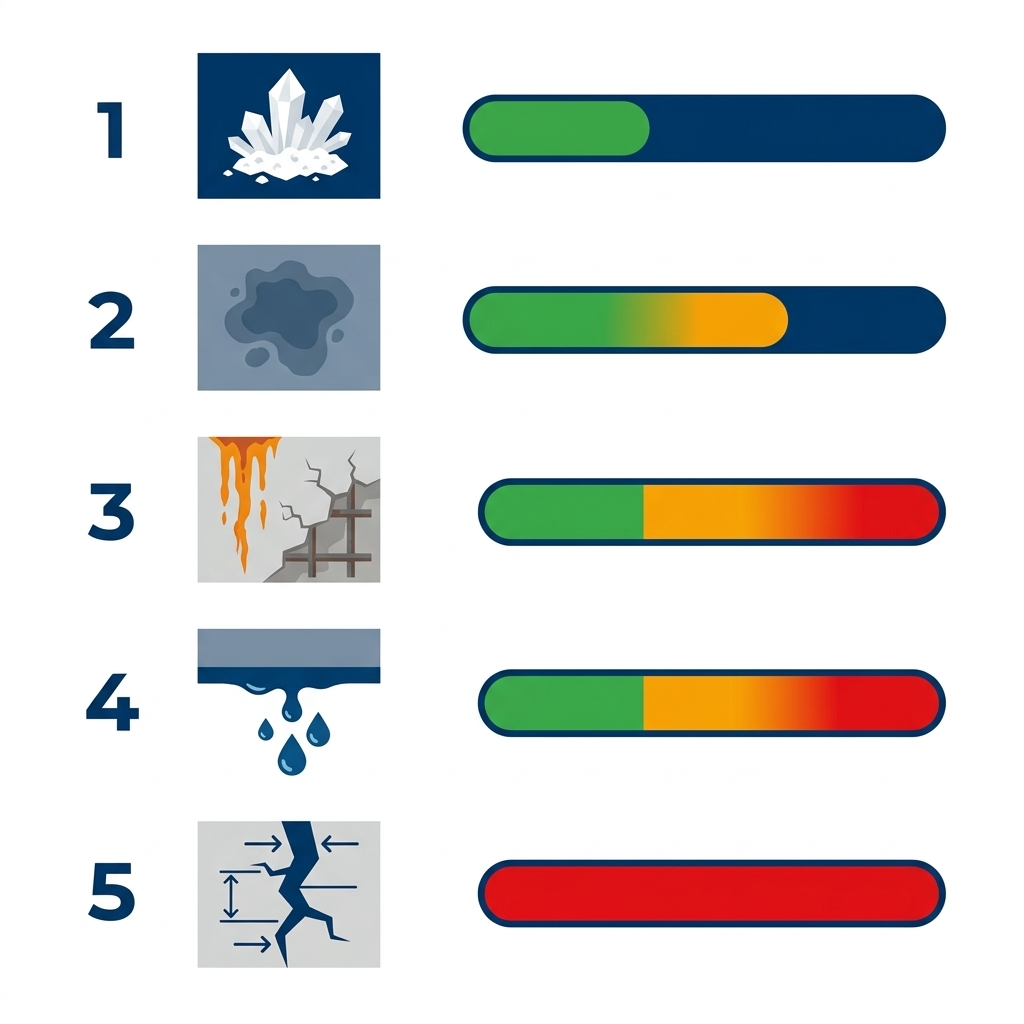
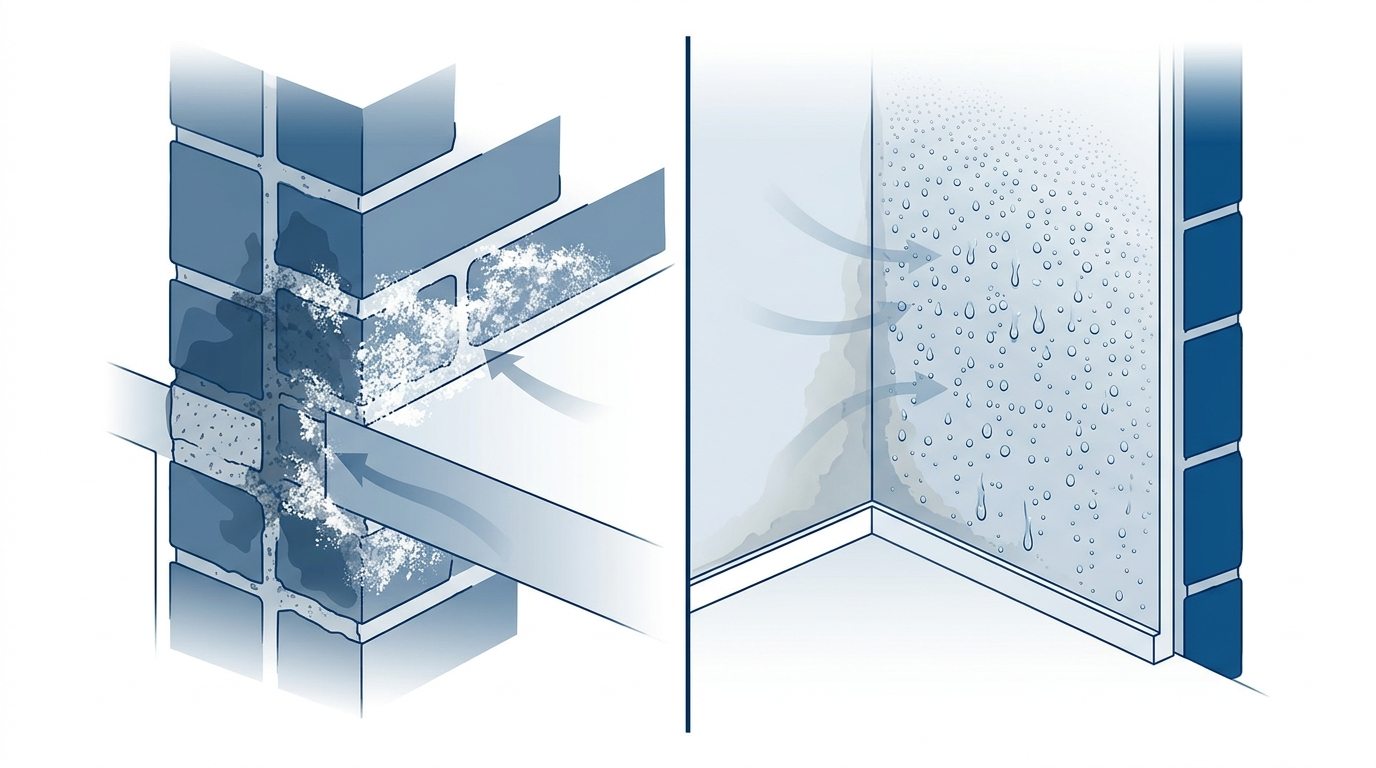
Efflorescence appears as white, powdery or crystalline deposits on concrete or masonry surfaces. It may form in patches, streaks following water pathways, or as a general haze across affected areas.
Efflorescence is not the problem — it's evidence of the problem. When water passes through concrete, it dissolves mineral salts (primarily calcium carbonate). As the water evaporates at the surface, these salts are left behind as white residue.
The presence of efflorescence confirms:
As BRE guidance on diagnosing dampness in buildings explains, distinguishing between water ingress and other moisture sources is critical for choosing the right remediation approach. To understand why these symptoms appear in underground structures in the first place, see our guide to what causes water ingress in underground concrete structures.
Our water leak detection service can identify exactly where water is entering before any remediation begins — using moisture mapping rather than guesswork.
Efflorescence can be brushed or washed off, but it will return if the underlying water ingress continues. Removing it helps you monitor whether the problem is stable or progressing. If deposits return quickly after cleaning, the water ingress is active and ongoing.
Damp patches appear as darker areas on concrete or rendered surfaces. They may feel cold or wet to the touch, and in severe cases, moisture may be visible on the surface.
Unlike surface condensation (which dries when ventilation improves), persistent damp patches indicate water is reaching the surface from within or behind the structure. In underground structures, this typically means:
Rust staining appears as orange-brown streaks or patches on concrete surfaces. Spalling is where the concrete surface is flaking, crumbling, or breaking away — often revealing corroded reinforcement bars beneath.
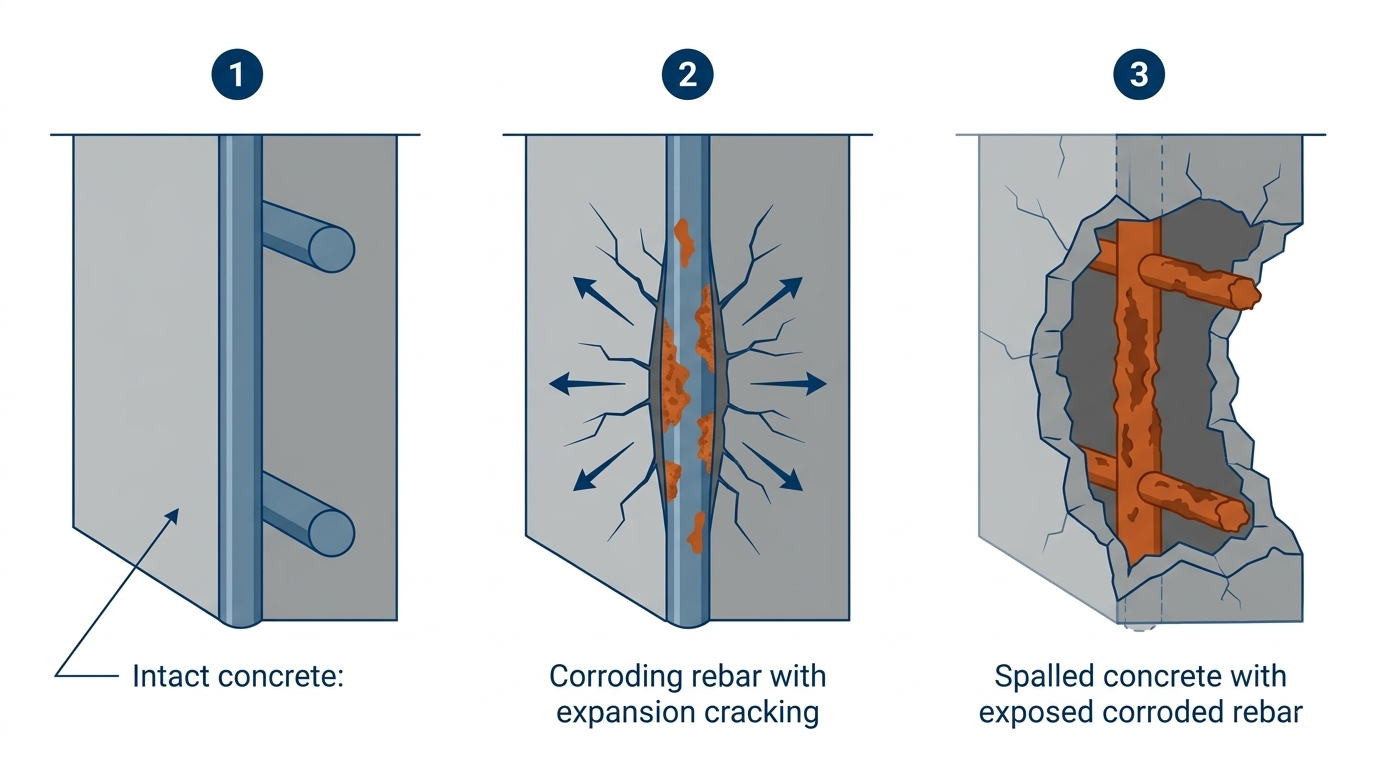
This is a critical warning sign. In underground structures with active water ingress, rust staining almost always confirms that water has reached the steel reinforcement and corrosion is underway — a finding supported by structural imaging research in Materials and Structures (Angst et al., 2024), which used advanced bimodal X-ray and neutron microtomography to visualise how corrosion initiates and spreads at the steel-concrete interface.
When steel corrodes, it expands to several times its original volume. This expansion creates internal pressure that cracks and eventually spalls (breaks away) the concrete cover protecting the steel. Once this process begins:
Corrosion is not reversible. Once started, it can only be stopped by removing the water source and treating the affected reinforcement. Every month of delay means:
Active water ingress manifests as:
Active water movement indicates that hydrostatic pressure is sufficient to overcome any remaining waterproofing. This is a definitive sign that your structure requires intervention — the problem will not resolve without treatment.
Active leaks often occur at:
All active water ingress is considered significant. However, urgency varies:
Yes. Modern injection waterproofing can seal active leaks — even those with running water — from inside the structure. Specialist injection gels are designed to work against water flow and cure even in saturated conditions. Choosing the right repair method for your situation is important — our guide to injection waterproofing vs tanking explains the options clearly and when each is appropriate.
Widening cracks indicate ongoing structural movement. This could be caused by:
Importantly, widening cracks allow progressively more water ingress, which accelerates deterioration — creating a damaging feedback loop.
Simple monitoring methods:
If cracks are widening more than 0.5mm over 6 months, or if new cracks are appearing, structural investigation is recommended. The Concrete Society Technical Report 22 provides industry-standard guidance on crack classification and assessment.
At a premium residential development in Belgrade — King's Court — the basement was experiencing persistent damp patches and early rust staining across the retaining walls. Previous waterproofing attempts had failed, and the high-value basement storage was becoming unusable.
Our assessment identified hydrostatic pressure forcing water through construction joints and settlement cracks. Using high-pressure injection at up to 120 bar with EURAS Gel Type B, we sealed all active and latent leak paths without any demolition work. The basement has remained completely dry, protecting both the structure and the property value.
EURAS Technology specialises in diagnosing and permanently resolving water ingress in underground structures. With 25+ years of experience across dams, tunnels, car parks, and commercial basements across Europe, the Middle East, and North Africa, we've seen every type of water ingress problem. If your facility is showing these warning signs, talk to our specialists before the damage escalates.
Act quickly — rust staining indicates active corrosion that accelerates over time. Arrange a specialist assessment within 1–2 months to prevent significant structural damage.
Avoid it. Paint may temporarily hide the problem, but water continues moving through the structure — causing hidden corrosion and eventually blistering the paint. Address the water source first.
Hairline cracks (What's the difference between structural cracks and shrinkage cracks?
Shrinkage cracks occur as concrete cures and are typically hairline, random in pattern, and stable. Structural cracks are often wider, may follow stress lines, and can indicate ongoing movement. A specialist can distinguish between them.
Yes. Modern injection waterproofing creates permanent seals that last the lifetime of the structure when properly applied. The key is addressing the active water pathways, not just treating the surface.
Costs vary significantly by structure size and severity. For commercial underground structures, targeted resin injection to seal active leak points typically ranges from £3,000–£15,000 (MPS Concrete Solutions, 2026). Structures with extensive reinforcement corrosion and spalling can require combined structural repair and waterproofing at £50,000–£250,000+. Early intervention is always significantly more economical.
If your underground structure is showing any of these warning signs, don't wait for the damage to escalate. Request a no-obligation site survey — our team will assess the severity, identify the water source, and recommend a permanent solution.
Request a site survey | Learn about our leak detection service