+1 (954) 787-2570

Email: hello@eurastechnology.com


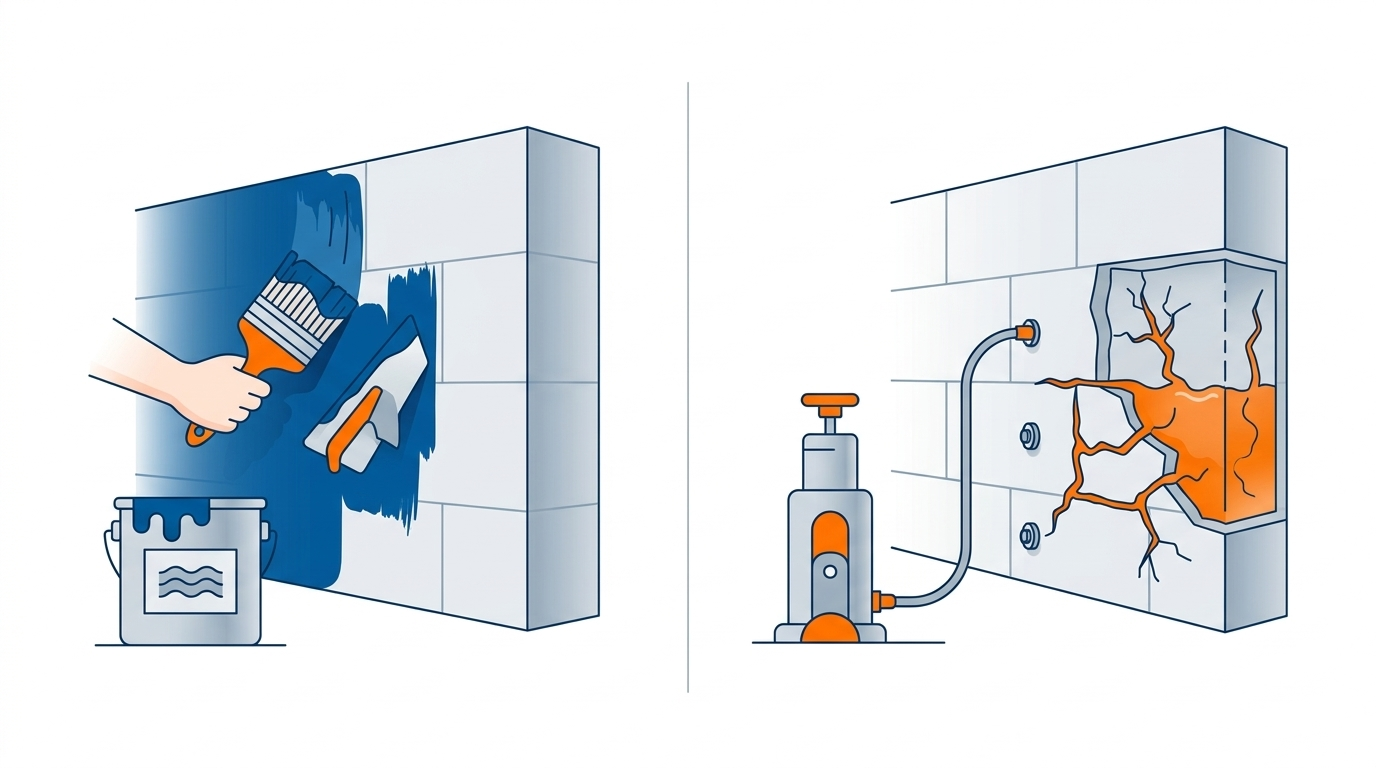
Injection waterproofing seals water ingress by injecting specialist materials directly into cracks and joints from inside the structure. Tanking creates a continuous waterproof barrier applied to wall and floor surfaces. Both methods can work, but they solve different problems — and choosing the wrong one often leads to expensive failures.
If you're dealing with active leaks in an occupied basement, car park, or underground facility, understanding this distinction is critical. This guide explains how each method works, when each is appropriate, and how to make the right choice for your situation — whether you manage a commercial basement, an underground car park, or critical infrastructure that cannot be taken out of service.
Key takeaways:
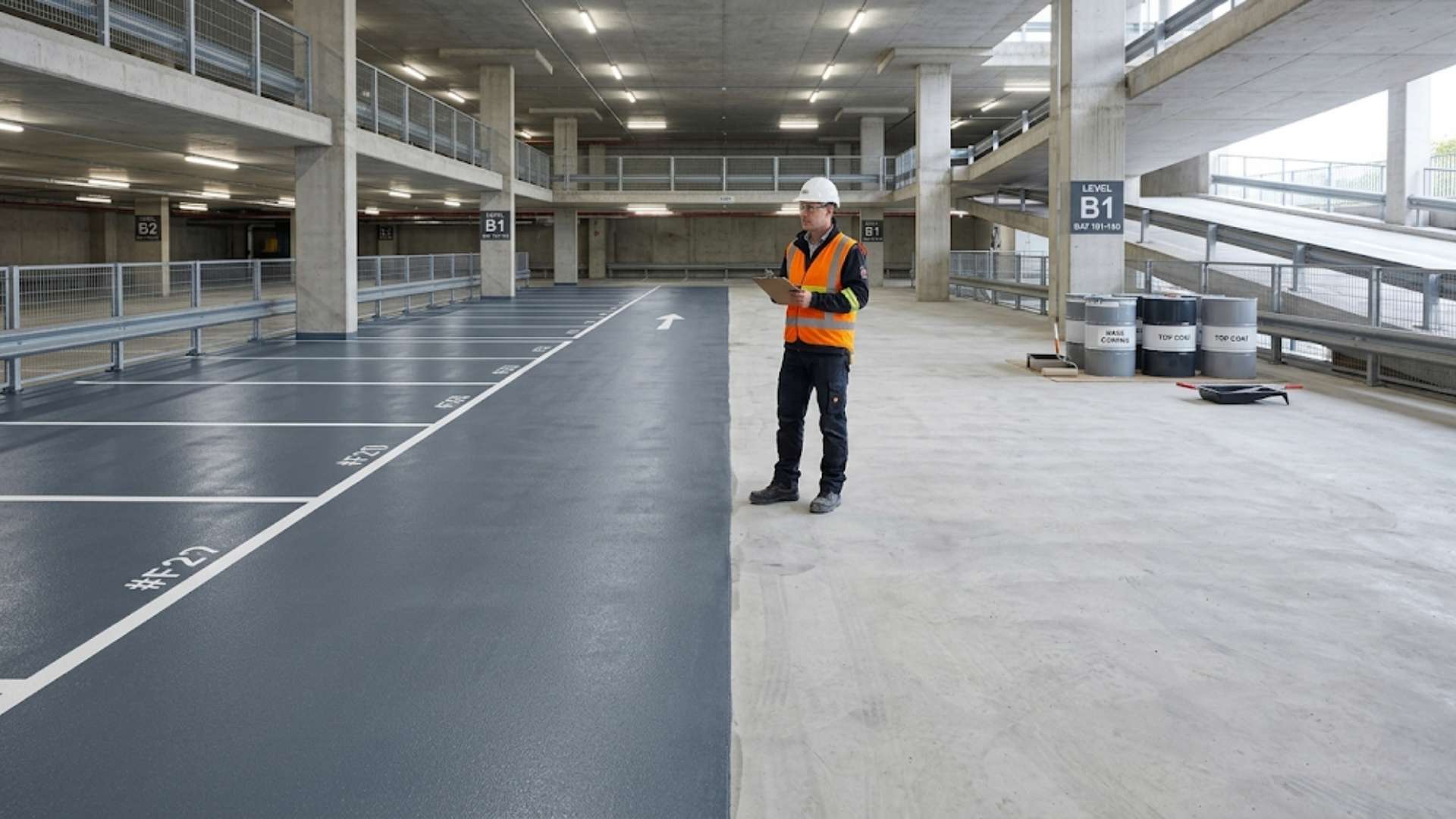
Tanking is the application of a continuous waterproof membrane or coating to the internal or external surfaces of a below-ground structure. The goal is to create an unbroken barrier that prevents water from reaching the interior.
If you're not sure what type of water ingress you're dealing with, our guide to what causes water ingress in underground structures explains the main entry pathways and helps you understand whether you have a discrete leak or a broader moisture issue.
Cementitious tanking (slurry coats):
Sheet membrane tanking:
Liquid-applied membranes:
The BS 8102:2022 code of practice classifies waterproofing systems into three types: Type A (barrier), Type B (structurally integral), and Type C (drained). Tanking typically falls under Type A.
Tanking is most effective when:
Cannot be applied to wet surfaces: Most tanking products require dry or near-dry substrates. If water is actively entering the structure, tanking cannot be applied until the water source is stopped — creating a catch-22.
Requires full surface preparation: Surfaces must be clean, sound, and free of contamination. This often means removing existing finishes, cleaning thoroughly, and repairing defects before tanking can begin.
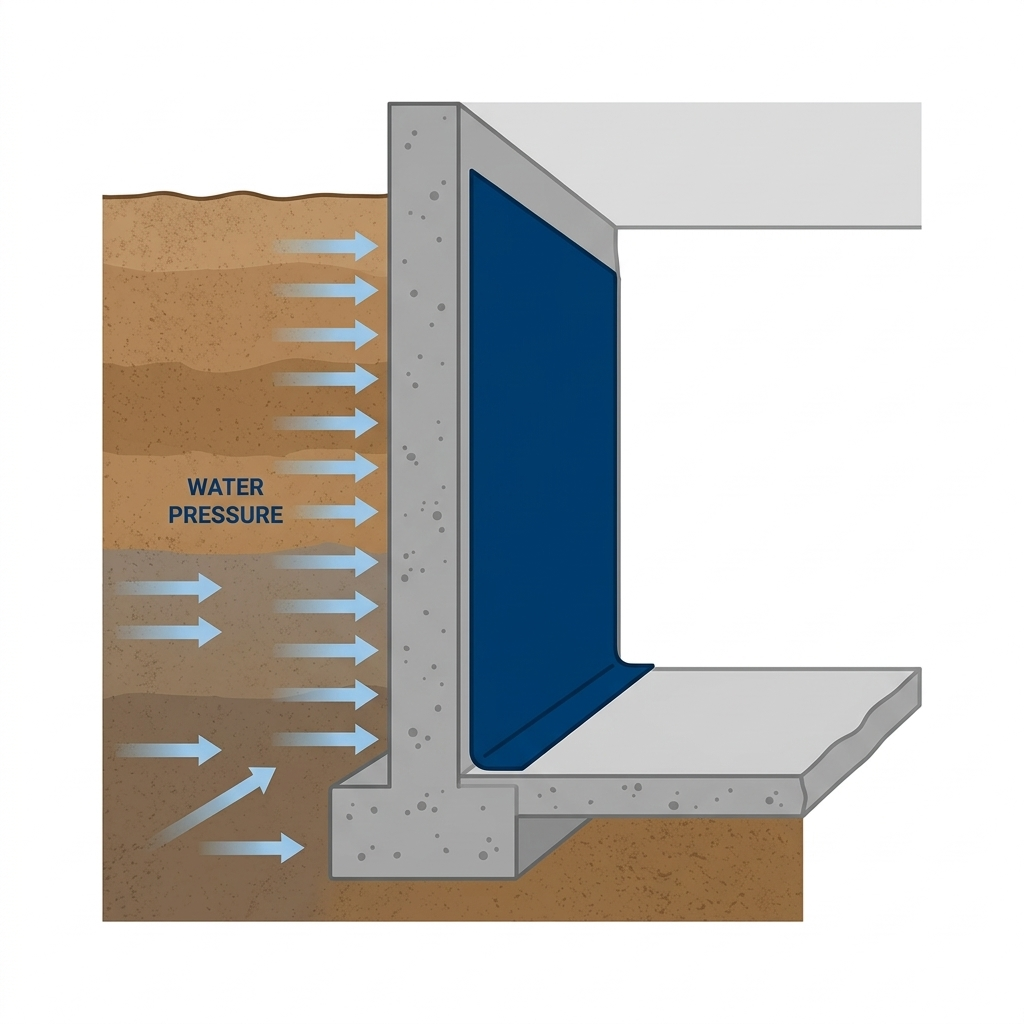
Vulnerable to hydrostatic pressure: Internal tanking (applied to the inside of walls) must resist water pressure trying to push it off the wall. As engineering guidance from WJE explains, hydrostatic pressure requires proper detailing and redundancies — and tanking alone often cannot withstand sustained pressure. Under high hydrostatic pressure, tanking can debond, blister, or fail. The BRE guidance on treating dampness in basements provides further context on when tanking systems are appropriate and how they perform in practice.
Difficult to repair: If tanking fails at one point, water can track behind the membrane and emerge elsewhere. Identifying and repairing the actual failure point is challenging.
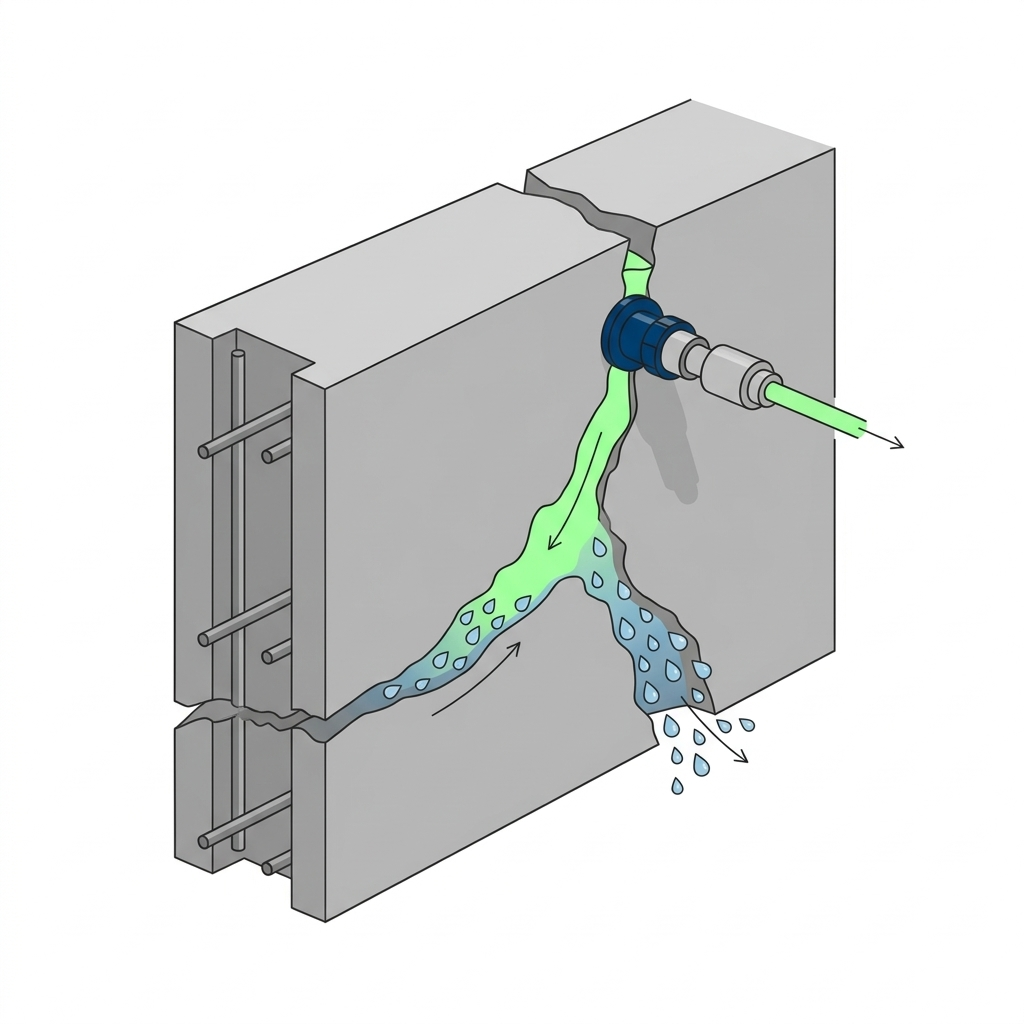
Injection waterproofing seals water ingress by injecting specialist resins or gels directly into the pathways water is using to enter the structure — typically cracks, construction joints, and voids.
For a full assessment of what's causing the water ingress in your structure before committing to a repair approach, our non-destructive testing service uses moisture mapping and half-cell potential surveys to pinpoint water pathways precisely.
Polyurethane resins:
Acrylic gels:
Mineral-based gels (e.g., EURAS Gel):
Epoxy resins:
Injection is most effective when:
Not a surface treatment: Injection seals specific pathways, not entire surfaces. If water can find alternative routes, new leaks may appear elsewhere (though this is uncommon when work is done comprehensively).
Requires specialist expertise: Effective injection depends on correct material selection, pressure calibration, and understanding of water flow patterns. Poor execution leads to poor results.
Less effective for porous concrete: If water is entering through the general concrete matrix rather than discrete cracks, injection may need to be combined with other methods (curtain injection or surface treatments).
For a real-world illustration of these principles applied to a car park context, see our detailed guide to water ingress in underground car parks.
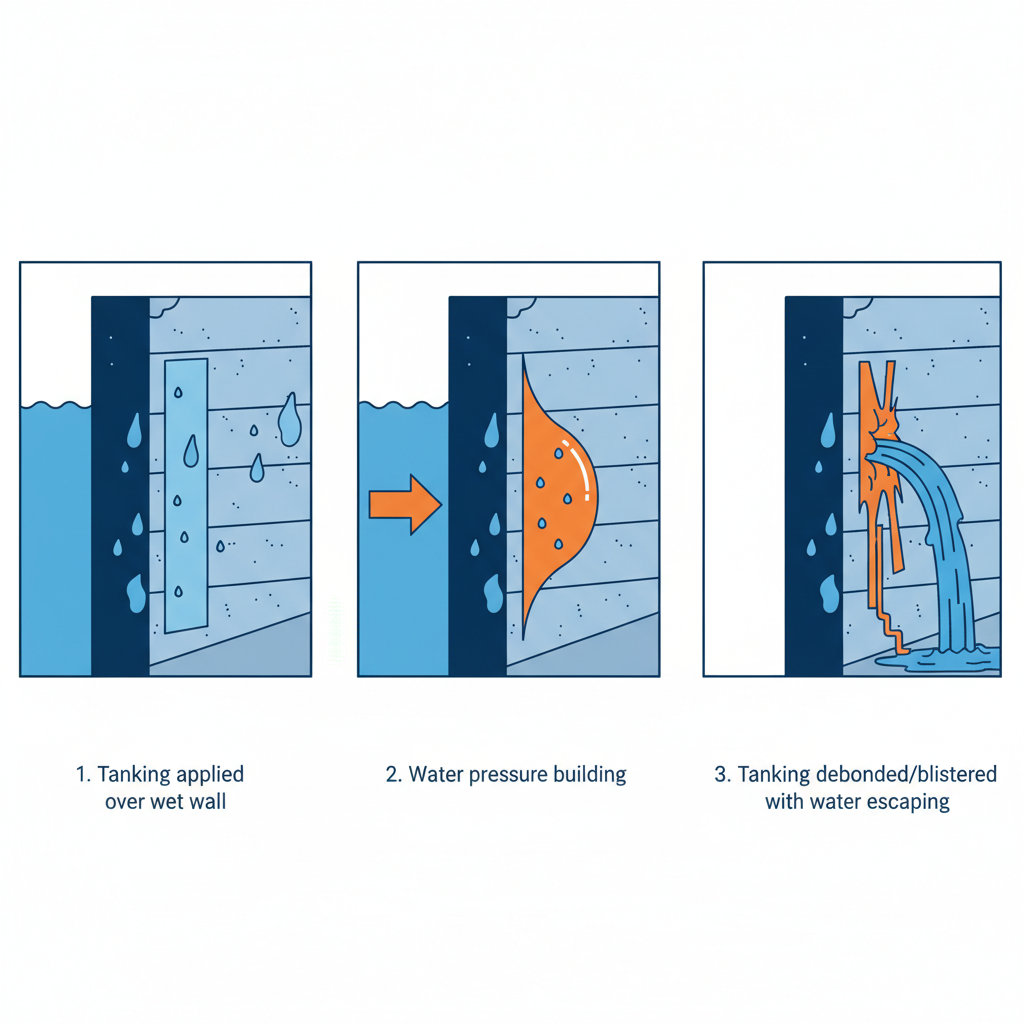
A common mistake is attempting to tank a structure that has active water ingress. This approach typically fails because:
1. Tanking cannot bond to wet surfaces Most cementitious and liquid-applied tanking products require moisture content below specific thresholds (often 2. Water pressure builds behind the tanking When you seal the interior surface, hydrostatic pressure doesn't disappear — it concentrates behind the tanking layer. This pressure will eventually:
3. Hidden damage continues Tanking over active water ingress hides the problem while damage continues behind the membrane. Reinforcement corrosion, concrete deterioration, and freeze-thaw damage proceed unseen.
For structures with active leaks:
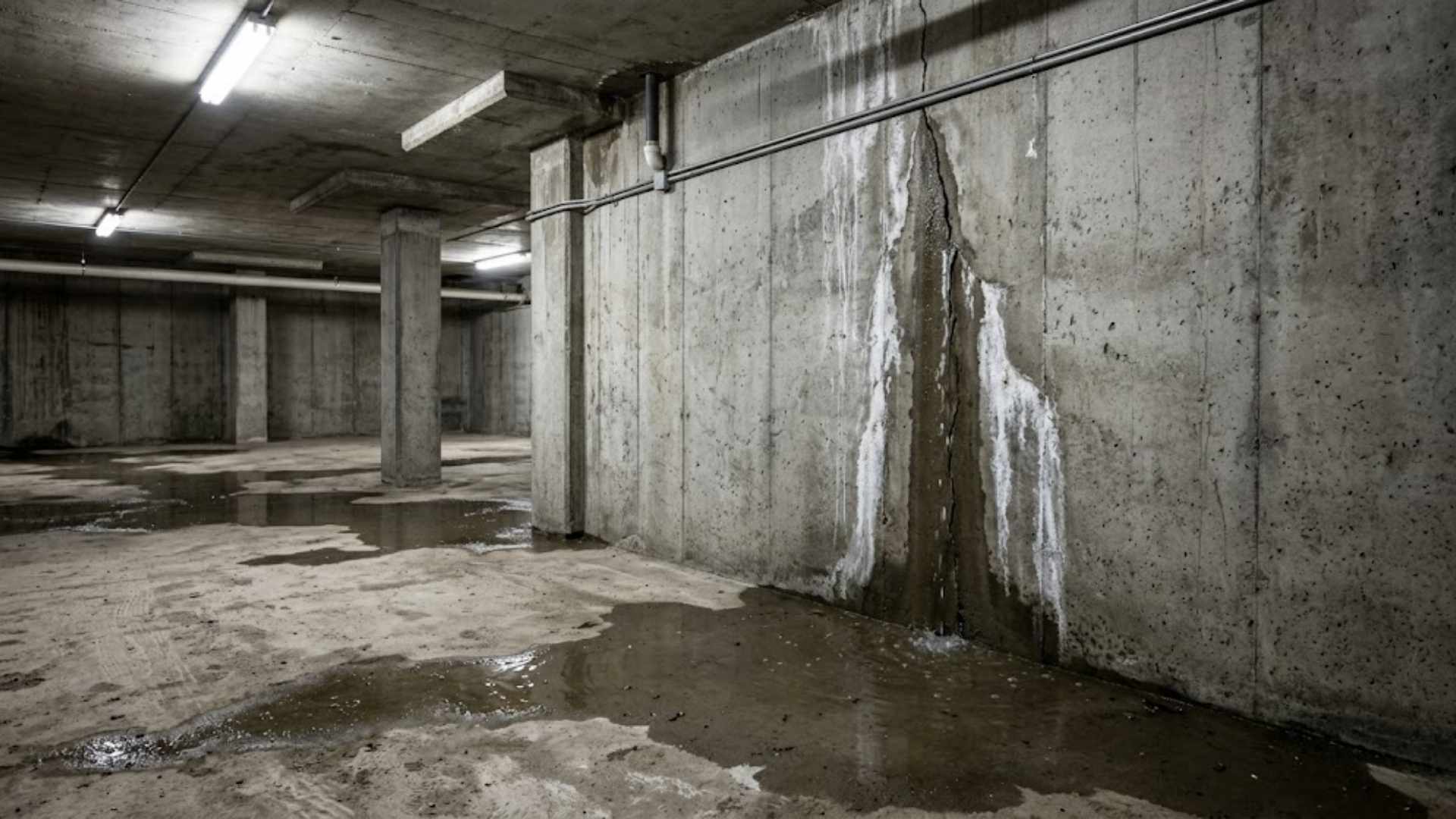
At the Marina Limassol underground car park in Cyprus, we saw a textbook example of why tanking fails on structures with active water ingress. The prestigious marina development's underground parking had widespread leakage due to hydrostatic pressure from groundwater and sea infiltration. Existing waterproofing membranes had failed, and conventional repair attempts — including cement grouting and membrane patching — proved ineffective at achieving permanent results.
The solution required injection waterproofing on a large scale. Our team injected over 12,000 kg of EURAS Gel Type B to fill interconnected crack networks and voids throughout the basement walls and slabs. Unlike tanking, the injection worked directly against the active water flow, sealing pathways that tanking could never have addressed. The car park has remained completely dry, with the client endorsing the technology for future maintenance contracts.
EURAS Technology has been resolving waterproofing failures for 25+ years across dams, tunnels, underground car parks, and industrial facilities in Europe, the Middle East, and North Africa. We've seen tanking fail under hydrostatic pressure, and we've successfully remediated structures that others couldn't. If your structure has active leaks — whether tanking has failed or water is entering through other pathways — our specialists can assess the right solution.
Cost comparisons depend heavily on specific circumstances, but general patterns exist:
Indicative UK commercial market ranges. Tanking costs for a small basement reflect a cementitious (Type A) system; cavity drain (Type C) systems cost more — typically £90–£160/m² for a commercial basement floor (MPS Concrete Solutions, 2025). Injection costs reflect a targeted programme for isolated leak points. All figures exclude structural repairs, enabling works, and enabling access. A site survey is required for an accurate estimate. Sources: MPS Concrete Solutions — Waterproofing Costs UK 2025; Commercial Basement Waterproofing Cost UK 2026.
Not reliably. Tanking products require dry or near-dry surfaces for proper adhesion. Applying tanking over active moisture typically leads to debonding, blistering, or failure.
Yes, when properly executed with appropriate materials. Mineral-based hydrophilic gels like EURAS Gel are designed for permanent application, maintaining flexibility and integrity indefinitely. Some polyurethane foams may degrade or lose elasticity over time under repeated wetting and drying cycles — a well-documented limitation compared to mineral-based gel systems, which remain permanently elastic.
If initial injection doesn't fully resolve water ingress, additional injection can be applied — this is straightforward and relatively inexpensive. In contrast, failed tanking typically requires complete removal and reapplication.
Tanking products are available to consumers, but achieving a watertight result requires meticulous surface preparation and application. Injection waterproofing requires specialist equipment and expertise — it is not a DIY method.
Both methods can be guaranteed when installed by specialist contractors. Injection waterproofing guarantees typically cover treated areas against recurrence. Tanking guarantees vary by system and installer.
Not necessarily. Many successful projects use injection to stop active leaks, followed by tanking or surface treatments to provide secondary protection or a finished surface.
If you're deciding between injection waterproofing and tanking — or you've had tanking fail and need a reliable solution — request a no-obligation site survey. Our team will assess your structure, identify the water pathways, and recommend the right approach for your specific situation.
Request a site survey | Learn about our basement waterproofing service