+1 (954) 787-2570

Email: hello@eurastechnology.com


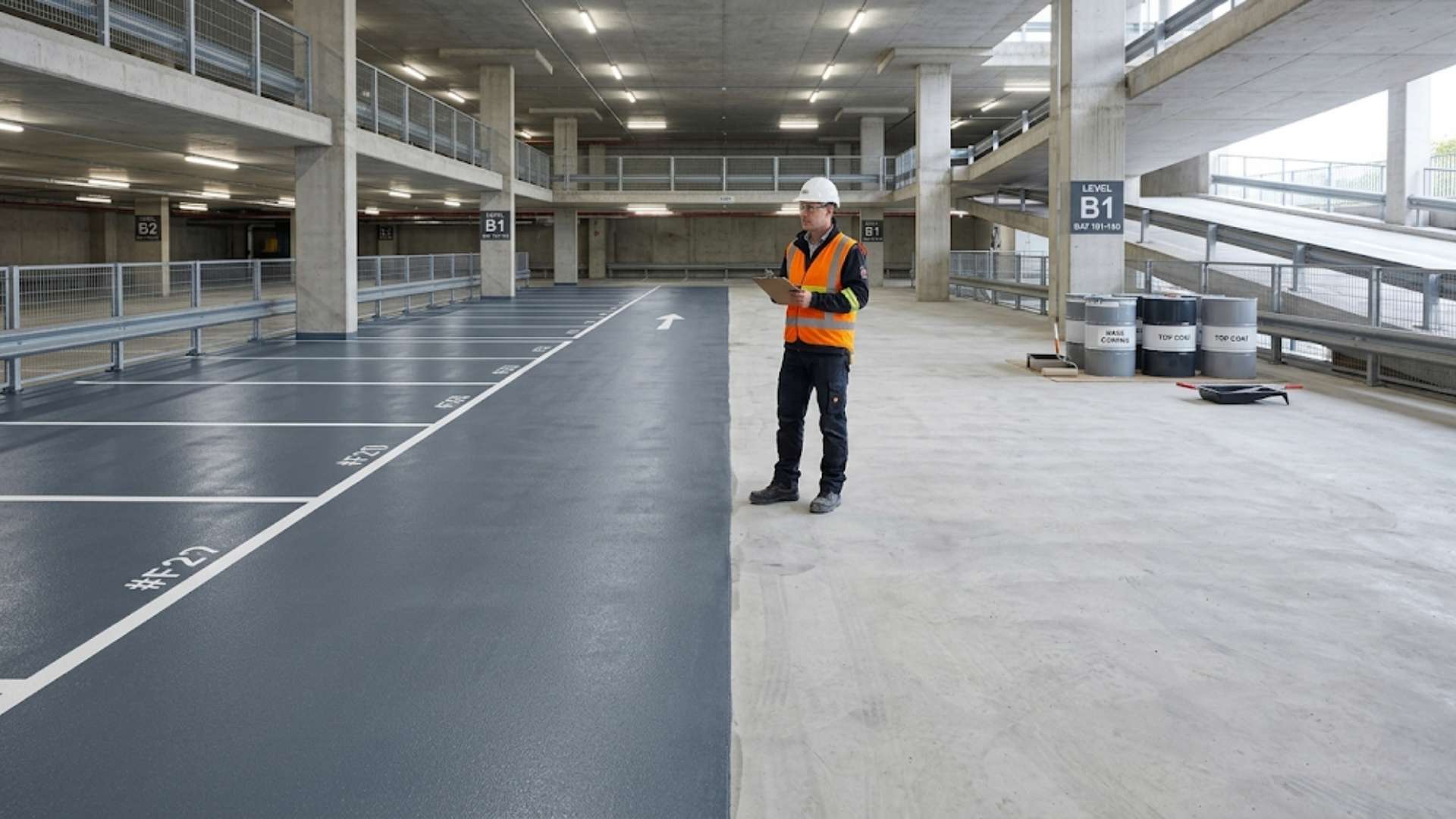

Specifying waterproofing for a multi-storey car park deck requires balancing cure time, durability, chemical resistance, and cost against the operational constraints of the facility. The UK market is dominated by liquid-applied systems — primarily PMMA (polymethyl methacrylate) and polyurethane (PU) coatings — with polyurea spray systems and injection waterproofing addressing specific scenarios.
Choosing the wrong system means either over-specifying (paying for performance you don't need) or under-specifying (facing premature failure and costly remediation). For engineers specifying new-build protection or refurbishment of existing car parks, understanding the technical differences is essential for getting the specification right.
This guide compares the four main car park deck waterproofing approaches, explains when each is appropriate, and provides the data specifiers need to make informed decisions.
The choice depends on four factors: operational constraints (can the car park close?), budget, existing condition (new build vs retrofit), and environmental exposure (coastal, heavy de-icing salt use).
What specifiers must consider:
Multi-storey car parks face a unique and aggressive exposure environment. Vehicles bring chloride-contaminated water from winter road salt directly onto the deck surface. This contaminated water penetrates through cracks, joints, and porous concrete to reach the reinforcing steel.
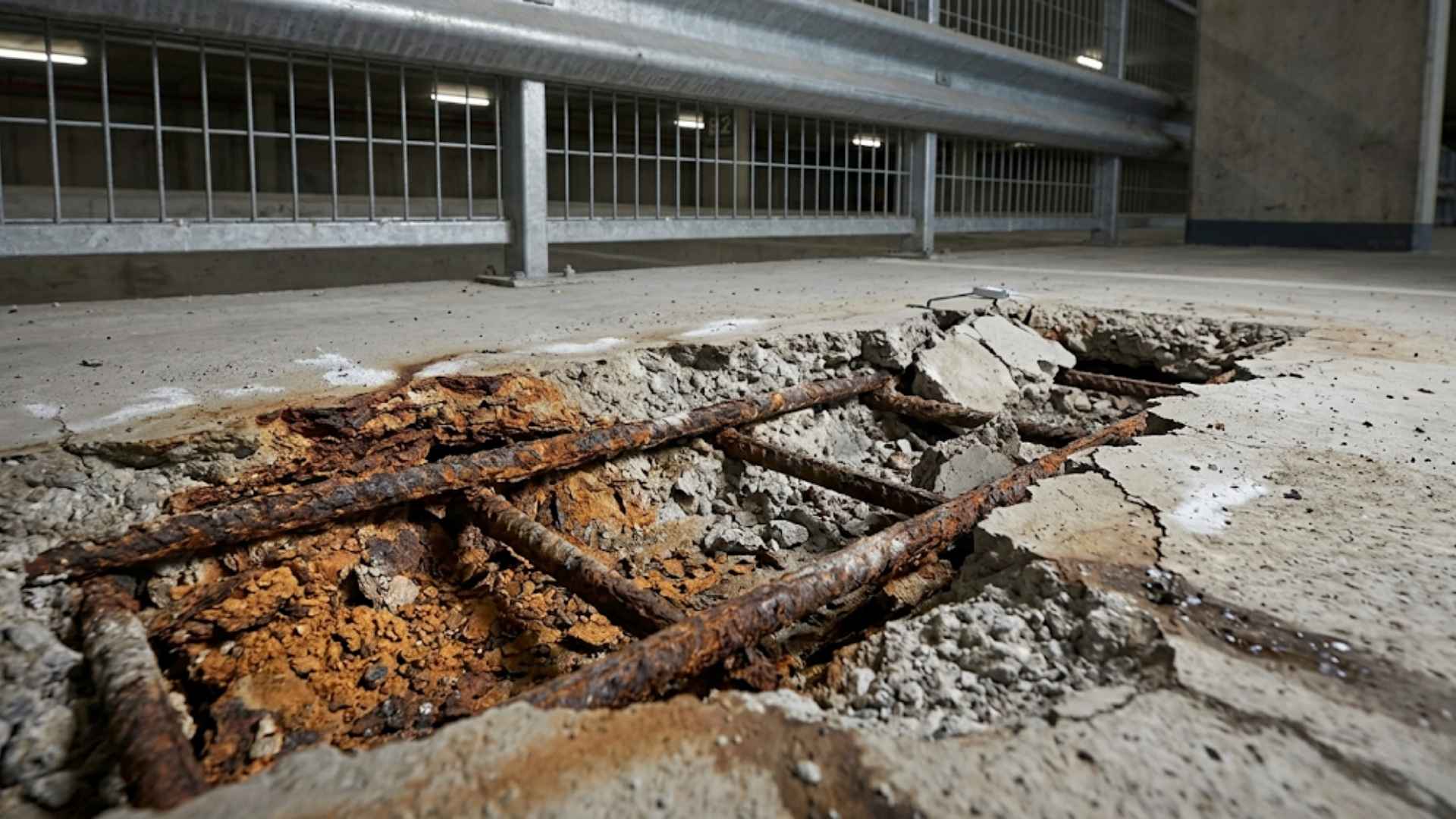
Research consistently identifies chloride-induced corrosion as the dominant deterioration mechanism in UK car parks. Once chloride concentration at the reinforcement exceeds the threshold — typically around 0.4% by weight of cement according to RILEM and most international standards — corrosion initiates and progresses rapidly. The consequences include:
Once chloride-induced corrosion initiates, the consequences are progressive and expensive — see what happens to reinforced concrete when water ingress is left untreated for the full deterioration timeline.
The waterproofing specification objective is clear: prevent chloride-laden water from reaching the reinforcement.
Unlike basements or tunnels, car park decks must withstand continuous vehicle traffic. Waterproofing systems must provide:
These demands rule out many waterproofing methods suitable for static applications.
PMMA is a liquid-applied, fast-curing resin system that creates a seamless waterproof membrane on the deck surface. The system typically comprises:
The key differentiator is cure speed: PMMA systems cure through chemical reaction rather than evaporation, enabling rapid hardening even in cold, damp conditions.
Cure time:
Temperature range:
Chemical resistance:
Crack-bridging:
PMMA is typically specified for:
Limitations:

PMMA systems have become the default specification for refurbishment of operational car parks in the UK, driven by the value specifiers place on fast cure and minimal disruption. For new-build and projects with full closure available, polyurethane retains a strong position on cost grounds. The LRWA notes that liquid-applied membranes are "regularly specified on multi-storey car parks to enhance the life expectancy and provide a tough, elastomeric, seamless and decorative finish."
Typical installed cost: £25–£45/m² depending on system complexity and access conditions.
Polyurethane deck coatings are moisture-curing liquid systems that form an elastic, waterproof membrane. Like PMMA, they're applied in multiple layers:
Polyurethane systems cure through reaction with atmospheric moisture — a slower process than PMMA's catalytic cure.
Cure time:
Temperature range:
Chemical resistance:
Crack-bridging:
Polyurethane systems are appropriate for:
Limitations:
Polyurethane systems offer lower upfront cost than PMMA and remain popular for new construction where cure time is not a constraint.
Typical installed cost: £18–£35/m² depending on system specification.
Polyurea is a spray-applied, rapid-curing elastomer that creates a seamless membrane through reactive mixing at the spray gun. The two-component system (isocyanate and amine-terminated resin) reacts instantly on contact, building thickness quickly.
Cure time:
Application:
Crack-bridging:
Polyurea systems suit:
Limitations:
Sika's Sikalastic® OneShot PB-56 is an example of a polyurea system used in UK car park applications, providing approximately 4.0mm applied thickness with crack-bridging tested to DIN EN 1062-7 and surface protection classified to OS 11 / OS F under DIN V 18026.
Injection waterproofing addresses water ingress at its source — through cracks, construction joints, and expansion joints — rather than coating the entire deck surface. High-pressure injection of waterproofing materials (polyurethane resins, mineral gels, or acrylics) seals the pathways water uses to penetrate the structure.
Injection waterproofing is appropriate when:
Existing car parks with localised problems:
Complement to surface systems:
Retrofit with minimal disruption:
Cure/completion time:
What it addresses:
What it doesn't address:
At EURAS Technology, we've completed numerous car park waterproofing projects using injection methods, often in combination with surface treatments or as standalone solutions.
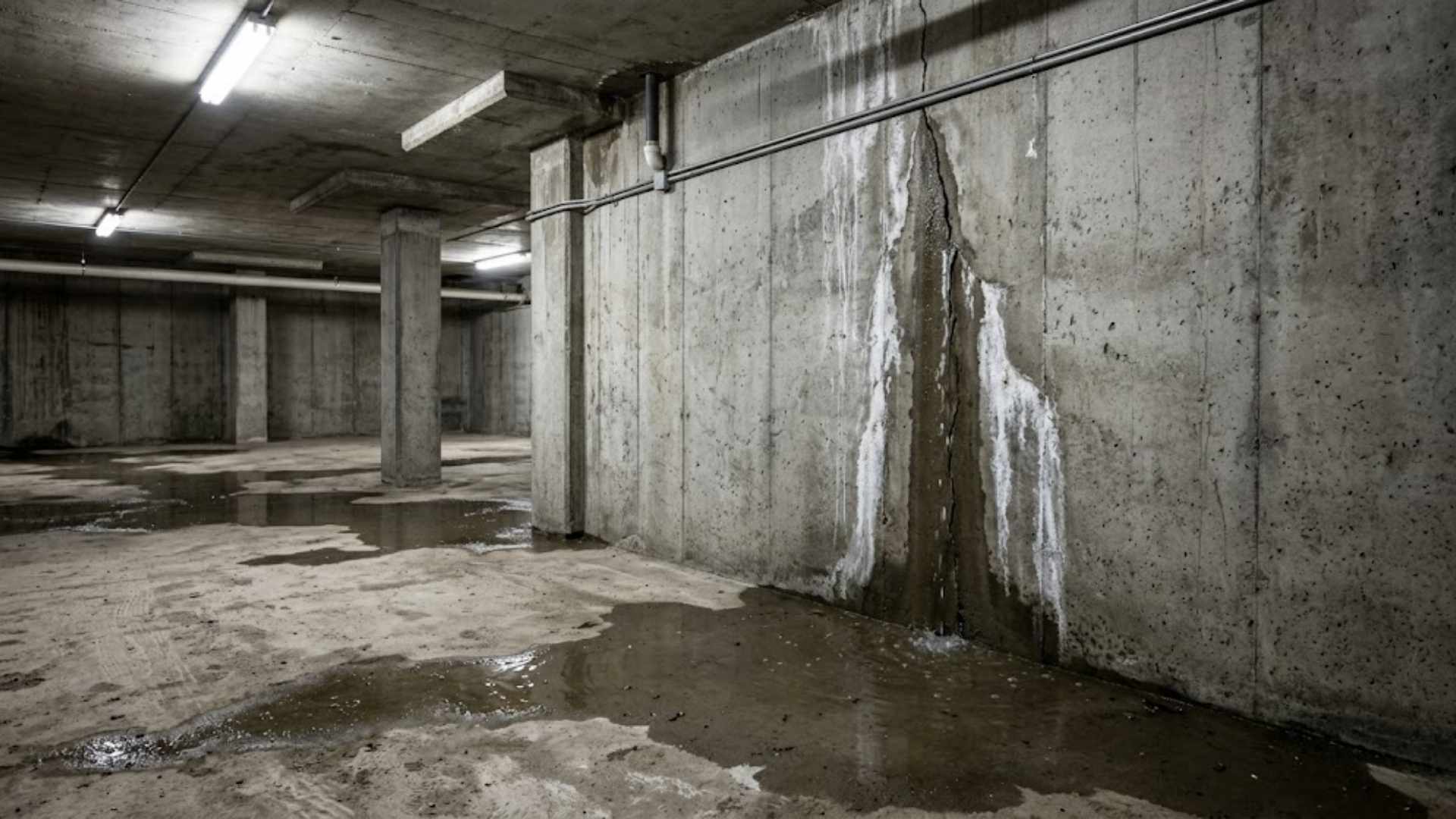
At the New Belgrade underground garage, water ingress through construction joints and cracks was causing standing water on parking surfaces. Our team injected EURAS® Gel Type B at up to 130 bar pressure, sealing all leak paths without closing the facility to users. The mineral gel penetrates crack networks, displaces water, and creates a permanent flexible seal that accommodates ongoing structural movement.
For car parks where the primary issue is water ingress through specific defects rather than general deck surface failure, injection provides a cost-effective, low-disruption alternative to full deck coating.
Scenario A: New-build multi-storey car park
Scenario B: Refurbishment of operational car park, cannot close
Scenario C: Existing car park with leaking construction joints
Scenario D: Large industrial/commercial car park, full closure available
Car park deck coating systems should be specified against the relevant performance standards rather than a single document:
A complete specification references the relevant clauses across these documents and stipulates the OS/crack-bridging class, skid resistance value (SRV per BS EN 13036-4), and wear class required for the deck's traffic category.
Car park waterproofing failures often result from mismatched specification — using the wrong system for the operational context.
At the Marina Limassol underground garage, years of water ingress through cracks and construction joints had caused widespread problems before EURAS was engaged. The project ultimately required over 12,000 kg of mineral gel to seal thousands of leak paths. Had the facility addressed the initial water ingress with targeted injection when it first appeared, the scope would have been substantially smaller.
Conversely, car parks that specify appropriate deck coating systems from the outset — and maintain them — avoid the costly remediation cycle entirely. The choice of PMMA vs PU vs injection depends entirely on the project's operational constraints, existing condition, and budget.
EURAS Technology specialises in injection waterproofing for critical infrastructure — underground car parks, dams, tunnels, and industrial facilities. Our EU-patented mineral gel technology has been protecting concrete structures across Europe for 25+ years. We provide injection waterproofing for car parks where water ingress occurs through cracks, construction joints, or expansion joints. Our mineral gel creates permanent seals that accommodate structural movement, installed without closing the facility. Where deck coating is also required, we partner with specialist coating contractors so the injection and coating elements integrate cleanly into a single specification.
Dealing with water ingress through cracks or construction joints in your car park? Our specialists have solved this exact issue across underground garages from Belgrade to Limassol. Talk to a waterproofing specialist or request a site survey.
Properly applied PMMA systems have a typical service life of 15–25 years depending on traffic intensity and maintenance. Top coats may require renewal at 10–15 years to restore anti-slip properties and surface appearance.
Sometimes. Compatibility testing is essential — not all PU systems adhere to existing coatings. Surface preparation (abrading, priming) is typically required. Consult the coating manufacturer for specific guidance.
PMMA systems typically cost 30–50% more than polyurethane on a £/m² basis. However, this premium is often recovered through reduced operational disruption and faster project completion.
For car parks where the issue is water ingress through specific defects (cracks, joints), injection can be a complete solution. Where the deck surface is also worn or provides inadequate slip resistance, coating addresses these surface performance requirements that injection does not.
Signs include: water staining on soffits below, efflorescence (white deposits), rust staining indicating reinforcement corrosion, spalling concrete, and visible cracks with moisture. A specialist survey identifies the water pathways and recommends appropriate treatment.
Typical specification is 2–4mm total system thickness depending on traffic intensity and system type. The LRWA Code of Practice and BS EN 1504-2 provide guidance on thickness requirements by application and OS classification.
PMMA systems can be applied down to -5°C, making them suitable for winter work. Polyurethane requires 5°C+ and dry conditions, limiting winter application in the UK.
Annual inspection is recommended, with particular attention to expansion joints, areas of heavy traffic wear, and any previously repaired locations. Early identification of coating damage allows targeted repair before water ingress reaches reinforcement.
Car park deck waterproofing specification is fundamentally about matching the system to the project's operational constraints, existing condition, and budget. There is no universally "best" system — only the right system for your specific circumstances.
For operational car parks where closure is impossible, PMMA's fast cure justifies its premium cost. For new builds with construction programme flexibility, polyurethane offers value. For existing car parks with water ingress through specific defects, injection waterproofing provides targeted resolution without full deck coating.
The right mechanism for the project — coating, injection, or both — is what protects the structure long-term.
Next step: If you're specifying car park waterproofing or have an existing car park with water ingress problems, contact us for technical guidance. We can assess whether injection addresses your specific issues or whether combined solutions are required.