+1 (954) 787-2570

Email: hello@eurastechnology.com


When procuring specialist injection waterproofing for infrastructure projects, verifying relevant experience is the most important step in contractor evaluation. A contractor with excellent basement waterproofing credentials may lack the specific expertise required for dam galleries, live tunnels, or high-pressure industrial environments. The wrong contractor on a complex infrastructure project creates programme risk, cost overruns, and potential liability exposure.
This guide sets out what "relevant infrastructure experience" means, how to assess it during procurement, and what evidence contractors should provide. For procurement professionals, engineers, and main contractors subcontracting specialist waterproofing work, these verification steps protect your project and your organisation.
Relevant infrastructure experience is assessed across five dimensions:
A contractor may score highly on one dimension but poorly on another. A basement waterproofing specialist with excellent residential references may lack tunnel or dam experience. An international contractor with major infrastructure projects abroad may lack UK-specific knowledge. Assess all five dimensions against your specific project requirements.
Infrastructure waterproofing differs fundamentally from residential or commercial building waterproofing:
Pressure conditions: Underground car parks typically face groundwater pressure of 1–3 bar. Dam galleries can exceed 10 bar. Hydropower penstocks may reach 20+ bar. A contractor experienced with low-pressure basement work may lack equipment, materials, or expertise for high-pressure infrastructure.
Access constraints: Residential basements offer straightforward access. Tunnel work requires night-time rail possessions. Dam work may involve rope access or confined space entry. Infrastructure contractors must plan for and work within these constraints.
Operational requirements: Commercial basements can often be vacated for repair. Critical infrastructure — power plants, water treatment facilities, operational tunnels — cannot shut down. Contractors must execute repairs while maintaining operations.
Consequences of failure: A leaking basement causes inconvenience. A failed dam repair can cause catastrophic flooding. A tunnel leak compromises rail safety. Infrastructure waterproofing carries higher stakes.
Engaging an under-qualified contractor creates multiple risks:
Proper experience verification at procurement stage prevents these outcomes.
Has the contractor completed projects on your structure type? Structure-specific experience matters because each type has distinct characteristics:
Request a project list filtered by structure type. For your project type, ask for:
A contractor claiming "extensive dam experience" should be able to provide specific dam project references. If they cannot, their experience is claimed rather than demonstrated.
Has the contractor delivered projects of comparable scale and scope? A contractor experienced with 50m² basement repairs may struggle with a 5,000m² underground car park. Conversely, a contractor focused on major infrastructure may not cost-effectively deliver small residential projects.
For major projects, request:
At an underground garage in Marina Limassol, EURAS deployed over 12,000 kg of mineral gel across thousands of injection points. This scale of work requires specific logistics, quality control, and project management capability that smaller contractors may lack.
Has the contractor handled comparable technical complexity? Complexity factors include:
Pressure conditions:
Water conditions:
Access constraints:
Ask for project references that match your complexity profile:
A contractor claiming high-pressure capability should have specific evidence. At the Kissir Dam in Algeria, EURAS completed injection at pressures up to 200 bar — this extreme capability requires specialised equipment and training that not all contractors possess.
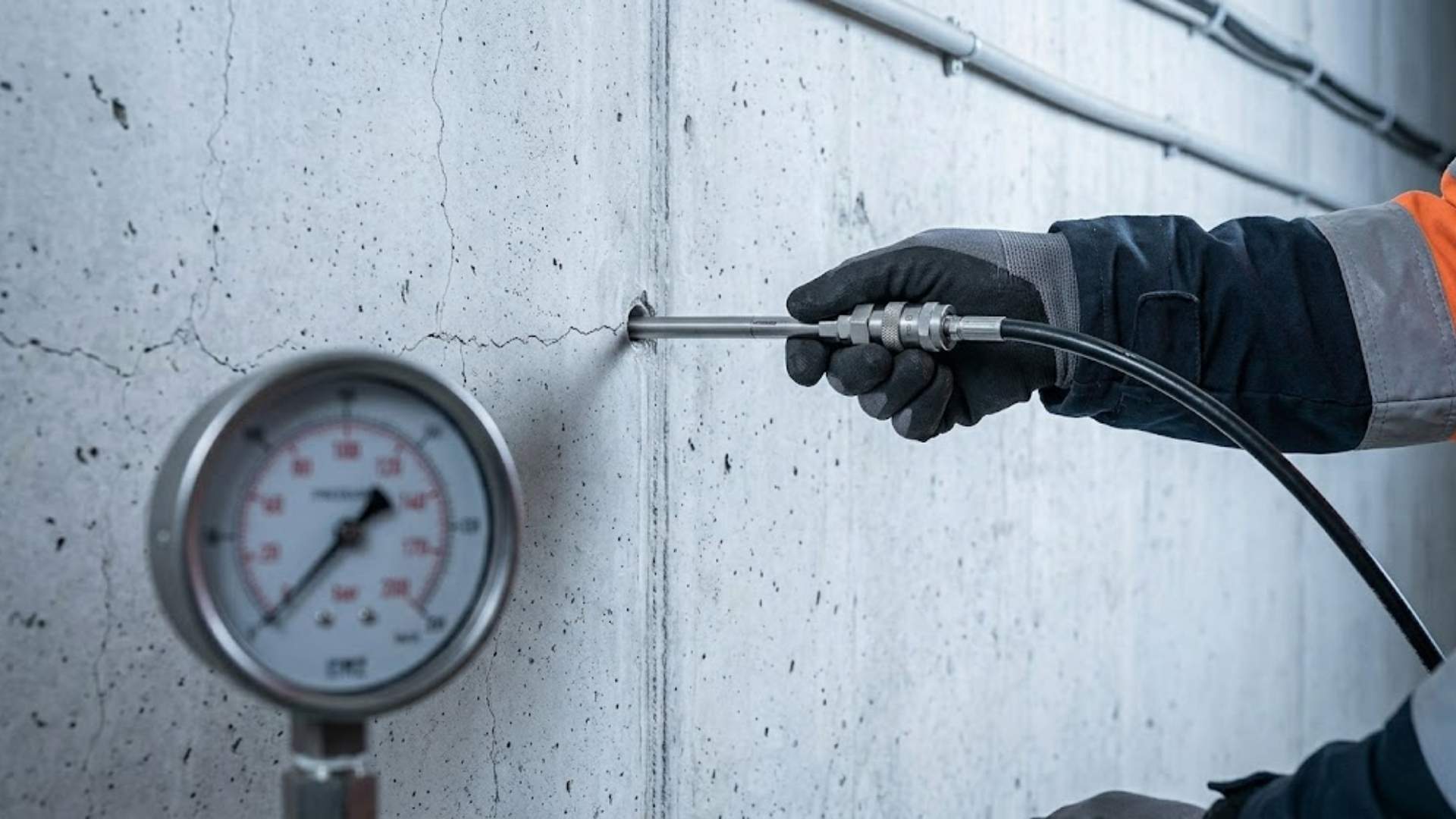
Has the contractor worked in live operational environments? Many infrastructure assets cannot shut down for repair:
Working in operational environments requires:
Ask specifically:
At the HE Đerdap 1 hydroelectric plant, EURAS sealed the S2–S3 expansion joint without interrupting power generation. This required coordination with plant operations, working within operational constraints, and completing the work while the facility continued producing electricity.
Has the contractor operated in comparable environmental conditions?
Environmental factors:
Geographic factors:
For projects with specific environmental challenges:
At Melchsee-Frutt in the Swiss Alps, EURAS worked in high-altitude conditions with freeze-thaw cycling and seasonal access constraints. This Alpine infrastructure experience is directly relevant to similar UK mountain or exposed locations.
Project lists and capability statements are claims. References verify them. A contractor who cannot provide verifiable references for claimed experience should be treated with caution.
For each relevant reference project, request:
When contacting references, ask:
At EURAS Technology, we regularly participate in pre-qualification for major infrastructure projects. Clients who conduct thorough experience verification get better outcomes.
A recent dam project in North Africa required:
The thorough pre-qualification gave the client confidence in award. The project completed successfully, sealing all active leaks without lowering reservoir levels.
By contrast, projects where experience verification is weak often encounter mid-project challenges: equipment limitations, unforeseen complexity, and ultimately delays and cost overruns.
EURAS Technology specialises in injection waterproofing for critical infrastructure — dams, tunnels, underground car parks, and industrial facilities. Our EU-patented mineral gel technology has been protecting concrete structures across Europe, the Middle East, and North Africa for 25+ years. Our project portfolio includes hydroelectric dams (up to 200 bar injection pressure), railway tunnels, underground car parks, power plants, and water treatment facilities. We can provide detailed project references with client contacts for any infrastructure type on request.
If you're evaluating contractors for an infrastructure waterproofing project,contact us for our project references, capability documentation, and accreditation evidence. We're confident our track record demonstrates the experience your project requires.
For formal procurement, create a scoring matrix across the five dimensions:
Score each contractor 0–4 (0 = no relevant experience; 4 = extensive directly relevant experience). Weight by importance to your project. The result provides objective comparison.
For critical projects, set minimum requirements:
Contractors failing pass/fail requirements should not progress regardless of other strengths.

Request at least 3 relevant projects for the structure type and complexity of your project. For major infrastructure, 5+ references provide stronger assurance.
Yes, but with consideration. International experience demonstrates capability. However, verify the contractor also has UK knowledge — standards, regulations, and supply chain. Ask for at least one UK reference if available.
Staff experience can partially substitute for company track record. Request CVs for key personnel with their individual project histories. Verify through references that named individuals were significantly involved (not just present).
Prioritise projects from the last 5 years. Older references may reflect outdated methods, different personnel, or changed company capability. Recent references demonstrate current competence.
For major contracts, site visits to completed projects provide valuable verification. You can observe the quality of work and speak directly with end users. Contractors confident in their work will facilitate visits.
If your project is unusual, assess transferable experience. A contractor with extensive dam experience likely has relevant skills for reservoir work even without specific reservoir references. Document the assessment rationale.
Prepare a structured reference questionnaire (same questions for all references). Schedule 15-minute calls. Document responses systematically. Inconsistencies between contractor claims and reference feedback are significant.
Ask whether the contractor self-delivered or subcontracted. If critical work was subcontracted, verify those subcontractors will be used on your project. Experience through subcontractors is less reliable than self-delivery.
Assessing contractor infrastructure experience is the single most important step in specialist waterproofing procurement. Accreditations confirm qualifications; experience verification confirms capability.
The process is straightforward: define your project requirements across the five dimensions (structure type, scale, complexity, operational conditions, environmental factors), request specific project references that match those requirements, and verify through client contact that the claimed experience is real and the outcomes were successful.
Contractors with genuine infrastructure experience welcome this verification — it differentiates them from less qualified competitors. Contractors who cannot provide verifiable references for claimed experience should not be awarded critical infrastructure work.
Next step: If you're procuring specialist injection waterproofing for infrastructure, contact us for our detailed project references, capability documentation, and client contacts. Our experience across dams, tunnels, car parks, and industrial facilities is documented and verifiable.