+1 (954) 787-2570

Email: hello@eurastechnology.com


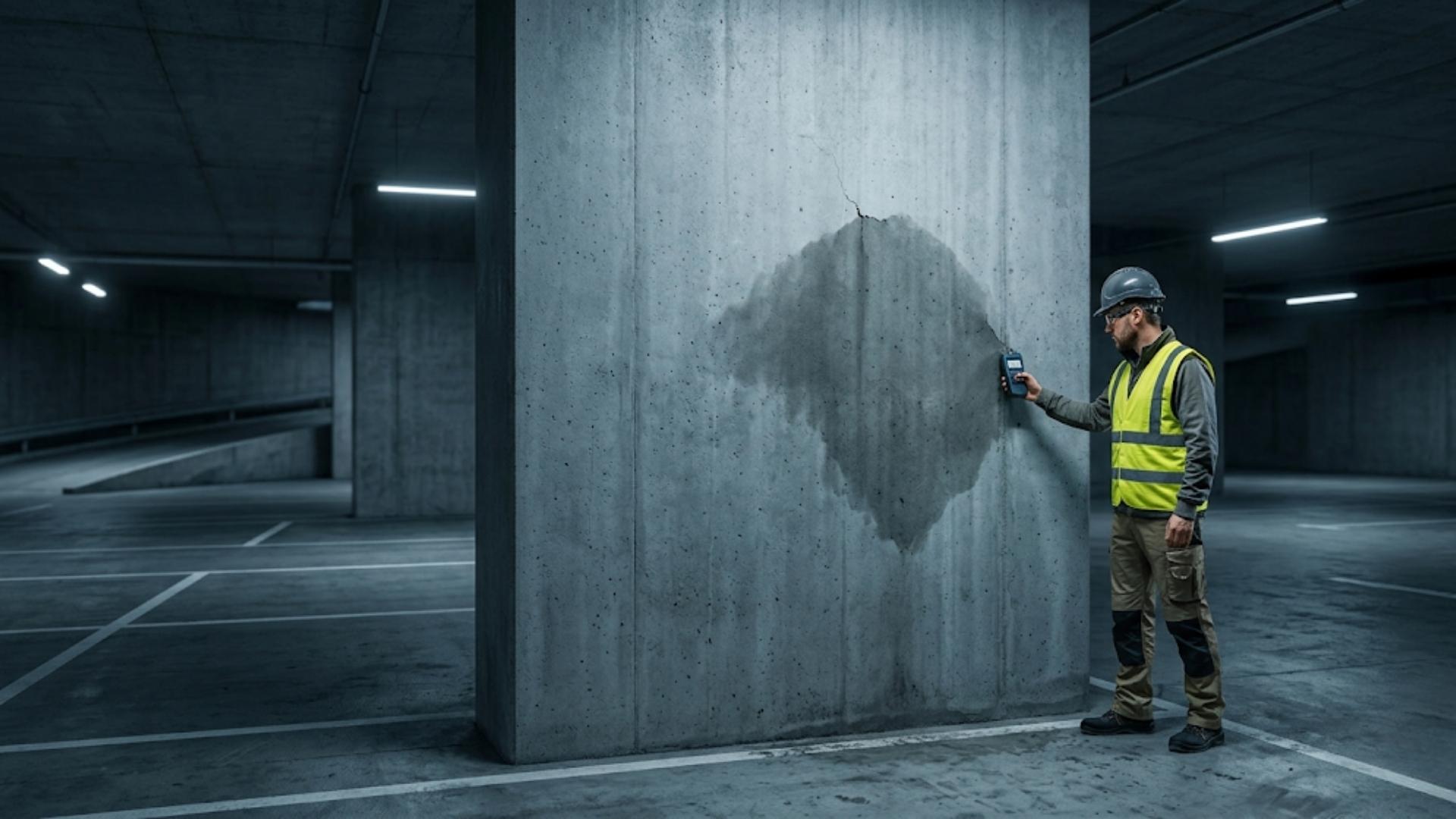
Untreated water ingress in reinforced concrete triggers a predictable chain of deterioration: the moisture initiates reinforcement corrosion, the corroding steel expands (up to seven times its original volume), the expansion cracks the surrounding concrete, and that cracking allows more water in — accelerating the entire cycle. What starts as a damp patch becomes spalling concrete, exposed rebar, and eventually structural compromise.
Research consistently identifies reinforcement corrosion as one of the primary causes of premature concrete deterioration — and water is the catalyst. Corrosion-related damage to UK infrastructure runs into billions of pounds annually in repair and replacement costs. For facility managers, the message is clear: water ingress is not cosmetic. Every month without intervention is a month of accelerating, compounding damage.
This guide explains exactly what happens inside your concrete when water ingress goes unaddressed, the timeline of deterioration, and why early action transforms a targeted repair into avoiding a structural remediation programme.
Key takeaways:
Reinforcing steel in concrete is normally protected by the concrete's high alkalinity (pH 12.5–13). This creates a passive oxide layer on the steel surface that prevents corrosion. Water ingress disrupts this protection in two ways:
1. Carbonation Carbon dioxide from the atmosphere dissolves in the moisture and reacts with calcium hydroxide in the concrete, reducing the pH. When the carbonation front reaches the reinforcement, the passive layer breaks down and corrosion begins. Carbonation progresses at approximately 1–5mm per year in typical UK conditions, but cyclic wetting dramatically accelerates this rate.
2. Chloride Attack Chlorides (from de-icing salts, marine environments, or contaminated groundwater) penetrate through water-filled pores and cracks. Even in alkaline concrete, chloride concentrations above typically around 0.4% by weight of cement — the threshold identified by RILEM and most international standards — will initiate corrosion. Underground car parks exposed to vehicle-tracked road salt are particularly vulnerable.
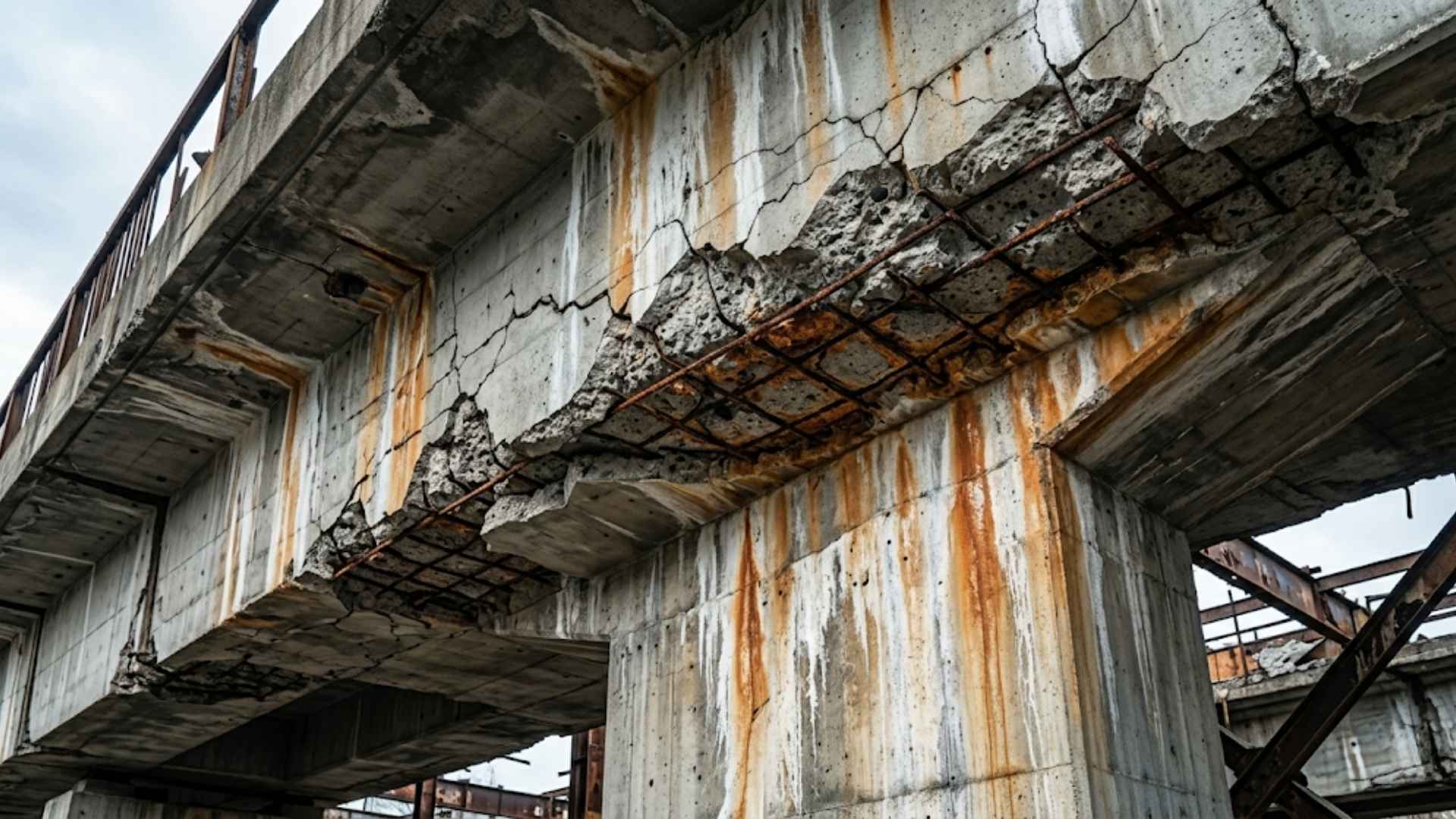
Once corrosion initiates, the iron oxidation products occupy 2–7 times the volume of the original steel. This expansion creates internal tensile stresses that exceed concrete's tensile capacity, causing cracking and spalling.
In the early stages, there may be no visible signs beyond the original water ingress symptoms (damp patches, efflorescence, minor seepage). However, inside the concrete:
What you see: The same damp patches you've been monitoring. What's happening inside: The conditions for structural damage are being established.
As corrosion products accumulate, internal pressure builds. Hairline cracks appear, often running parallel to the reinforcement layout. Hollow sounds when the concrete is tapped indicate delamination — the concrete is separating from the steel below.
Visible signs:
Structural impact: The bond between steel and concrete is weakening. Load transfer is compromised.
The expanding corrosion products overcome concrete tensile strength. Chunks of concrete detach and fall away (spalling), exposing corroded reinforcement to direct moisture and oxygen — which accelerates corrosion further.
Visible signs:
Structural impact: Reinforcement is losing cross-sectional area. Structural capacity is reducing. Depending on the element, this may approach critical thresholds.
Without intervention, corrosion continues until:
At this stage, repair is no longer patch-and-seal. Options include major concrete removal and recasting, structural strengthening with carbon fibre or additional steel, or in extreme cases, demolition and reconstruction.
The financial case for early intervention is compelling. Research from the Building Research Establishment and industry data show that:
A small water ingress problem addressed in Year 1 might cost £2,000–£10,000 to resolve permanently with injection waterproofing. The same problem left until Year 10, when spalling has occurred across a significant area, can escalate to £50,000–£500,000+ for structural repair.
The Concrete Society's Technical Report 26 on repair of corrosion-damaged concrete documents case studies where remediation costs were 5–15 times higher than early intervention would have required.
Direct repair costs are only part of the equation:
At an underground parking garage in New Belgrade, water ingress had been observed for several years before EURAS was called in. By the time our team assessed the structure, there was standing water on parking surfaces, visible rust staining on the underside of slabs, and early signs of delamination at construction joints.
Using high-pressure injection of EURAS® Gel Type B at up to 130 bar, we sealed all active leak paths through construction joints and cracks — without closing the facility. The gel penetrated into the crack network, displaced the water, and created a permanent seal that accommodates ongoing structural movement.
The critical point: had the facility waited another 2–3 years, the repair scope would have extended to concrete removal, reinforcement treatment, and patch repairs across a much larger area — at significantly higher cost and disruption.
EURAS Technology specialises in injection waterproofing for critical infrastructure — underground car parks, dams, tunnels, and industrial facilities. Our EU-patented mineral gel technology has been protecting concrete structures across Europe for 25+ years. When you're facing water ingress that threatens your structure, we provide permanent solutions that work even against active water flow.
If your facility is showing signs of water ingress, don't wait for visible corrosion damage.
Request a site survey — our specialists will assess the current condition, identify the water entry points, and recommend a targeted intervention before the deterioration cycle advances.
Don't dismiss damp patches, efflorescence, or minor seepage as cosmetic issues. These are symptoms of an active water pathway. The longer water has access to your reinforcement, the more damage accumulates. See our guide to warning signs of serious water ingress for what to look for.
Water ingress diagnosis requires understanding the source (groundwater, surface water, or internal leaks), the pathway (cracks, joints, or membrane failures), and the current condition of the structure. A specialist survey identifies all three and provides a basis for targeted repair.
Surface coatings and tanking may hide water ingress symptoms, but they don't stop water from reaching reinforcement. Injection waterproofing seals the pathways at their source — within the concrete itself — creating a barrier that prevents moisture from reaching steel.
After repair, periodic inspection ensures that new crack formation or joint movement doesn't create fresh water entry points. A maintenance programme protects your investment in waterproofing.
The visible damage timeline varies from 3–15 years depending on exposure conditions, but internal corrosion begins within months of sustained moisture contact. Chloride-contaminated water (from road salts or marine exposure) accelerates corrosion significantly faster than clean groundwater.
Most water-damaged concrete can be repaired through a combination of corrosion treatment, patch repair, and waterproofing — provided intervention occurs before reinforcement section loss exceeds critical thresholds. Severe cases may require partial reconstruction or structural strengthening.
External signs include rust staining (orange-brown discolouration running from cracks or construction joints), hairline cracking in patterns following rebar layout, hollow sounds when the surface is tapped, and eventually spalling where concrete chunks break away.
Damp concrete indicates moisture presence, but water ingress specifically refers to water actively penetrating the structure from outside. Condensation can cause surface dampness without the same reinforcement corrosion risk, though sustained high humidity still accelerates carbonation.
Patch repair of spalled areas typically costs £70–£200/m² in the UK. However, extensive corrosion damage across a structure can escalate to £500–£2,000+/m² for full remediation. Proactive waterproofing and injection repair costs a fraction of this — typically £30–£150 per linear metre of treated crack or joint.
Injection waterproofing stops further water ingress, which halts the corrosion process by removing the moisture catalyst. However, if significant corrosion has already occurred, the steel may need treatment (rust removal, protective coatings) and the damaged concrete may require patch repair before or alongside waterproofing.
For water ingress issues, start with a waterproofing-focused assessment that identifies water sources and pathways. If there are visible signs of structural distress (extensive cracking, spalling, or deformation), a structural engineer should assess load-bearing capacity alongside the waterproofing specialist.
Water ingress typically involves groundwater or surface water penetrating horizontally or downward through walls and slabs under hydrostatic pressure. Rising damp is capillary action drawing moisture upward through porous masonry — it affects ground-floor walls in older buildings with failed or absent damp-proof courses. The repair approaches differ significantly.
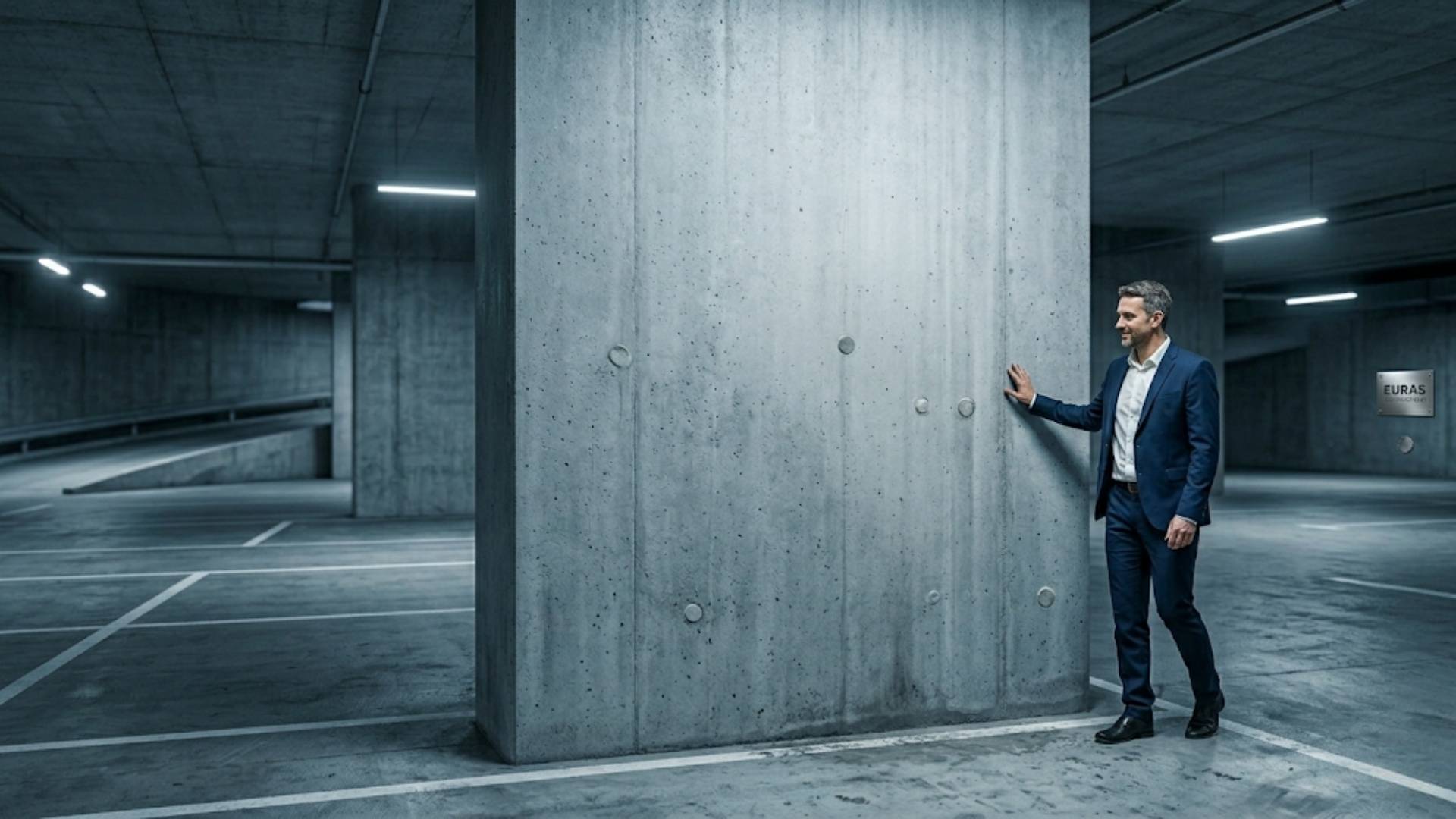
Water ingress in reinforced concrete is a progressive condition. Every day that moisture has access to reinforcement is a day of advancing corrosion. The longer you wait, the more extensive — and expensive — the eventual repair becomes.
The evidence is clear: reinforcement corrosion is one of the leading causes of structural deterioration in UK concrete buildings, costing the infrastructure sector billions of pounds annually in repairs and replacement. Proactive intervention costs a fraction of reactive remediation.
Next step: If your underground car park, basement, or concrete structure is showing signs of water ingress — damp patches, efflorescence, rust staining, or active leaks — request a no-obligation site survey. Our specialists will assess the water entry points, evaluate current structural condition, and recommend a targeted repair before the deterioration cycle advances.
Request a site survey | Learn about our injection waterproofing service