+1 (954) 787-2570

Email: hello@eurastechnology.com


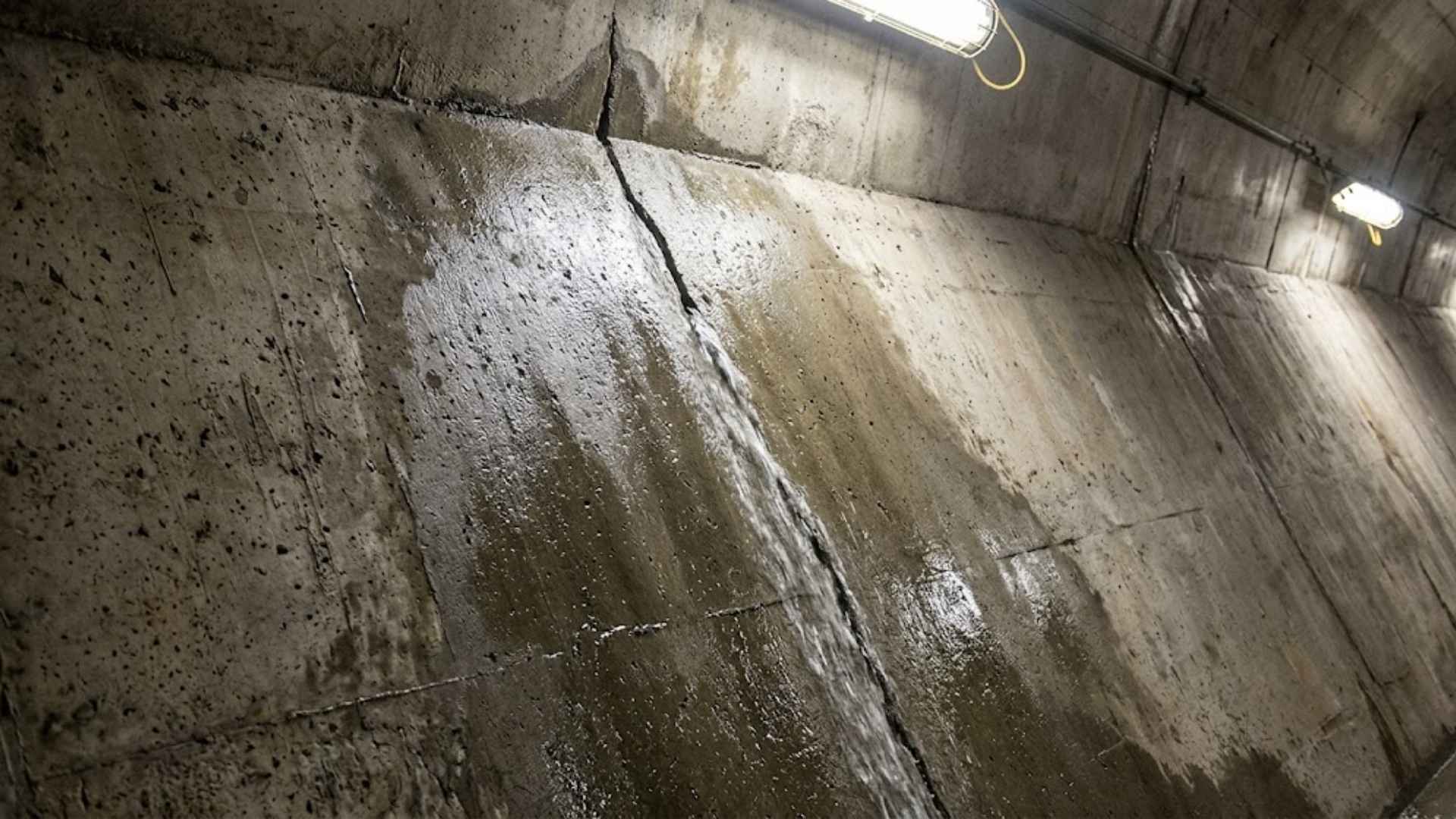
If you have an active leak right now: Our emergency response team can mobilise quickly for critical infrastructure leaks.
Contact our emergency line | Learn about our emergency leak repair service
Yes — a crack that is actively leaking under hydrostatic pressure can be injected and permanently sealed. Not with standard sealants or surface-applied materials, but with specialist high-pressure hydrophilic gel injection using materials and equipment specifically engineered for the purpose.
This article explains the precise mechanics of how active leak injection works, what conditions must be met for it to succeed, and what separates a technique that holds permanently from one that fails within months.
Active leak injection is a specialist repair technique for concrete structures where water is flowing through a crack, joint, or void under pressure. A hydrophilic, elastic gel is injected at high pressure, advancing into the crack against the direction of water flow. The gel swells on contact with water, filling micro-channels inaccessible to standard materials, and cures to form a permanently elastic, waterproof seal.
Requirements for success:
Most people's first instinct when faced with an actively leaking crack is to push something into it — a plug, a surface sealant, a fast-setting mortar. These approaches fail for a fundamental reason: they try to stop the water at the surface, while the water source is behind or within the structure.
Surface sealants applied over an active crack are immediately undermined by the water pressure they cannot resist. The water simply finds the next weakest point.
Fast-set hydraulic cements can temporarily reduce flow, but in a crack under sustained pressure they will eventually be displaced, debonded, or bypassed — particularly in structures with movement.
Standard epoxy resins — designed for structural crack repair — require a dry or damp (not flowing) substrate to achieve bond. Against flowing water, they fail to cure properly. Hydrophilic polyurethane foam resins can work against actively flowing water — but they foam and expand rapidly, which limits penetration into fine cracks and makes them unsuitable for many high-pressure environments where the foam structure is repeatedly cycled. In dam galleries and deep tunnels, PU foam has been used and then re-leaked within months as the rigid foam structure cracks under sustained pressure fluctuation — the ČHE Avče pumped-storage project below is a documented example of this failure mode.
The solution requires a material that can: advance against flowing water without early uncontrolled reaction, penetrate micro-channels at injection pressure, and remain permanently elastic under ongoing movement and pressure. Hydrophilic mineral gel injection is engineered for that combination — which is why it performs where PU foam fails in the most demanding environments.
Understanding the right material for this situation — versus where polyurethane may or may not be adequate — is covered in detail in our guide to mineral gel vs polyurethane injection. For programme timing before injection starts, see injection waterproofing mobilisation speed.
The mechanism is different from standard injection. Here is the process in sequence:
The visible wet surface is where water arrives, not necessarily where it enters. A thorough diagnosis traces the water pathway back to its source — whether a construction joint, a crack in the structure, or a void behind the lining. Injecting the wrong location results in gel that does not contact the water at all.
Ports are drilled to intersect the crack or void within the concrete body — not just the surface. The angle and depth are calculated from the crack geometry. Ports are typically drilled at 30–45° to the surface, spaced 150–250mm apart along the crack line. In high-flow situations, additional ports may be drilled to provide ventilation for displaced water.
In an active leak situation, the injection sequence matters. Working from the lowest point and advancing upward (where gravity aids) or from the edge of the water pathway inward — the sequence is designed to close off the path ahead of the gel front, preventing it from bypassing the crack through unintended pathways.
Injection pressure must exceed the hydrostatic back-pressure of the incoming water. In typical urban basement and similar below-ground scenarios, operational injection pressure is often in the region of 10–50 bar depending on crack geometry, depth, and equipment — a practical field range, not a cited standard. In dam galleries or deep tunnels, it can reach 100–200 bar. Specialist high-pressure pumps and calibrated packers are required — standard hand-operated equipment is inadequate.
An experienced technician reads the gel behaviour during injection — observing back-pressure build, watching adjacent ports for gel return, and monitoring flow reduction. When gel begins returning from adjacent ports, the crack network is saturated. Premature stopping before saturation leaves voids that will re-leak.
Ports are sealed and the treated area is monitored. In high-stakes infrastructure, formal leak testing may be required post-injection to certify watertightness.
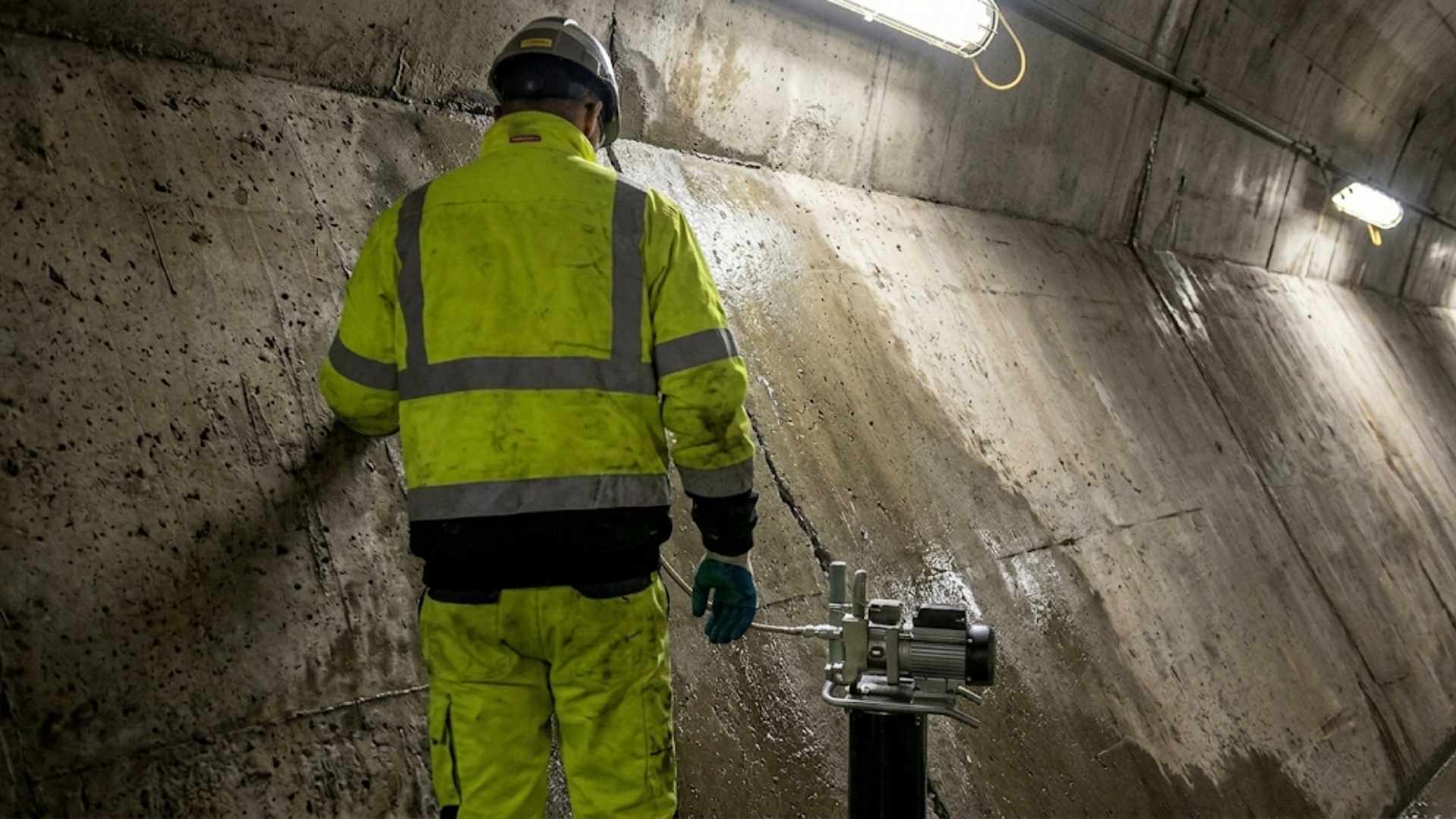
Not every actively leaking crack is injectable by this method. Key conditions that must be present:
The crack must be accessible and identifiable. If the water is entering through a broad diffuse zone — say, through highly porous concrete rather than a discrete crack — injection targeting requires different strategy. A specialist survey will determine whether injection is applicable.
The gel must reach the water pathway. In very fine micro-cracks (under 0.1mm), even low-viscosity gels cannot penetrate adequately. Surface application or re-injection of the broader zone may be required.
The structure must be able to sustain injection pressure. Very weak or highly deteriorated concrete may fracture under the injection pressure required to overcome back-pressure. A structural assessment should confirm the concrete is in a condition to receive injection.
The water pathway must be continuous and injectable. Isolated voids behind linings may require a different approach — curtain injection — to create a barrier rather than filling the void directly.
The ČHE Avče pumped-storage plant in Slovenia is one of the most technically demanding active leak injection projects in our history. The plant — Slovenia's first pumped-storage facility, critical for grid balancing — had developed persistent water ingress at the surge chamber-to-tunnel interface, with leaks occurring under fluctuating reservoir pressure that changed as the plant cycled between pumping and generating modes.
The challenge was not just high pressure — it was variable, dynamic pressure. Conventional grouting had failed because it could not accommodate the pressure cycles. Standard polyurethane foam had been tried and had partially sealed some areas, but re-leaking began within months as the rigid foam cracked under the pressure fluctuations.
Our team specified EURAS® Gel Type B for its combination of high-pressure injection capability (up to 160 bar) and permanent elasticity. Injection was carried out in a precisely planned sequence targeting the interface between the surge chamber and tunnel connections. All active and latent leaks were permanently sealed. The plant has continued operating without recurrence.
EURAS Technology specialises in injection waterproofing for critical infrastructure — dams, tunnels, hydropower plants, and underground industrial facilities. Our EU-patented mineral gel technology has been used to seal actively leaking structures under pressures up to 200 bar across projects in Europe, the Middle East, and North Africa, for over 25 years.
If you're seeing similar conditions — active flow under high or cycling pressure, or repeat failure after PU or cementitious repairs — our specialists can assess the water pathway and recommend a permanent gel injection programme.
Emergency leak repair service | Contact our team now
Can injection stop a crack that is flowing heavily — not just seeping? Yes, including high-flow situations. The technique involves initially managing the flow by partially restricting it during port preparation, then injecting against the remaining flow. In extreme flow situations, a fast-setting plug material may be used to reduce flow before the main injection, followed by gel injection for the permanent seal.
Does injection work if the crack has been patched before and leaked again? Yes — and repeat-fail cracks are one of the most common scenarios we address. If previous repairs have failed, it almost always indicates that the wrong material was used (typically rigid material in a moving crack) or that the water pathway was not fully treated. Mineral gel injection addresses both issues.
How quickly can an emergency injection team mobilise? Response time depends on location and project complexity, but for critical infrastructure emergencies we can typically mobilise within 24–48 hours. The PAP Lisina / HE Vrla hydropower project is one example — our team completed a critical pump manhole seal within a 48-hour window at this Serbian facility, where previous PU injection attempts had repeatedly failed under high pressure.
What pressure is required to inject against active groundwater? This depends on the depth of the structure below the water table and the groundwater conditions. For most urban basements, 10–50 bar is sufficient. For deep tunnels or dams, 100–200 bar may be required. Our injection equipment is rated for pressures up to 200 bar.
Is the seal permanent or will it need to be redone? When the correct material is used and the injection is correctly executed, the seal is permanent. Elastic mineral gel accommodates ongoing movement and does not degrade under sustained hydrostatic pressure. Re-injection should not be necessary unless the structural conditions change significantly.
Can I do this myself or with a general contractor? No. Active leak injection under pressure requires specialist equipment, specialist materials, and the diagnostic experience to correctly identify and target the water pathway. Incorrect injection can displace water to new locations or create additional pathways. This work requires qualified specialist contractors. For how structural waterproofing is framed in the UK — including Type B integrally waterproof structures under BS 8102:2022 — and contractor competence indicators, see PCA structural waterproofing guidance.
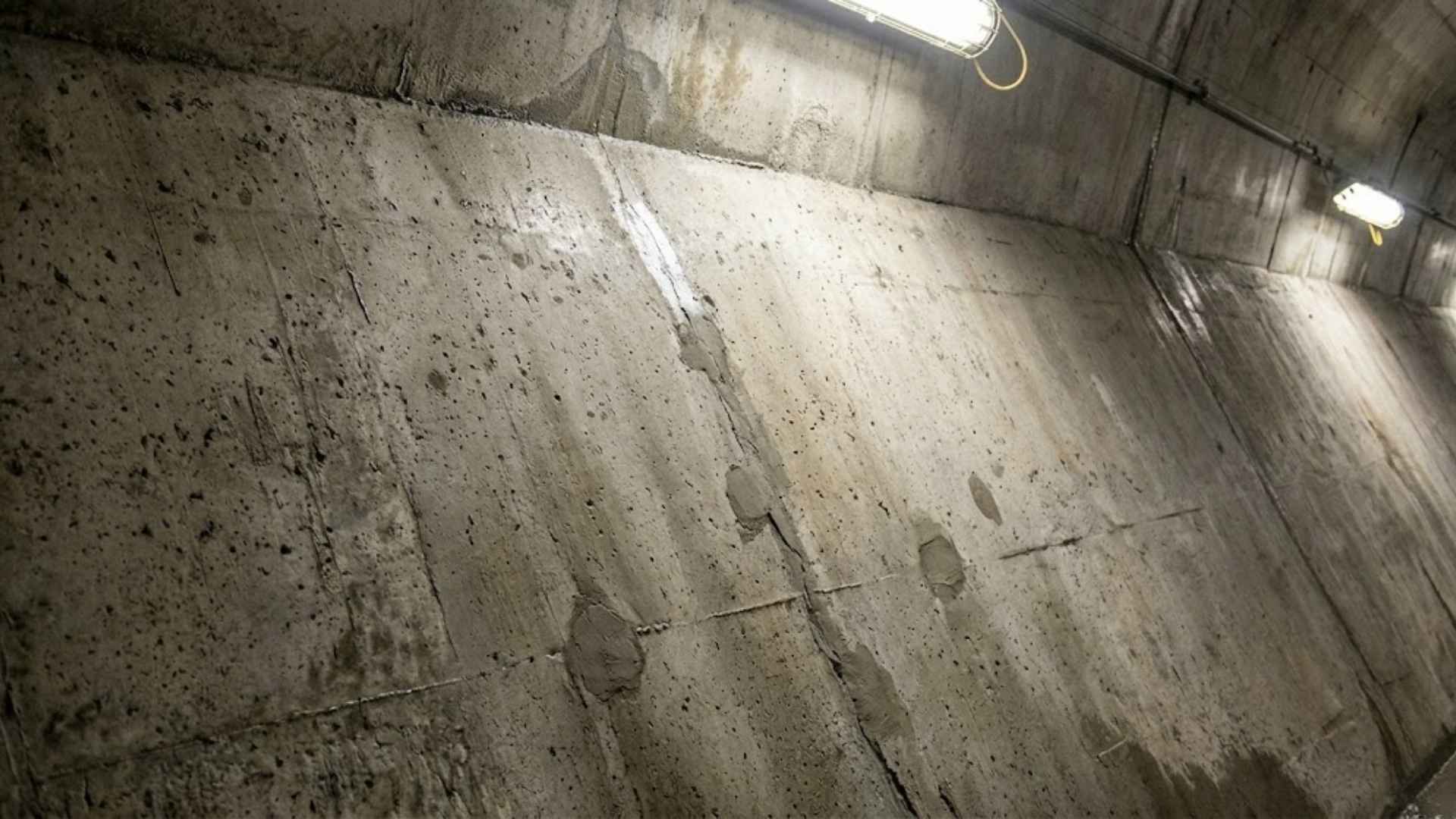
An actively leaking crack under pressure is not an indication that injection cannot work — it is an indication that the right materials and technique are essential. With correctly specified hydrophilic gel, the right injection pressure, and an experienced team, active leak injection delivers permanent results even in the most demanding pressure environments.
If you have an active leak: Do not wait for it to worsen. The longer active water flow continues, the more it widens the crack, degrades the surrounding concrete, and increases the scope and cost of repair.
Next step: Request a no-obligation site survey or urgent assessment — our team will confirm the water pathway, injection feasibility, and pressure requirements.
Request a site survey | Emergency leak repair service | Concrete crack injection service