
+1 (954) 787-2570

Email: hello@eurastechnology.com


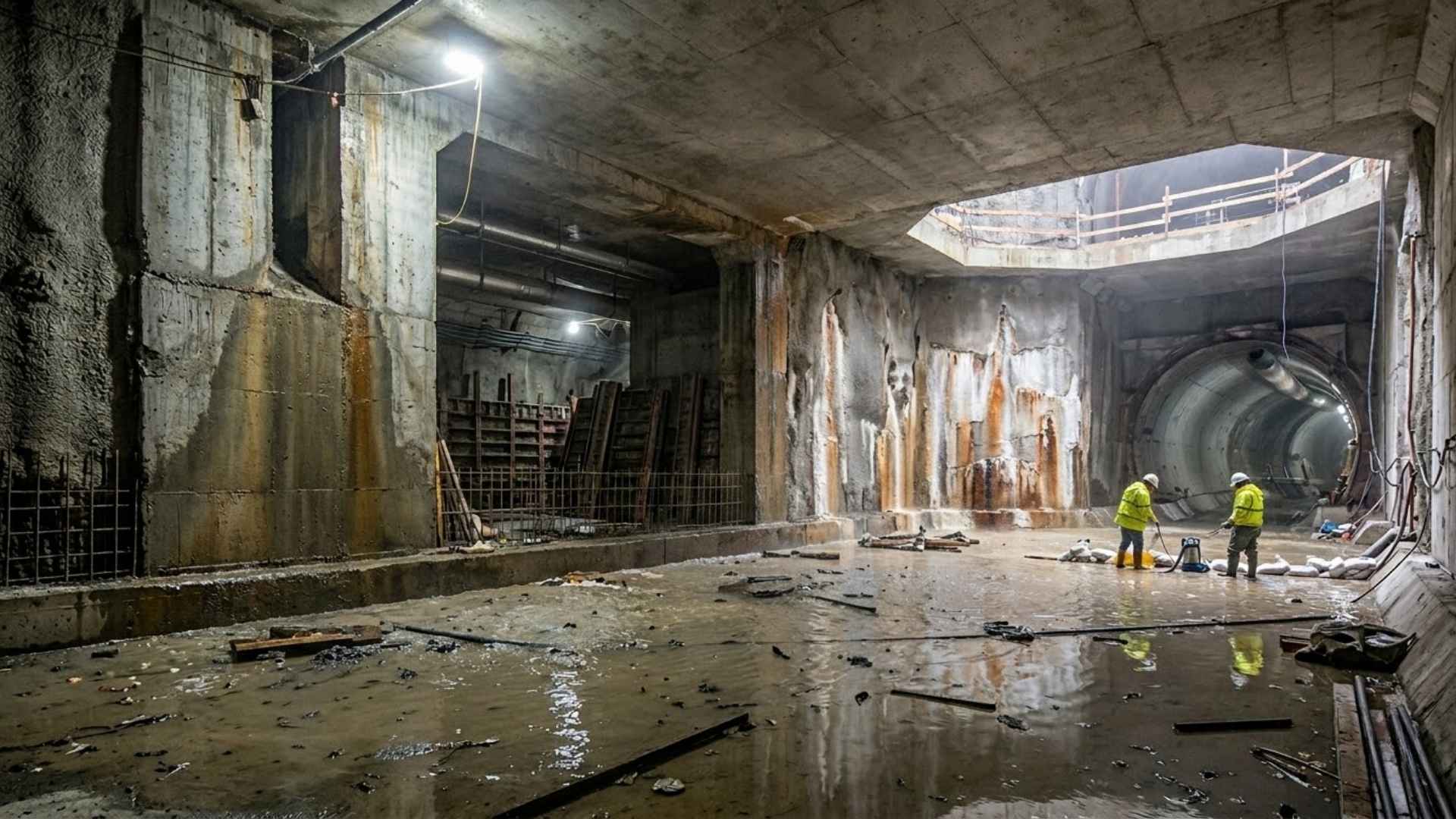
Fixing water ingress in an underground structure typically costs between £3,000 and £100,000+ depending on the severity of the problem, the size of the structure, and the method used. Injection waterproofing — the most common remedial approach — is usually the least disruptive and most cost-effective option, often costing a fraction of what excavation or structural replacement would require.
This guide breaks down what drives the cost of water ingress repairs, provides realistic price ranges for different situations, and explains why acting early almost always saves money in the long run.
Key takeaways:
- Early-stage water ingress repairs are significantly cheaper than emergency or reactive interventions
- Injection waterproofing typically costs less than excavation, tanking, or structural replacement
- The size of the structure, access conditions, injection pressure required, and severity of ingress are the main cost variables
- Leaving water ingress untreated multiplies repair costs — and adds structural risk, liability, and operational disruption
Quick Summary: Water Ingress Repair Costs
Water ingress repair in underground structures involves identifying the leak source and sealing it using methods such as injection waterproofing, tanking, or drainage systems. Injection is the most frequently specified remedial method because it works from inside the structure, requires no excavation, and can be performed without operational shutdown.
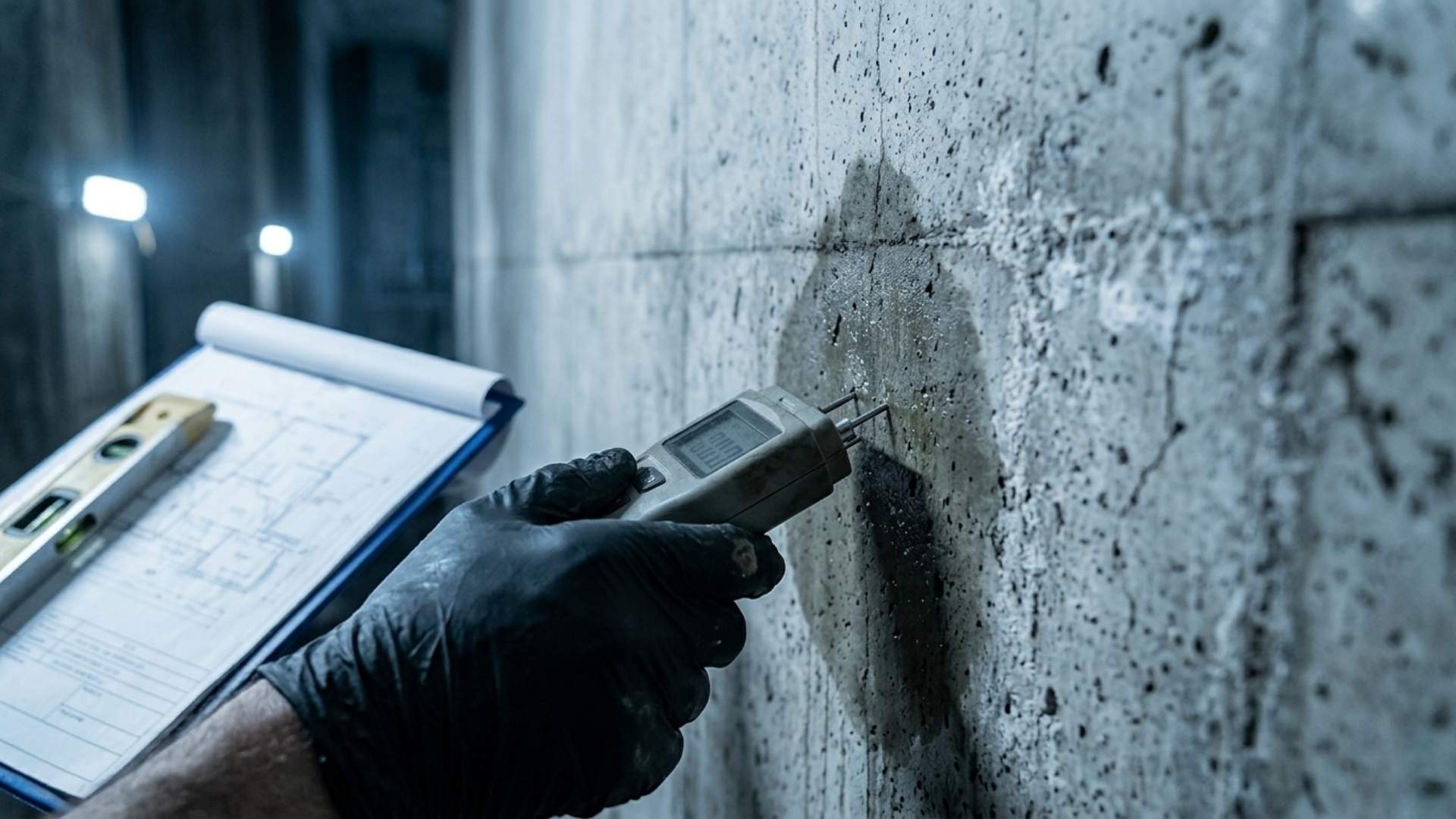
No two water ingress problems are the same, and costs vary significantly based on six key factors.
A single leaking construction joint is a very different proposition from active water flow across multiple walls, slabs, and joints. The more widespread the water ingress, the more injection ports need to be drilled, the more material is required, and the longer the project takes.
Early-stage water ingress — damp patches, efflorescence, minor seepage — is substantially cheaper to fix than active flow, standing water, or widespread saturation. If you're unsure how severe your problem is, understanding the five warning signs of serious water ingress can help you gauge urgency before calling a contractor.
Injection waterproofing remains the most cost-efficient remedial method for existing underground structures. It requires only small-diameter drill holes, no excavation, and in most cases no structural disruption. Injection waterproofing works very differently from tanking or surface coatings — it seals the water path from inside the structure rather than applying a barrier to the surface.
Negative-side tanking (applied to interior walls) requires extensive surface preparation, drainage planning, and often structural modifications. It costs more and carries a higher failure risk under active hydrostatic pressure.
Excavation and external membrane systems are the most expensive remedial option — requiring full excavation of the structure's perimeter, removal of failed membranes, and replacement with new waterproofing. This approach can cost three to five times more than injection waterproofing for the same structure.
Indicative ranges based on UK commercial market data (MPS Concrete Solutions, 2025–2026). All figures exclude structural concrete repair, enabling works, and access scaffolding. A specialist contractor will need to assess your structure before providing a meaningful cost estimate. Sources: MPS Concrete Solutions — Structural Waterproofing Costs UK 2025; Commercial Basement Waterproofing Cost UK 2026.
Restricted access, confined spaces, and the need to work around operational activities all add to project cost. An underground car park that stays open during works requires careful sequencing and safety management. A structure that can be closed for access will almost always cost less to treat. Similarly, structures with low headroom, deep galleries, or complex geometry take longer to work in — increasing labour costs.
Water ingress under high hydrostatic pressure — common in deep basements, below the water table, or in dam galleries — requires specialist high-pressure injection equipment and more material to achieve a complete seal. Injection pressures in demanding infrastructure projects can reach 100–200 bar. This capability is not universal among contractors, and specialist mobilisation adds to cost.
Accurate diagnosis is not optional — it determines where to inject and what materials to use. A water ingress survey using non-destructive testing methods — including moisture mapping, borehole cameras, and flow assessment — typically costs £500–£3,000 depending on structure size. This cost is almost always recovered many times over by avoiding unnecessary injection in the wrong locations.
For most remedial waterproofing on existing underground structures, injection waterproofing is the most practical and cost-efficient option. Here is how it compares.
Injection waterproofing wins on nearly every measure for remedial projects — unless the structure has fundamental design failures that also need addressing. Understanding what causes water ingress in the first place helps you determine whether injection alone will resolve the issue or whether additional structural work is needed.
For car park operators specifically, see our guide to water ingress in underground car parks for a detailed look at the typical repair scope and what drives cost in that structure type.
Delaying water ingress repair rarely saves money. The costs that accumulate while the problem is left untreated typically far exceed the cost of acting promptly.
Water in concrete accelerates reinforcement corrosion through a well-documented process: water carries chlorides and oxygen to the steel, initiating corrosion. As the steel corrodes, it expands — fracturing the surrounding concrete and causing spalling. Repairs to spalled concrete with exposed reinforcement cost considerably more than sealing the original water pathway. The BRE guidance on diagnosing dampness in buildings notes that moisture-related deterioration is progressive and non-linear — small problems become large ones faster than expected.
Reactive repairs — called when a facility is flooding or operationally threatened — carry significant cost premiums consistent with wider commercial construction emergency cost premiums. Emergency mobilisation, round-the-clock working, and prioritised material supply can add 30–60% to the base cost of the repair. In critical infrastructure, the cost of business disruption and temporary mitigation measures can dwarf the repair cost itself.
Building owners and facility managers have a duty of care in relation to known structural defects. Leaving documented water ingress unaddressed increases liability exposure if the structure causes injury, property damage, or regulatory breach. The Property Care Association guidance on structural waterproofing provides a useful framework for understanding what constitutes an appropriate response to known ingress.
For commercial facilities — car parks, basements, industrial plants — water ingress that is left to worsen eventually forces partial or full closure for remediation. The operational cost of closure can be orders of magnitude greater than the waterproofing repair itself.
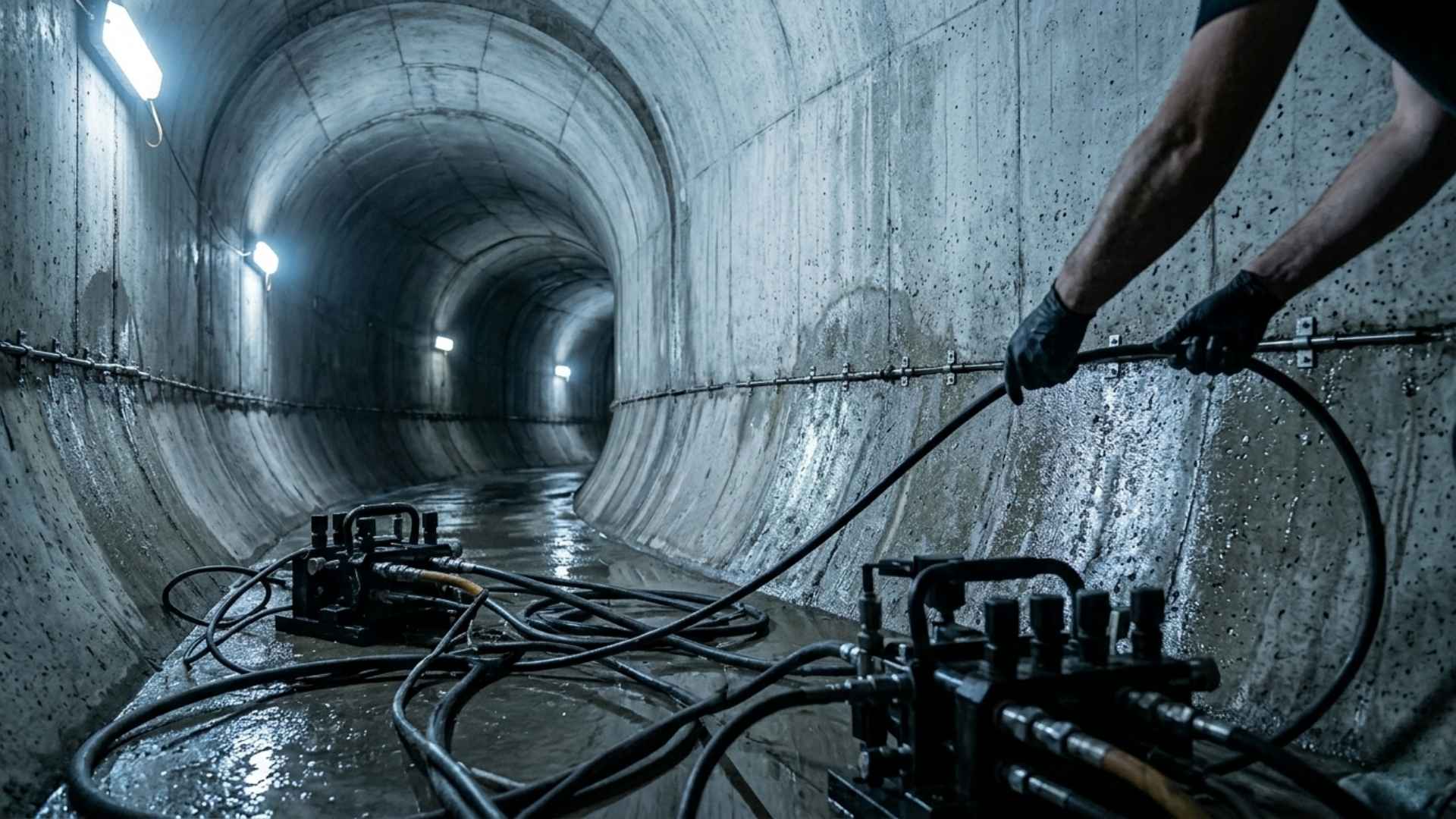
Across 25 years of projects, we have seen the cost difference between proactive and reactive intervention play out hundreds of times. One of the starkest examples is a valve chamber and tunnel waterproofing project at PAP Lisina — HE Vrla hydroelectric plant in Serbia.
Active water ingress had developed in the valve chamber and adjacent tunnel areas of an operational hydropower facility. Prior conventional repair attempts — cement-based grouting and patch repairs — had failed to provide lasting results. By the time the EURAS team was called, the leaks were classified as critical: proximity to pressure-regulation systems, saturated concrete, and difficulty accessing the internal cavities where water was entering all combined to create a high-risk scenario.
Using high-pressure injection of EURAS® Gel Type B at up to 150 bar, our team completely sealed all active leaks in just 48 hours — without interrupting plant operations or requiring any structural demolition.
The lesson: a proactive injection treatment on those construction joints, at the first sign of seepage, would have cost a fraction of the emergency intervention. The client estimated that avoiding a production shutdown during the emergency period alone justified the repair cost many times over.
EURAS Technology has been permanently sealing water ingress in critical infrastructure for 25+ years — across hydropower facilities, underground car parks, tunnels, dams, and commercial basements in Europe, the Middle East, and North Africa. If your facility is showing early signs of water ingress, our specialists can assess the right approach before costs escalate. Talk to a waterproofing specialist.
A meaningful cost estimate for water ingress repair requires a site inspection. Telephone or desk-based estimates are rarely reliable because:
A competent specialist will typically provide a site survey — often at a fixed fee — that covers:
The concrete crack injection service page on our site explains what a typical assessment involves and what you should expect from a specialist visit. If the problem appears extensive or the cause is unclear, additional non-destructive testing may be warranted before specifying the repair.
You can also request a no-obligation site survey directly — a specialist will visit, assess the damage, and provide a clear recommendation with costings.
How much does injection waterproofing cost per square metre?
Injection waterproofing is typically priced per injection port, per linear metre of treated joint, or as a lump sum for a defined programme of works — not per square metre, because the material goes into the structure rather than onto it. Per-point costs vary widely based on depth, injection pressure required, and material: a low-pressure residential crack injection costs significantly less per point than a high-pressure infrastructure seal under 100+ bar. For commercial underground structures, a specialist will provide a cost plan based on the condition survey findings rather than a per-point rate. A site survey is required for any meaningful estimate.
Is injection waterproofing a permanent solution or will it need to be redone?
When applied correctly under the right conditions, injection waterproofing using an elastic, hydrophilic gel is a long-term permanent solution. Unlike surface coatings that can delaminate or membrane systems that can be breached, correctly injected gel remains in the structure. Our work at the Hoch-Behälter reservoir in Germany — a potable water facility completed over 20 years ago — has shown no recurrence of treated leaks, demonstrating the long-term performance of mineral-based gel injection.
Why is it cheaper to fix water ingress early rather than later?
Early-stage water ingress involves smaller, more targeted repairs — fewer injection points, less material, lower pressure required. As water ingress progresses, it widens cracks, degrades concrete, corrodes reinforcement, and creates new pathways. Each of these developments adds to the scope and cost of repair. Emergency reactive repairs also carry significant cost premiums.
Can water ingress be fixed without closing the building?
In the majority of cases, yes. Injection waterproofing is a non-invasive process — small drill holes are made, gel is injected, and ports are sealed. Most commercial structures remain operational throughout the works. For car parks, sections can be cordoned off while the rest remains open. For tunnels and infrastructure, works are typically scheduled during maintenance possessions or overnight periods.
Does the cost of repair depend on what's causing the water ingress?
Yes, significantly. Water entering through a single construction joint is a different repair from water entering through multiple cracks, failed membranes, and honeycomb defects across an entire basement. The cause also determines the material: active flow under pressure requires a hydrophilic gel with high injection capacity; damp seepage through micro-cracks may be resolved with a lower-viscosity injection material.
How do I know if I need injection waterproofing or something more extensive?
A specialist survey will determine the appropriate method. As a rough guide: if the structure is otherwise sound, the water source is identifiable, and the issue is localised leaking rather than fundamental design failure, injection waterproofing is usually the right approach. If the entire original waterproofing system has failed and the structure has widespread deterioration, a more comprehensive approach — potentially combining injection with drainage or overlay systems — may be required.
What is the BS 8102 standard and does it affect what repair method I should use?
BS 8102:2022 is the British Standard covering the protection of below-ground structures against water ingress. It defines grades of watertightness and the types of waterproofing system appropriate for each grade. For remedial work, the standard provides guidance on which system type is appropriate for which end use. Your contractor should be familiar with this standard when specifying a repair.
Should I get multiple quotes for a water ingress repair?
Yes, but compare like for like. Quotes that differ significantly in method, materials, or scope are difficult to compare on price alone. The cheapest quote may specify a less durable method or use lower-performance materials. Ask each contractor to specify: the method, the injection material and its certification, the injection pressures achievable, and the warranty they offer.
Water ingress in underground structures rarely resolves itself, and it is consistently cheaper to address than most facility managers expect — provided it is caught and treated before reaching an advanced stage. A targeted injection repair at the early stage — typically £3,000–£15,000 for a commercial underground structure — can prevent the need for full structural concrete repair and waterproofing at £50,000–£250,000+ once corrosion and spalling have taken hold. The cost of inaction is not linear: each stage of deterioration adds scope, access requirements, structural risk, and downtime — all of which compound the final bill.
If your underground structure is showing signs of water ingress — damp patches, efflorescence, active seepage, or rust staining — the right first step is a specialist survey that identifies the source and recommends a proportionate fix.
Next step: Request a no-obligation site survey. Our team will assess your structure, identify the water ingress pathway, and provide a clear recommendation with realistic costings — so you can make a properly informed decision.
Request a site survey | Learn about our underground infrastructure repair service


