+1 (954) 787-2570

Email: hello@eurastechnology.com


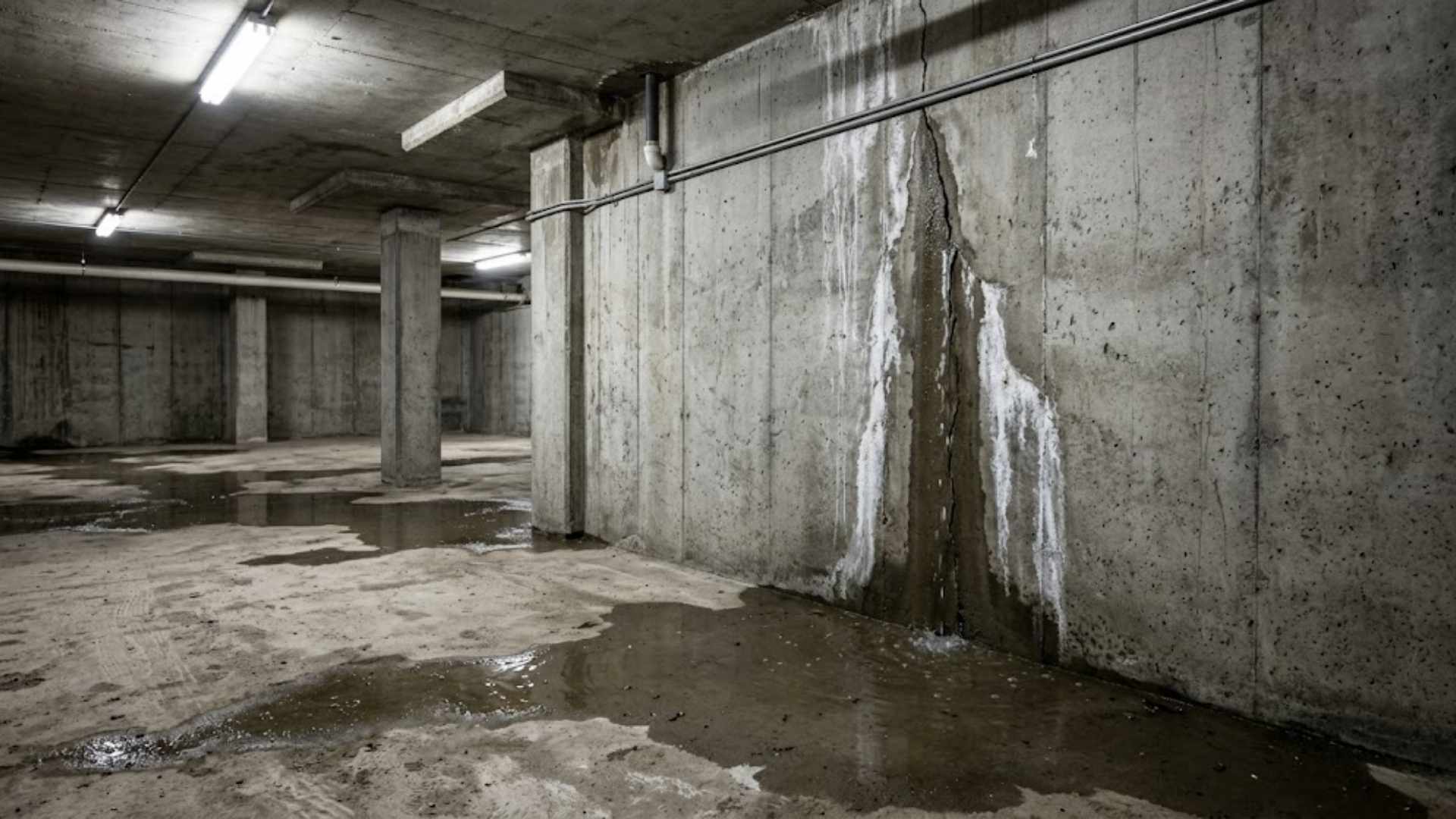
Mineral gel and polyurethane are the two primary injection materials used for remedial waterproofing in concrete structures. They work differently, perform differently under pressure, and are appropriate for different conditions. Specifying the wrong material often means the repair fails — not because injection waterproofing does not work, but because the material was not suited to the specific conditions of the structure.
This guide provides a direct technical comparison of mineral gel and polyurethane injection systems — covering how each works, where each excels, and where polyurethane reaches its limits.
Key takeaways:
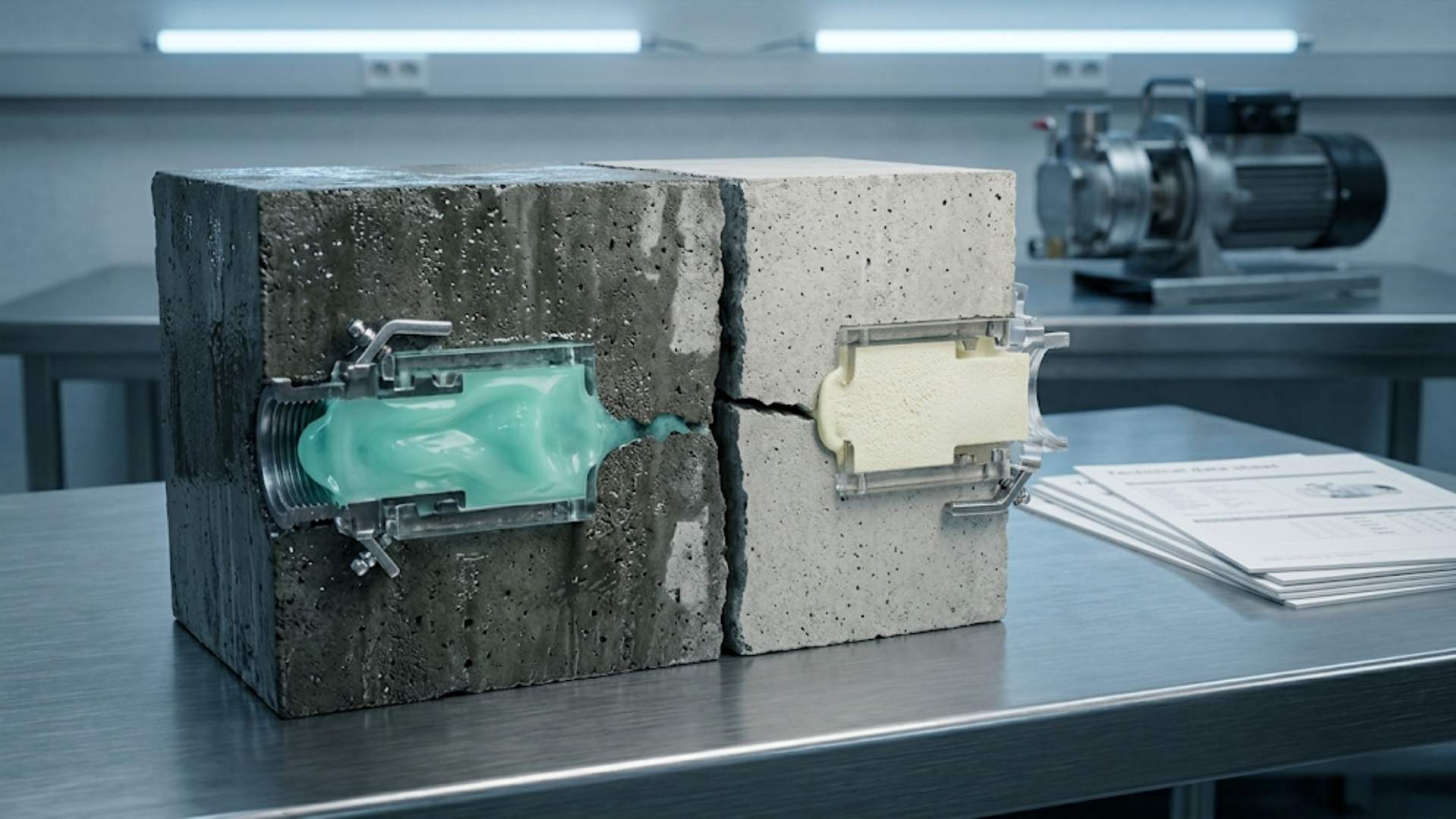
Mineral gel injection systems are based on naturally occurring mineral compounds — typically bentonite or synthetic mineral derivatives — formulated as injectable gels. The defining characteristic is hygroscopic behaviour: mineral gel absorbs water and swells, actively displacing water from cracks and voids as it expands.
The key properties of mineral gel injection:
Permanent elasticity. Once injected and cured, mineral gel remains elastic — it can deform and recover without losing its seal. This is critical in structures that experience ongoing movement from thermal cycling, settlement, or dynamic loading.
High-pressure performance. Mineral gels can be injected at very high pressures — up to 200 bar in specialist applications — and maintain their waterproofing function under sustained hydrostatic pressure of the same magnitude. This makes them uniquely suited to dams, deep tunnels, and structures below significant groundwater.
Compatibility with wet substrates. Mineral gel does not require a dry or dehumidified substrate. It works against live water flow, which is essential in remedial waterproofing where drying a substrate before injection is impractical.
Non-toxic, potable water certified. Natural mineral-based gels carry approvals for use in contact with potable water — a requirement for reservoirs, water towers, and treatment plants that polyurethane systems cannot always meet. For structures in England and Wales, materials in contact with drinking water must meet the regulatory regime administered by the Drinking Water Inspectorate — see what Regulation 31 covers and confirm listing for the specific product batch you specify.
For structures where the first challenge is classifying the hydraulic condition before choosing a material, see our guide to active water flow vs damp seepage in concrete.
Long-term chemical stability. Mineral gels are chemically inert and stable across a wide temperature range (-25°C to +100°C), with proven resistance to aggressive groundwater chemistry including chlorides, sulphates, and low-pH conditions.
Polyurethane (PU) injection systems are synthetic resins available in a wide range of formulations — from low-viscosity liquids to two-component foaming systems. They are broadly divided into hydrophobic (water-repelling, requiring dry or damp conditions) and hydrophilic (water-reactive, expanding on contact with water).
The key properties of polyurethane injection:
Fast reaction time. Hydrophilic PU foams react rapidly on contact with water, expanding to fill voids quickly. This makes them useful for initial emergency flow stoppage in situations where immediate action is needed.
High expansion ratio. Some PU foams expand up to 20–30 times their liquid volume. This can fill large voids rapidly — but the expansion is difficult to control precisely, and the resulting foam structure may not be dense enough to withstand sustained pressure.
Low viscosity options. Some PU resins have very low viscosity, allowing them to penetrate fine hairline cracks before curing. These rigid resins (often epoxy-modified) are used for structural crack repair where load transfer is needed.
Limitations under movement. Once cured, most polyurethane systems are semi-rigid to rigid. In cracks or joints that continue to move — through thermal cycling, structural loading, or settlement — the rigid repaired zone may re-crack at the interface between cured PU and concrete, allowing water re-entry.
Variable durability under pressure. Foamed polyurethane, while initially effective at stopping flow, can compress or degrade under sustained hydrostatic pressure — particularly where the foam is not uniformly dense — as documented in manufacturer and industry guidance on hydrophilic foams. This limits its suitability for long-term waterproofing in high-pressure environments.
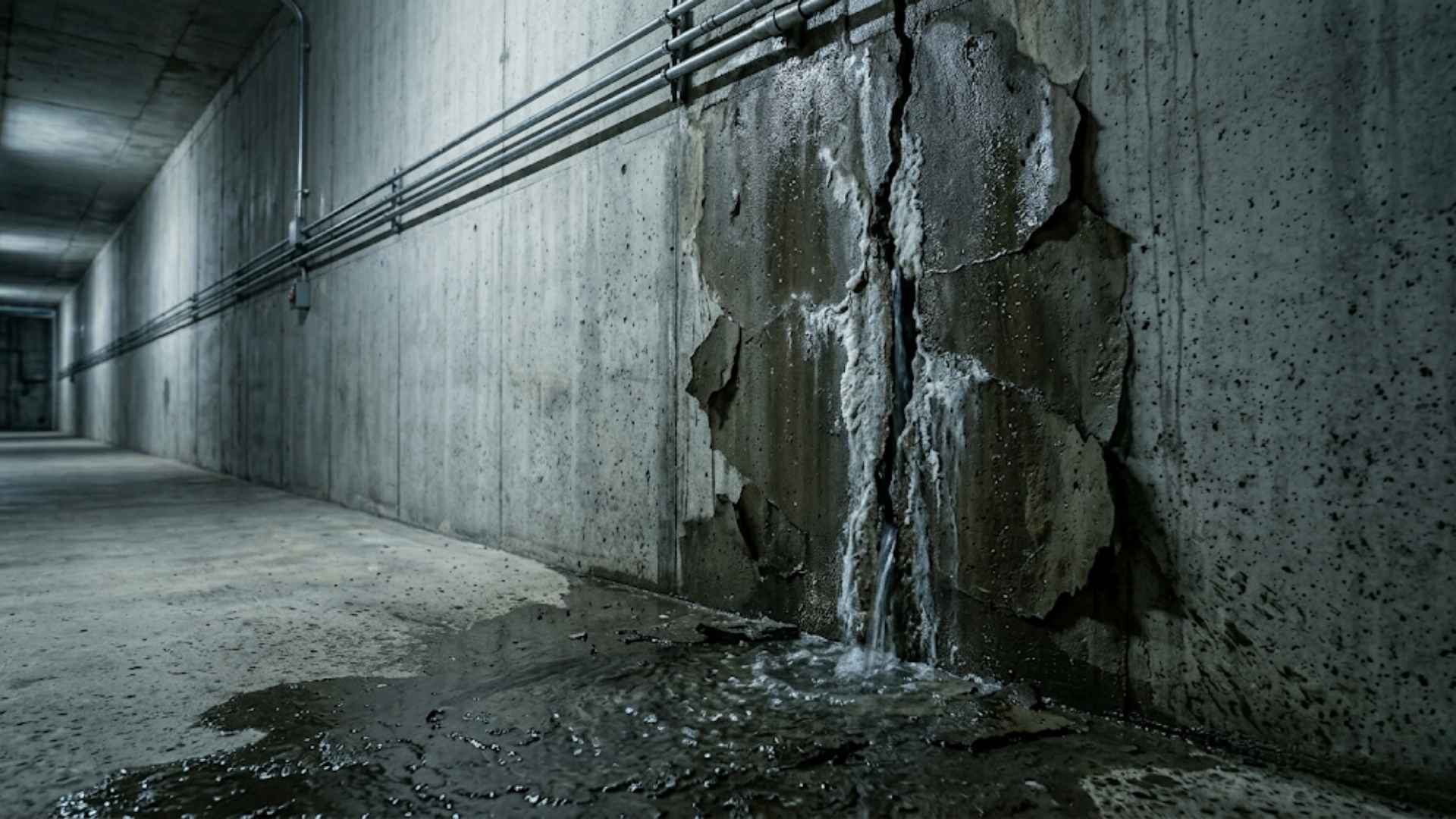
Mineral gel is the correct specification for:
Structures under sustained high hydrostatic pressure. Where groundwater pressure is significant — below the water table in urban basements, in dam galleries, in deep tunnels — mineral gel's long-term performance under pressure makes it the appropriate choice. Polyurethane foam can be displaced or degraded by sustained pressure after initial cure.
Structures with ongoing movement. Car parks, bridges, and structures subject to thermal cycling or dynamic loading experience continuous crack movement. Mineral gel's elasticity means it deforms with the structure rather than re-cracking at the repair boundary.
Long-term remedial repair. Where the goal is a permanent fix rather than temporary stabilisation, mineral gel has the stronger track record in critical infrastructure over 20+ years.
Potable water environments. Reservoirs, service reservoirs, water towers, and desalination plants require materials certified safe for contact with drinking water. Approved mineral gel formulations meet this requirement; most polyurethane systems do not.
Complex injection geometry. Mineral gel's hygroscopic expansion allows it to find and fill micro-channels and capillaries beyond the immediate injection zone — useful in old or deteriorated concrete where crack geometry is unpredictable.
Polyurethane injection has legitimate applications:
Emergency flow stoppage. Fast-reacting hydrophilic PU foam can halt active water flow rapidly — useful as a first-response measure while a permanent repair is planned. This is not a long-term solution in high-pressure environments, but it can stop immediate flooding.
Fine crack injection with structural intent. Low-viscosity rigid PU resins (including epoxy-modified systems) can penetrate and fill hairline cracks where load transfer across the crack is required. This is a structural repair, not primarily a waterproofing one.
Lower-pressure, non-moving conditions. In structures with minimal structural movement and modest groundwater pressure, hydrophilic PU can provide satisfactory waterproofing at lower cost than mineral gel for specific applications.
Understanding where polyurethane reaches its limits is as important as knowing where it works. The Concrete Society TR 22 guidance on non-structural cracks in concrete distinguishes between live and dormant cracks — a distinction directly relevant to injection material selection.
In dynamic or live cracks. Rigid PU, injected into a crack that continues to move, will re-crack at the gel-to-concrete interface. The repair may appear successful initially but fails within one to three heating/cooling cycles. This is one of the most common causes of repeated injection failures reported by facility managers.
Under sustained high pressure. PU foam that expands to fill a large void may appear to have sealed it, but the foam structure — which is not uniformly dense — can be progressively compressed or displaced by sustained groundwater pressure. Mineral gel, by contrast, compresses under pressure and rebounds elastically.
In old, saturated, or contaminated concrete. PU adhesion can be compromised in highly saturated conditions or where the concrete contains chemical contaminants. Mineral gel's hygroscopic mechanism means performance is driven by water contact rather than compromised by it.
For background on how ingress develops in buried concrete before you choose a material, see water ingress in concrete underground structures — causes and pathways.
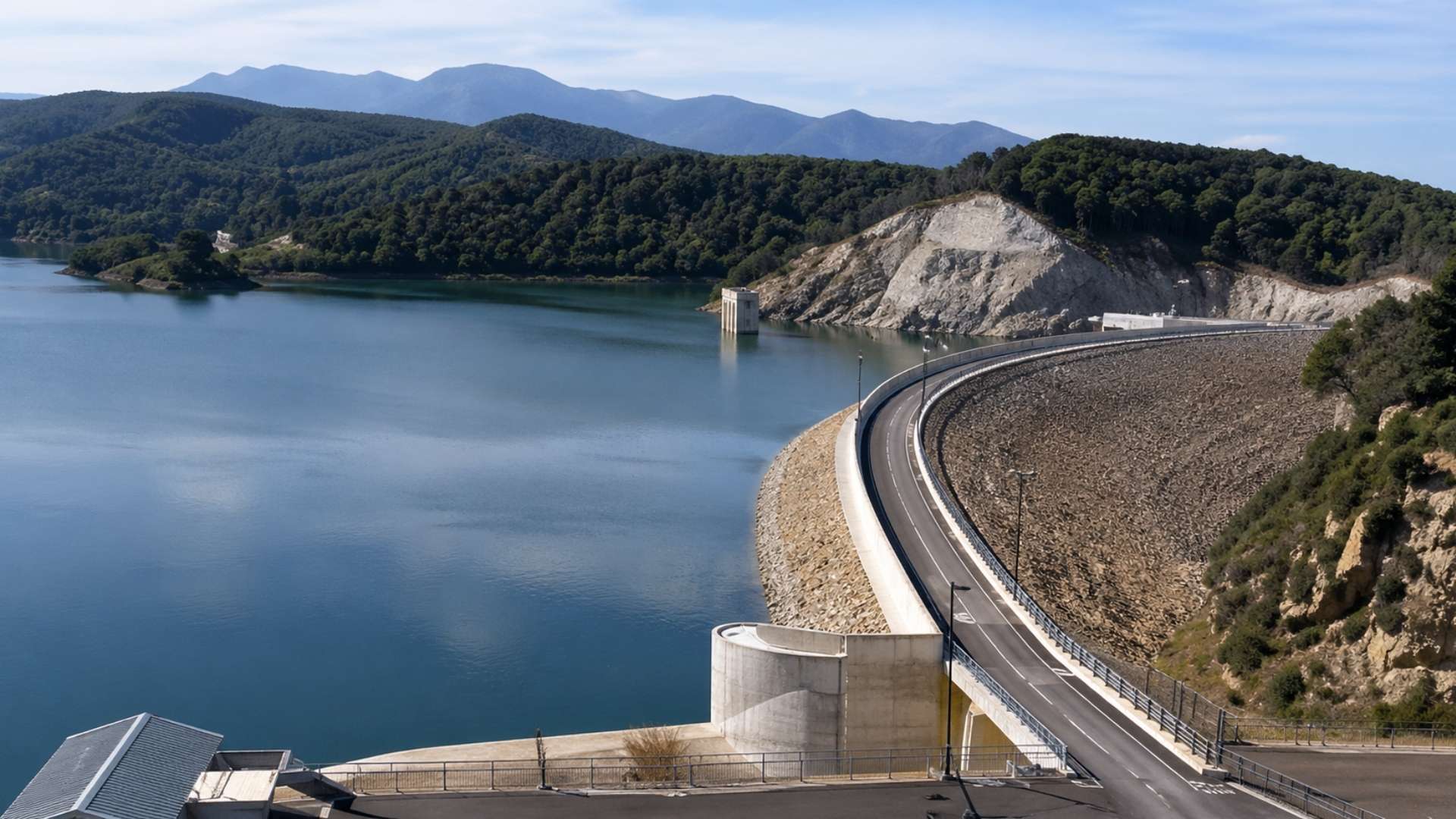
The clearest demonstration of where mineral gel outperforms polyurethane comes from dam gallery projects. At Kissir Dam in Jijel, Algeria, persistent high-pressure leakage was occurring through construction joints and cracks in the dam galleries — with the full weight of the reservoir bearing on the structure.
Previous repair attempts using conventional cementitious grouting had failed. The hydrostatic pressure — up to 200 bar at injection — was beyond what any standard polyurethane foam system could sustain. EURAS® Gel Type B was specified for its elastic properties and proven performance under extreme pressure. The injection was carried out without lowering the reservoir water level. All active leaks were permanently sealed.
This project illustrates the critical principle: in high-pressure infrastructure, material selection determines whether a repair succeeds or fails — not just the skill of the installer.
EURAS Technology has 25+ years of experience specifying and applying mineral gel injection in the most demanding infrastructure conditions — dams, tunnels, reservoirs, and industrial facilities across Europe, North Africa, and the Middle East. Our EURAS® Gel Type B is an EU-patented mineral gel specifically engineered for high-pressure, negative-side application against active water. If you are specifying a repair and need guidance on material selection, our technical team can advise.
Is mineral gel or polyurethane better for a leaking basement?
For an occupied basement with active water ingress, mineral gel is typically the correct specification. Its elasticity accommodates any ongoing structural movement, it works against live water, and it provides long-term performance under the hydrostatic pressures typical of urban basement environments.
Can polyurethane be used as a temporary measure before mineral gel injection?
Yes — fast-reacting hydrophilic PU foam can stop active flooding as an emergency measure. A subsequent mineral gel injection can then provide the permanent, pressure-resistant seal. This two-stage approach is used in high-flow emergencies where active flooding must be stopped before a permanent repair programme can proceed.
How do I know if my existing polyurethane injection repair has failed?
Signs of failure include re-emergence of water at or near the original repair location, visible cracks opening through or around the previous repair, or water tracking to new locations adjacent to the repair. If a polyurethane repair has been redone more than once in the same location, mineral gel should be specified for the next attempt.
Does mineral gel injection require specialist equipment?
Yes. High-pressure injection at the levels required for mineral gel — particularly in infrastructure applications — requires specialist pumps, calibrated packers, and trained technicians. This is not a DIY or general-contractor operation.
What certifications should I look for when specifying injection materials?
For potable water applications, check WRAS approvals and the Regulation 31 approved products information maintained by the Drinking Water Inspectorate. For repair product conformity, refer to BS EN 1504 (concrete repair and protection products) and request manufacturer data sheets and any third-party test evidence for your use case.
Is mineral gel the same as bentonite?
Not exactly. Bentonite is a naturally occurring clay mineral that exhibits hygroscopic properties. Mineral gel injection systems for concrete waterproofing are typically formulated from bentonite derivatives or synthetic mineral compounds, engineered to achieve specific injection viscosity, pressure, and adhesion performance. Raw bentonite is not an injection waterproofing product.
How long does mineral gel injection last?
Correctly specified and applied, mineral gel injection is a permanent repair. Projects carried out in the early 2000s — including the Hoch-Behälter reservoir in Germany — continue to show complete watertightness in long-term follow-up inspections. The material does not shrink, dry out, or degrade under the conditions it is designed for.
Can mineral gel and polyurethane be used in the same repair?
Yes. A fast-reacting hydrophilic PU foam is often used to arrest violent flow; once the line is stable, mineral gel injection provides the long-term, pressure-resistant seal. The sequence and materials should be written into the method statement — not left to improvisation on site.
Both materials have legitimate applications — the deciding factor is always the hydraulic condition and structural behaviour, not familiarity or first-quote price. In critical infrastructure, specifying the wrong resin first typically means remobilisation, re-assessment, and re-injection at a multiple of the cost of doing it correctly the first time. For high pressure, movement, and potable water contact, mineral gel is the class of solution with the demonstrated track record.
Next step: If you are specifying injection waterproofing and need technical guidance on material selection for your project conditions, our technical team can advise. We can also review existing repair specifications or previous failures to identify why other injection attempts have not held.
Talk to a technical specialist | Learn about EURAS® Gel Type B