+1 (954) 787-2570

Email: hello@eurastechnology.com


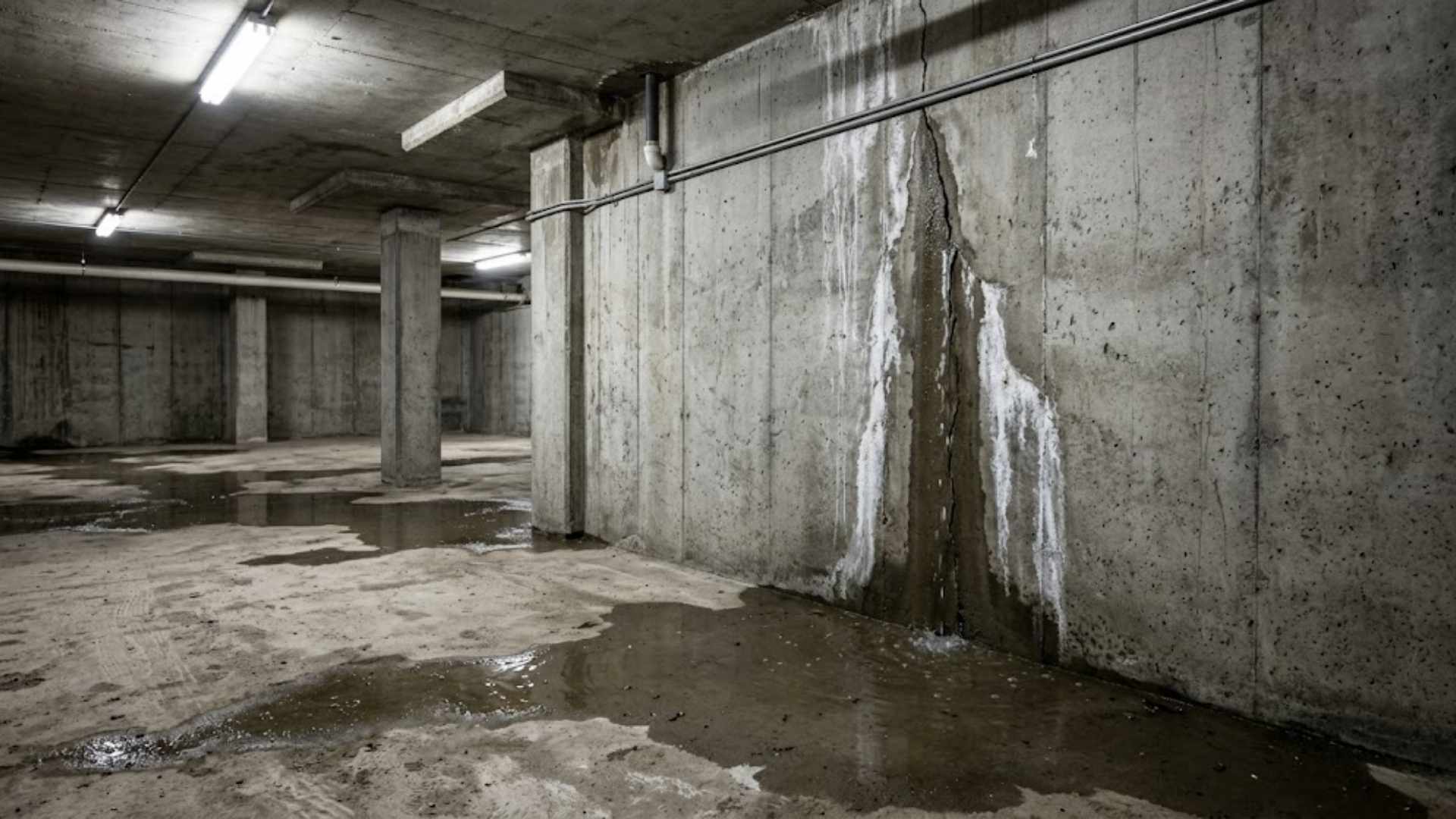
If your site has an active leak in a concrete structure, the question is not whether to call a waterproofing contractor. The question is whether to call a general waterproofing contractor or a specialist injection waterproofing subcontractor — and whether your programme can afford to get that call wrong. The wrong first mobilisation often costs weeks and a second specialist visit on top of the original budget.
This article explains what a specialist injection subcontractor does, what distinguishes them from general waterproofing trades, and the site conditions that make specialist involvement not optional but essential.
Specialist injection waterproofing subcontractors are a distinct trade category from general waterproofing operatives.
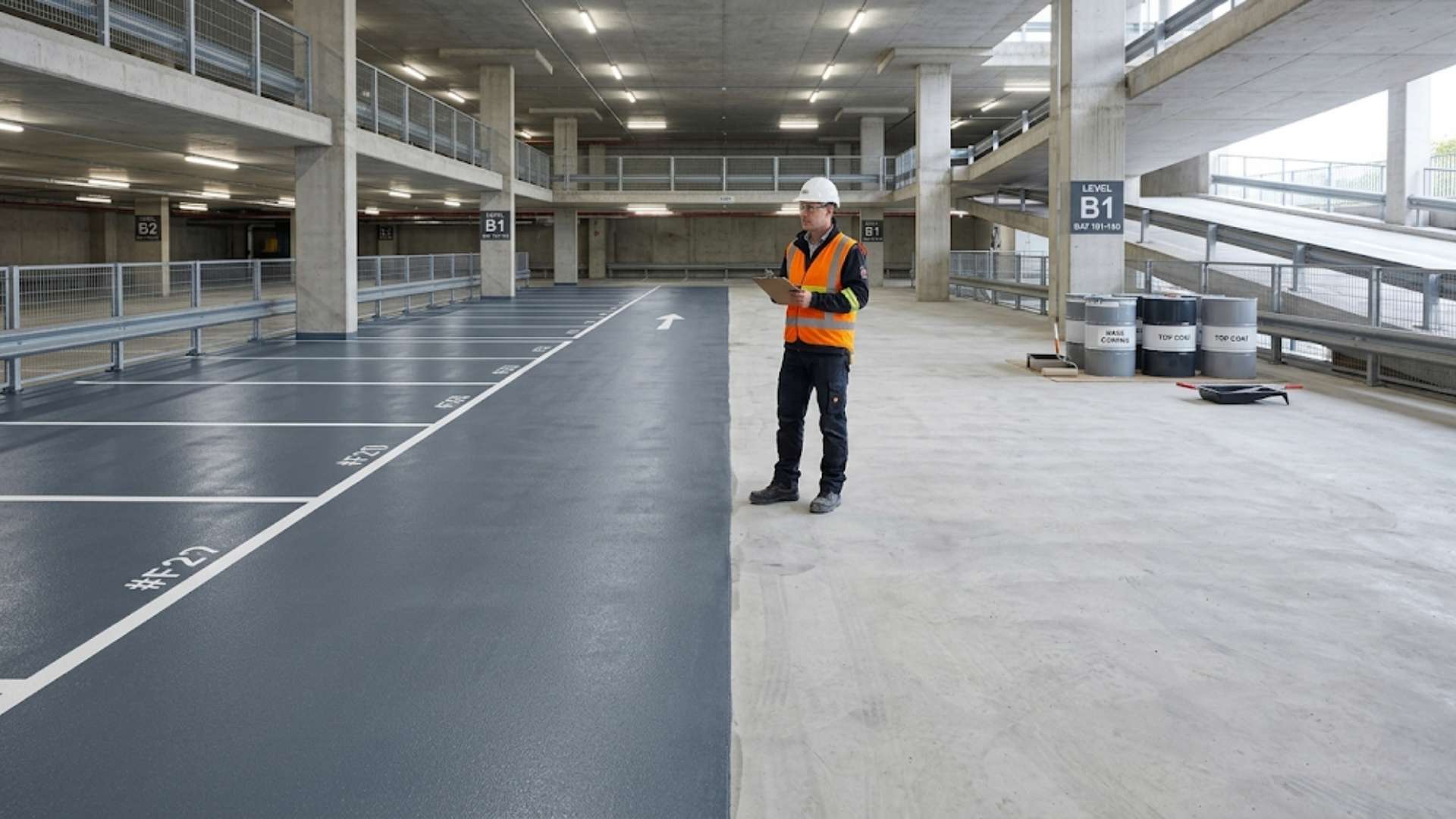
General waterproofing trades cover a wide range of work: membrane application, surface coatings, drainage channel installation, tanking. These skills are essential for new construction and for surface-level remediation work. What they do not cover is injection waterproofing under active water pressure. For live ingress on critical assets, emergency leak repair mobilisation should be part of the escalation path — not an afterthought once a general repair has failed.
Specialist injection waterproofing subcontractors are specifically trained and equipped to:
This is a distinct trade with specialist equipment — not a skill extension of general waterproofing practice.
The UK does not yet have a single mandatory licensing regime for injection waterproofing subcontractors. The Property Care Association (PCA) and the British Structural Waterproofing Association (BSWA) are the principal trade bodies covering structural waterproofing contractors. Membership — and surveyor qualifications such as CSSW (Certificated Surveyor in Structural Waterproofing) — are practical indicators that a firm works to recognised structural waterproofing standards, not only general building maintenance.
Credible injection specialists will typically hold:
For critical infrastructure projects (tunnels, dams, reservoirs, live operational structures), clients should additionally require demonstration of relevant sector experience — not just injection competence, but injection in confined spaces, live operational environments, and under high hydrostatic head.
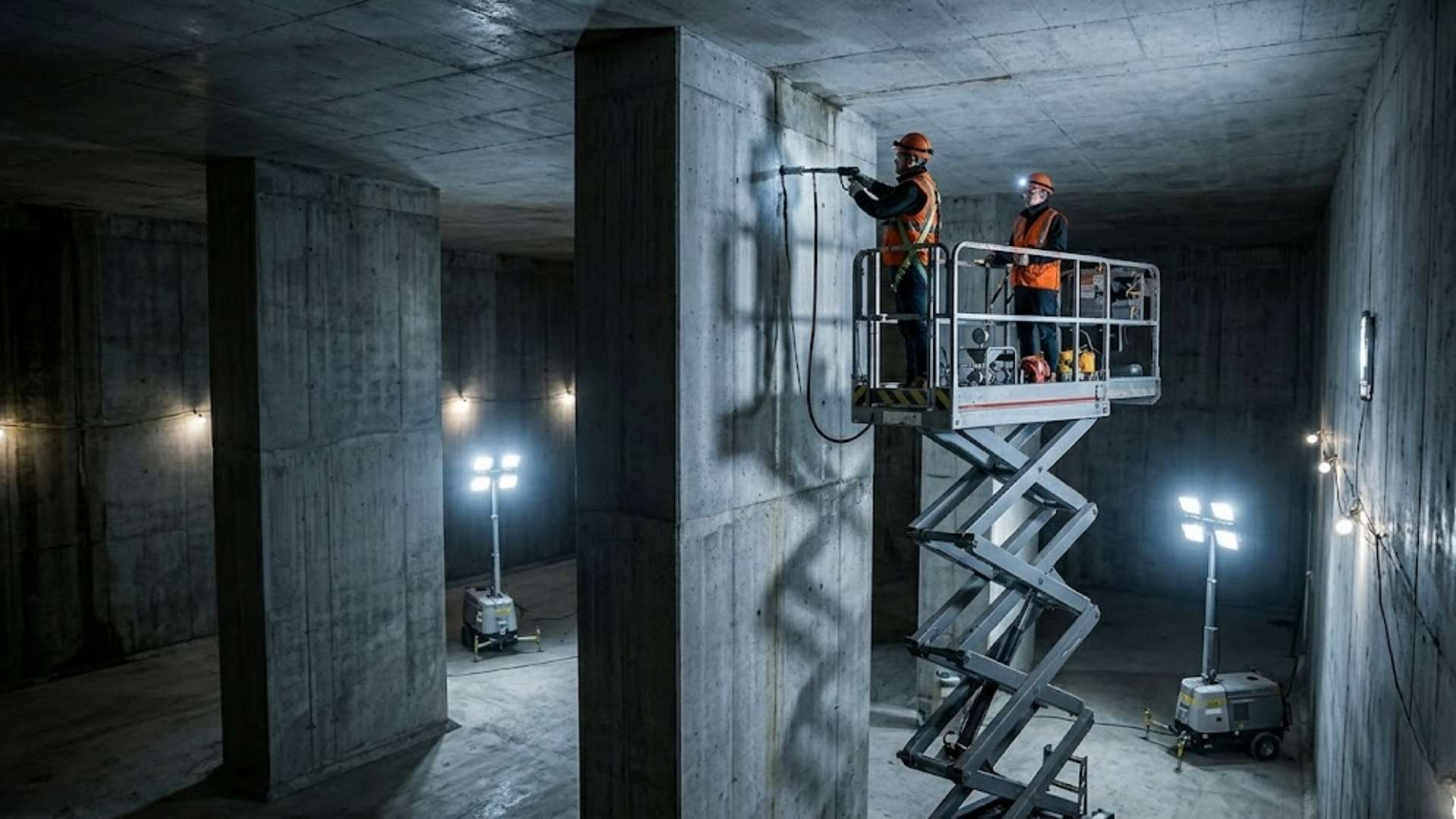
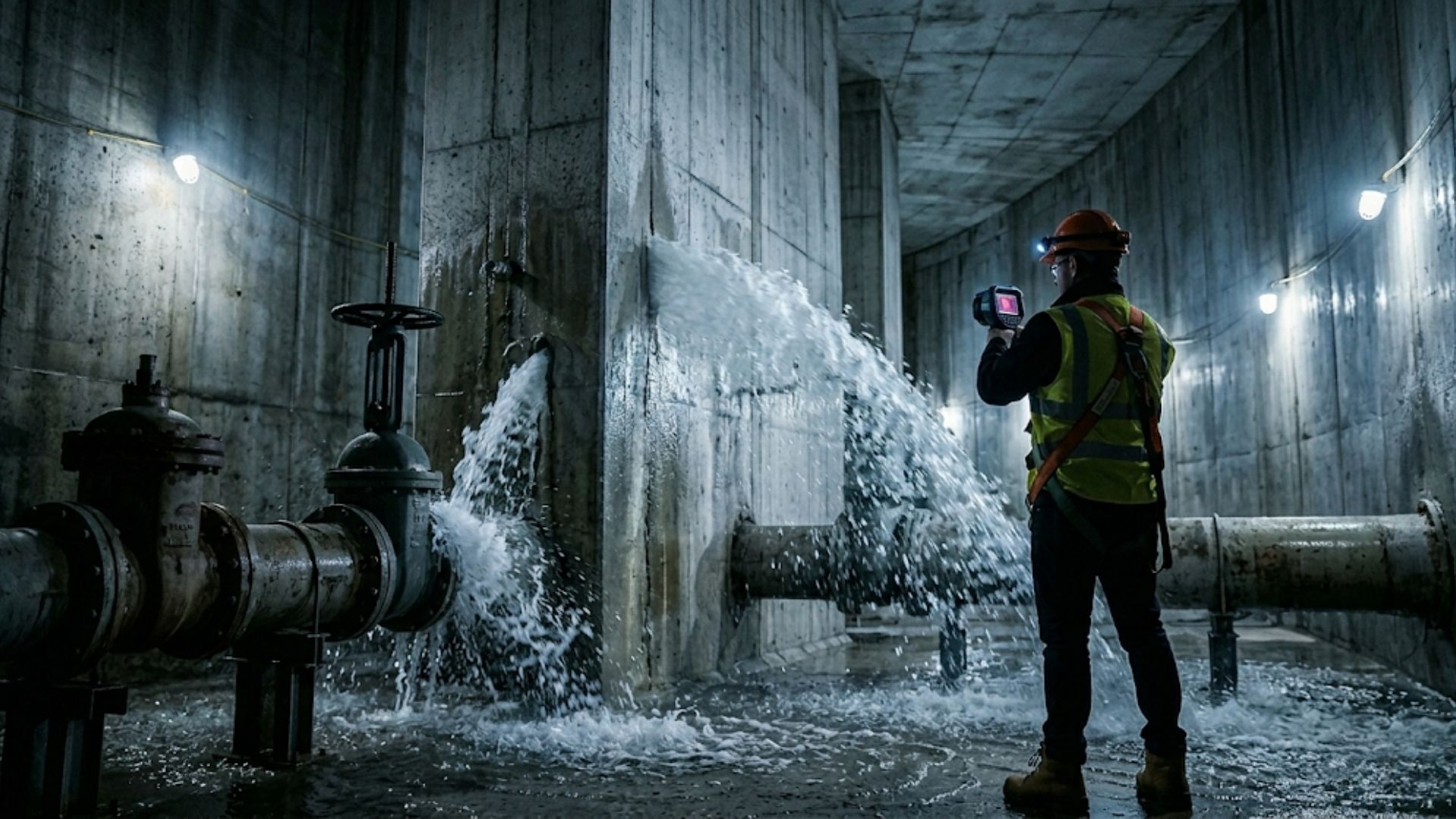
There are five site conditions that make specialist injection subcontractors not just preferable but necessary:
If water is moving — streaming, dripping, or jetting from a discrete location — standard waterproofing materials will not work. Cement grouts are washed out. Epoxy resins are diluted before curing. Surface coatings are overwhelmed at the ingress point.
A specialist injection subcontractor selects materials for active-water conditions — fast-expansion foams where an immediate plug is required, or hydrophilic gels that can be driven against the water head to form a permanent elastic seal inside the crack or joint. This requires both the right material and the right injection pressure capability — often 50–150 bar to drive gel into a saturated, flowing crack against the head of water.
If a surface-applied repair, cement grout, or standard polyurethane foam repair has already been attempted and has failed to hold, the problem is almost certainly beyond the capability of repeat surface treatment. A specialist will assess why the previous repair failed and select an approach that addresses the root cause — not the visible symptom.
If the structure cannot be excavated for exterior membrane repair — because it is occupied, the structure above cannot be disturbed, or the programme does not allow excavation — injection from the interior (negative-side injection) is the only technically viable option. This is specialist territory.
Any leak in a structure that is operationally live — a car park in use, a tunnel in service, a dam holding reservoir water, a power plant operating — cannot be repaired using methods that require shutdown, demolition, or extended cure times. Specialist injection can be performed with minimal or zero operational disruption in most infrastructure contexts.
If groundwater level is high relative to the structure — common in riverside, coastal, or low-lying developments — hydrostatic pressure can be significant enough to defeat any surface-applied repair material. High-pressure gel injection, which penetrates the structure and creates a seal within the concrete mass rather than on the surface, is the appropriate approach.
Calling a general waterproofing contractor to these conditions does not save time or money — it adds a failed attempt to the problem and delays the specialist who will ultimately fix it. Predictable outcomes include:
In critical infrastructure, these delays can carry significant operational or safety consequences. Getting the first call right matters.
The correct engagement process:
At HE Đerdap 1 — one of Serbia's largest hydroelectric power stations, operated by EPS and located on the Danube River — an active leak developed through the S2-S3 dilatation (expansion) joint in a critical wet gallery. The gallery is a confined maintenance space within the dam structure, essential for access to control systems.
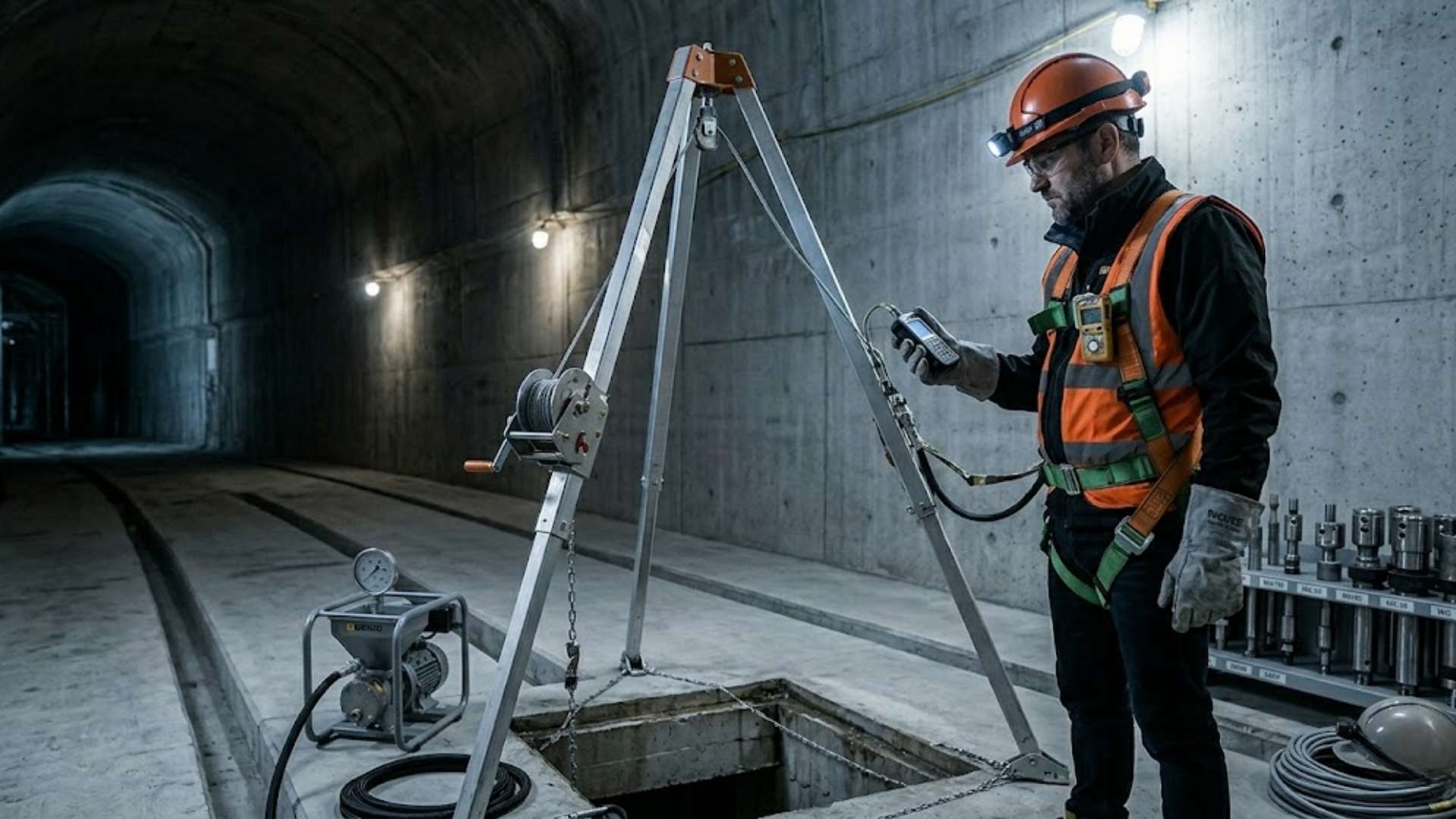
The conditions at Đerdap 1 were exactly those where specialist injection is mandatory: active water flow under constant reservoir pressure, no possibility of draining or dewatering the gallery, zero tolerance for operational downtime, and a confined space environment requiring specific safety competencies.
EURAS's certified contractor team performed the injection without shutting down the dam. High-pressure gel was injected at up to 120 bar through ports drilled along the joint line, stopping the active flow and creating a permanent elastic seal that accommodates future joint movement. The gallery was returned to safe access within the same shift window.
EURAS Technology partners with accredited specialist contractors across Europe. If your site has an active leak requiring specialist injection — particularly in a live, confined, or pressurised environment — our team can advise on the correct approach and connect you with an accredited contractor in your area. Contact our team
Can a specialist injection subcontractor be engaged directly by the main contractor, or does it go through the client?
Either route is common. Main contractors frequently engage injection specialists as a domestic subcontractor. The key is that the specialist's scope of work and method statement are reviewed at a level where someone with technical waterproofing knowledge can validate them.
How long does a specialist injection mobilisation typically take?
For non-emergency conditions, 5–10 working days from contract award is typical. For emergency response (active flow in critical infrastructure), EURAS-accredited contractors can mobilise in 24–48 hours.
Can the specialist injection work be coordinated with other trades working simultaneously?
Yes. Injection work requires only localised access to the injection port locations. Other trades can typically continue working in adjacent areas. See our article on can injection waterproofing be carried out while other trades are working for more detail on coordination.
What is the typical programme duration for a specialist injection project?
Highly variable. A single discrete crack or joint can be treated in a day. Large-area seepage conditions in a multi-bay underground structure may take 2–6 weeks. Emergency flow-stopping can be done in hours.
Do specialist injection contractors work in confined spaces?
Competent specialists do — this is a requirement for many infrastructure projects. Confirm that the contractor holds current confined space entry certification (IOSH or CITB-recognised) for any work in galleries, tunnels, pits, or similar.
How do I verify confined-space experience before I appoint?
Ask for method statements and training records for named operatives, recent project references in similar confined environments, and rescue arrangements (trained attendants, equipment). A credible firm will provide them without hesitation.
Is specialist injection more expensive than conventional repair?
Per square metre, specialist injection has a higher day-rate than general waterproofing trades. Per successfully repaired structure over the long term, it is significantly more cost-effective — conventional repairs on active flow conditions frequently fail and require repeat treatment.
A specialist injection waterproofing subcontractor is a distinct trade category from general waterproofing contractors. They are required whenever the structure has active water flow, previous repair has failed, access is interior-only, the structure is in live operation, or hydrostatic pressure is significant. Calling a specialist first gets the repair done right the first time — without paying twice for mobilisation.
If your site has an active leak that needs specialist injection, contact EURAS to discuss mobilisation.
Contact our team | Learn about our contractor support service