
+1 (954) 787-2570

Email: hello@eurastechnology.com


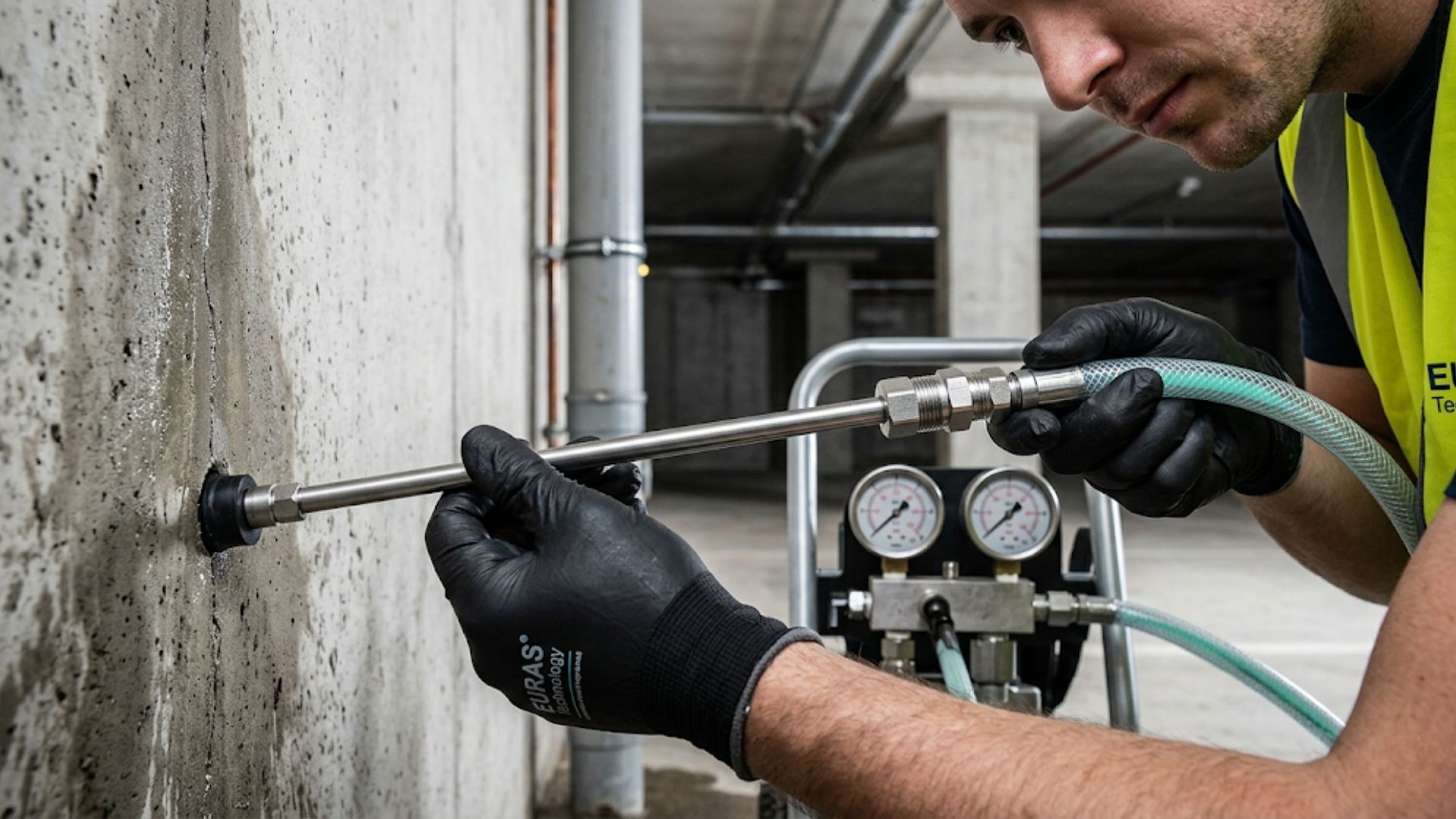
Choosing a waterproofing contractor is not the same as choosing a painting contractor or a cleaning service. Get it wrong and you will spend more money than if you had chosen the right contractor first time — on a repair that has failed, on a mobilisation of the right contractor to redo it, and on the damage that accumulated in between.
This article gives facility managers a concrete, practical checklist of what to assess before engaging an injection waterproofing contractor — and the specific questions that reveal whether you are talking to a genuine specialist or a general tradesperson who offers injection as a peripheral service.
A specialist injection waterproofing contractor is identifiable by six characteristics — all verifiable before contract award.
The waterproofing industry in the UK includes a broad range of contractors: tanking specialists, membrane applicators, drainage channel installers, damp-proofing contractors. All are legitimate trades with genuine skills. None of them are trained or equipped to perform high-pressure injection waterproofing against active water flow.
Injection waterproofing requires:
A damp-proofing contractor quoting for injection work in your underground car park or basement is like a GP quoting for surgery. The tools are different, the training is different, and the consequences of mismatched skills are serious.
Understanding how specialist concrete crack injection differs from general remedial treatment is the first step in evaluating anyone who quotes for this work.
When you receive quotes for injection waterproofing, the most important initial assessment is whether the contractor you are speaking to is a genuine injection specialist or a general waterproofing trade offering injection as an add-on service.
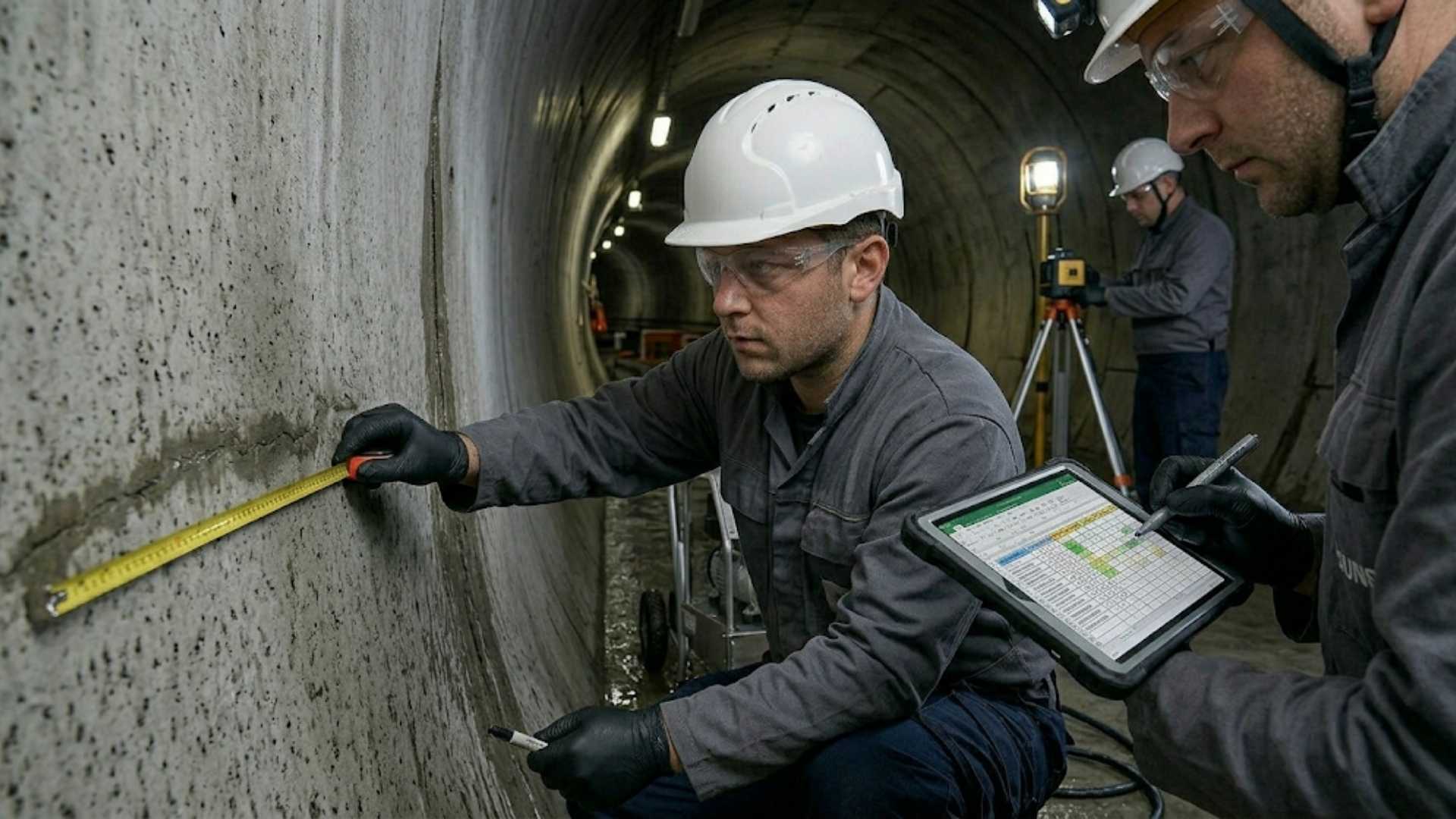
A genuine specialist owns and maintains their injection pump equipment. Ask directly: "Do you operate your own injection pumps, and what is the pressure capability of your equipment?"
A specialist will answer with a specific pressure range (e.g. "up to 200 bar with our high-pressure set") and will be able to describe the equipment. A contractor who borrows equipment or subcontracts the injection itself is not a specialist.
Follow-up question: "What happens if the injection pressure required exceeds the standard pump specification?" A specialist knows their pressure ceiling and how to plan for edge cases.
Before any work begins, the contractor should be able to explain which material they will use at your site — and why. The why is the test.
Acceptable answers reference the hydraulic condition: "Based on the active flow at the joint, we will use a fast-gel formulation to stop the movement, then follow with a mineral gel injection for the permanent seal." This shows the contractor is diagnosing the condition and matching the material to it.
Unacceptable answers reference brand habit: "We always use [product X]." Different conditions require different materials. A contractor who uses the same material for every condition is not diagnosing — they are applying.
For context on how EURAS structures injection programmes after survey, see our concrete crack injection service — specification always follows ingress classification, not product habit.
Ask for two or three reference projects that are comparable to your structure. Relevant similarity means:
Ask if you can contact the project reference directly. A contractor confident in their work will facilitate this without hesitation.
On very large or phased programmes, also ask how they segment the works (by level, by joint system, or by bay) and how they verify each segment before moving on — vague "we'll work through the building" answers without a verification plan are a warning sign.
Minimum requirements for a legitimate specialist:
For confined space work (tunnels, underground galleries, pits): current confined space entry certification and a documented rescue procedure is mandatory, not optional.
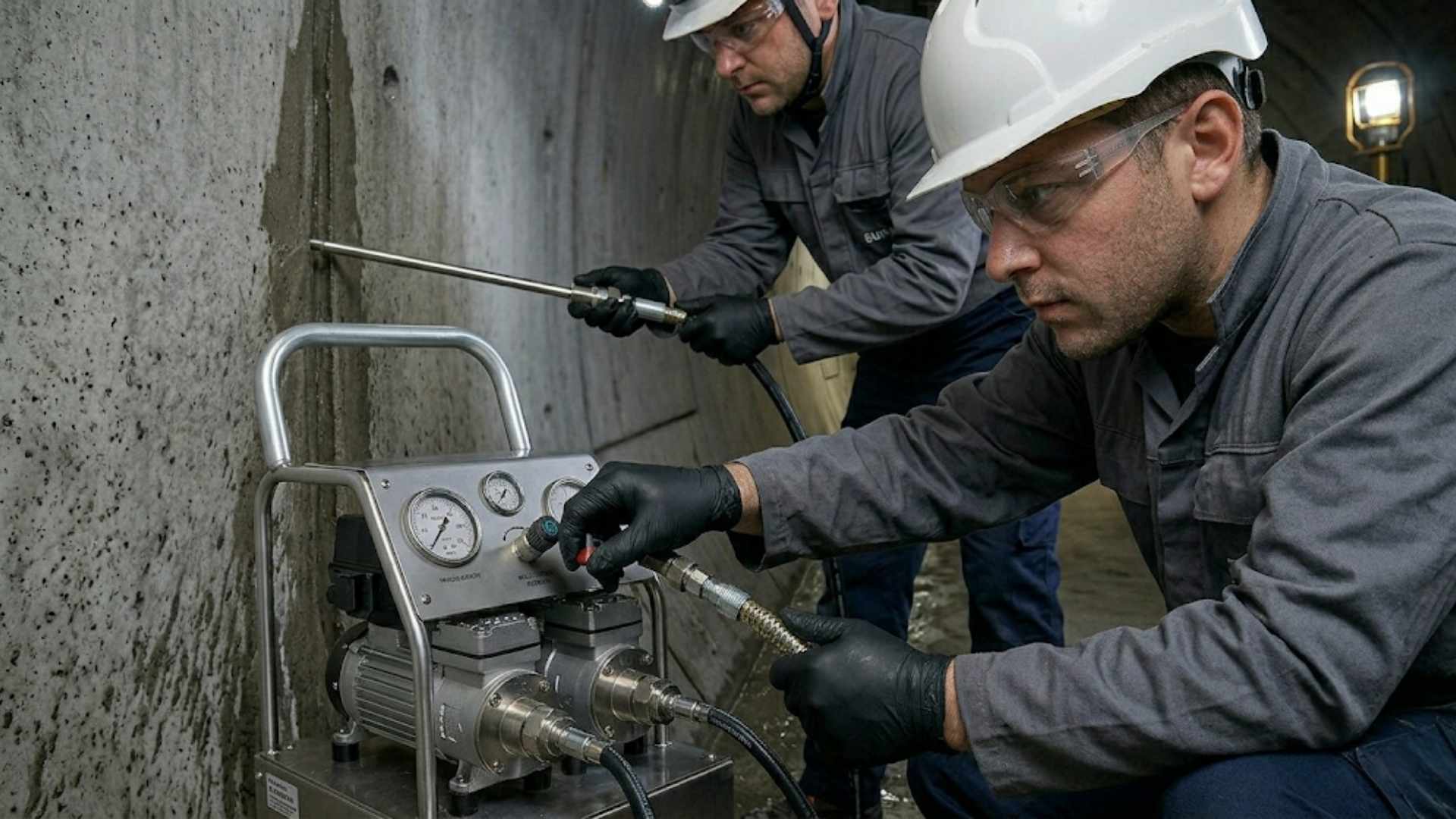
This is a critical differentiator. A genuine specialist will not provide a firm quotation without attending site to assess the ingress conditions directly. A quote produced from a phone description or photographs alone is an indicative figure, not a reliable basis for contract.
The site visit should produce a written condition report that documents:
Where moisture pathways are not visible at the surface, ask whether non-destructive testing or ultrasonic survey is recommended before ports are designed — competent specialists will say when NDT is justified, not only when it is upsold.
If a contractor quotes without visiting site, treat the quote as you would a medical diagnosis made without examination.
A competent injection specialist provides both as standard — these documents are not extras; they are the evidence that the work was executed to specification.
Warranty: A written guarantee on the completed injection works — typically 2–10 years depending on the structure and system. Ask what the warranty covers (the injection repair itself, not the surrounding concrete), what it excludes, and what the claim process is.
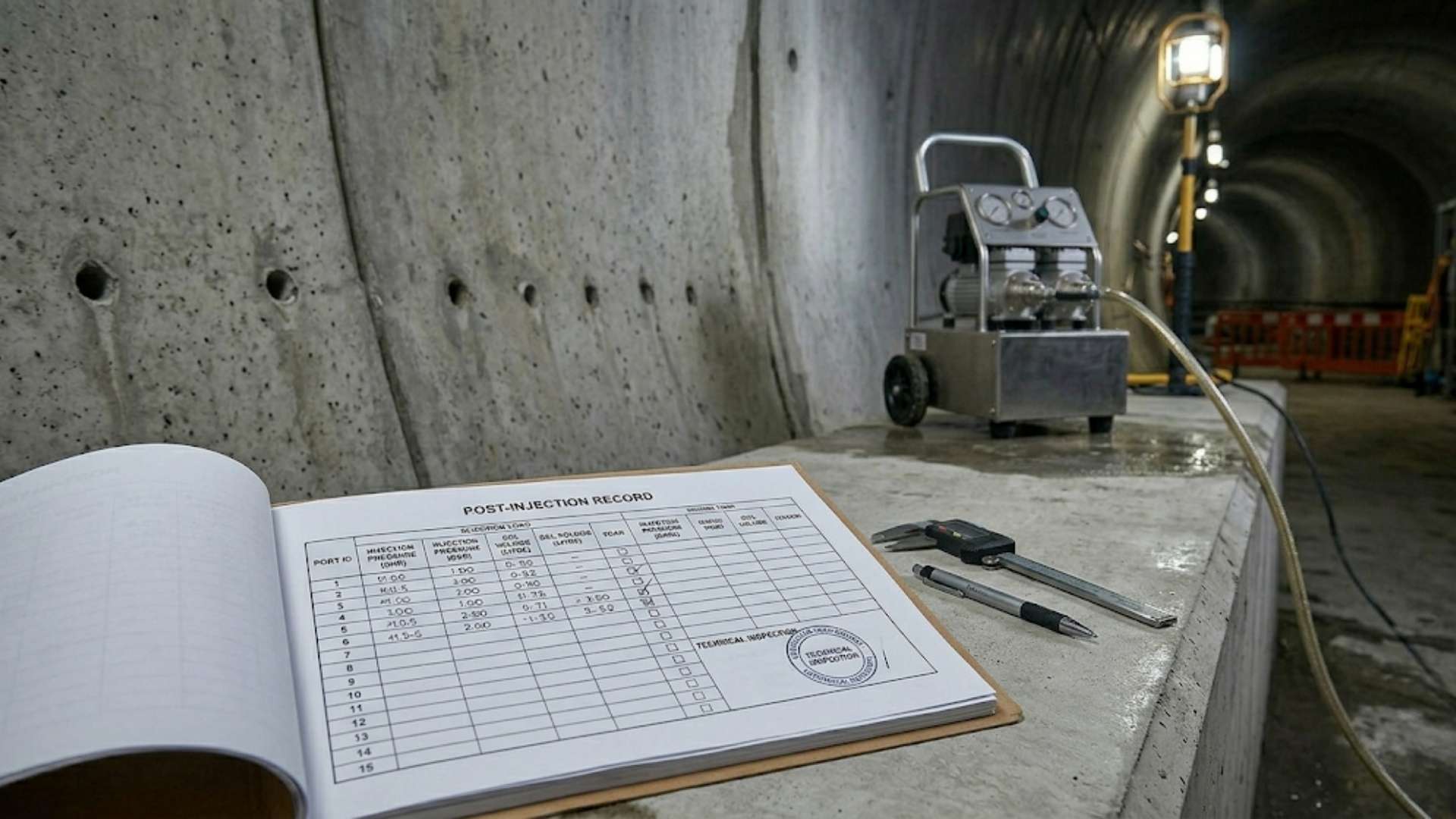
Documentation: A post-injection record for each port — the injection pressure achieved, the gel volume injected, the port return behaviour. This is the evidence that the injection was completed to specification. Without it, you have no way to verify the work was done correctly, and no basis for a warranty claim if the repair fails.
Pre-mobilisation RAMS: Before works start, expect a Risk Assessment and Method Statement (RAMS) specific to your structure and access — not a generic template. A contractor who cannot produce structure-specific RAMS is not applying the rigour facility and CDM teams require.
Beyond the positive indicators above, certain contractor responses should prompt immediate caution:
If you want to see how EURAS qualifies contractors and surveys before mobilisation for your asset class, contact us — we can walk you through our qualification and assessment process with no obligation.
At King's Court — a premium residential and commercial complex in central Belgrade — persistent water ingress had developed in the underground parking and storage levels. The building management had received multiple quotes from general waterproofing contractors offering surface treatments. All failed to hold.
When EURAS was engaged, the process began with a site survey, a written ingress condition report, and a materials selection rationale. The decision to use EURAS® Gel Type B was based on the specific hydraulic conditions at King's Court — high groundwater, settlement-induced micro-cracking in saturated concrete, and a requirement for non-toxic materials in a residential environment.
The repair was completed without disrupting residents. Permanent dry conditions were restored. The documentation from the project gave the building management a clear record of what was done, where, and at what injection parameters — creating an audit trail for future maintenance planning.
EURAS Technology has been providing specialist injection waterproofing across Europe for more than 25 years. Our site survey is always the first step — never a quote from a phone call. Request a site survey
If you are currently assessing injection waterproofing contractors and want to understand how EURAS evaluates your site conditions before proposing a solution, contact us now. Our pre-survey process is a technical assessment — we identify ingress conditions and specify a solution before contract terms are discussed.
The same discipline applies on commercial assets: at the New Belgrade underground garage, high-pressure injection (up to 130 bar) restored dry conditions without closing the facility — a useful contrast to the residential sensitivity at King's Court.
How many contractors should I approach when shortlisting?
Two to four specialists who have attended site and produced condition-based quotes is a manageable shortlist. Avoid collecting ten quotes from contractors who have not visited — you will be comparing incomparable assumptions.
Should I always go with the lowest quote?
Not for specialist injection work. A low quote from a contractor who has not attended site and has not identified all the ingress points will produce an incomplete repair. The cost of remobilising a competent contractor after a failed repair typically exceeds the original price difference.
What is the difference between a warranty on injection work and a product guarantee?
A product guarantee covers the material's physical performance (the gel will not shrink, crack, or chemically degrade). A warranty on the completed works covers the repair outcome — that the treated ingress point does not re-leak within the warranty period. Both are relevant; the contractor's warranty on completed works is the more important document for a facility manager.
Can I use a framework or preferred supplier list contractor for injection work?
If the framework contractor has injection waterproofing specialists on their supply chain with the credentials above, yes. If not, engaging a specialist directly is appropriate — framework arrangements typically include provision for specialist subcontractors not covered by the framework.
Do injection waterproofing contractors need to be on an approved list?
No mandatory national approved list exists for injection waterproofing in the UK. The Property Care Association (PCA) is the primary trade body for structural waterproofing contractors; PCA membership requires vetting, inspection, and ongoing auditing. The CSSW (Certificated Surveyor in Structural Waterproofing) qualification, administered through the PCA, is the relevant credential for design specialists — for injection execution, ask whether the contractor’s technical lead holds CSSW or equivalent and whether operatives are manufacturer-trained for the proposed gel system.
What should a pre-injection site survey report contain?
Location and description of each ingress point; classification of hydraulic condition; proposed injection material and rationale; port layout specification; expected gel volumes; programme estimate; access and health and safety constraints.
How do I verify that the injection was done properly after the work is complete?
Post-injection moisture mapping using a calibrated meter, review of the injection records (pressure and volume per port), and a post-injection walkthrough with the contractor present. If the contractor cannot provide any of these, the verification has not been completed.
A specialist injection waterproofing contractor is identifiable before you engage them — by their equipment, their site assessment process, their material selection rationale, their project references, their accreditations, and their documentation. Use the checklist in this article to assess every contractor who quotes for injection work on your structure. The difference between a specialist and a generalist is visible before the work starts — and that difference directly determines whether the repair holds.
To experience a site survey that starts with condition assessment rather than a sales pitch, contact EURAS.
Request a site survey | What a waterproofing site survey should include | When to use a specialist injection subcontractor


