
+1 (954) 787-2570

Email: hello@eurastechnology.com


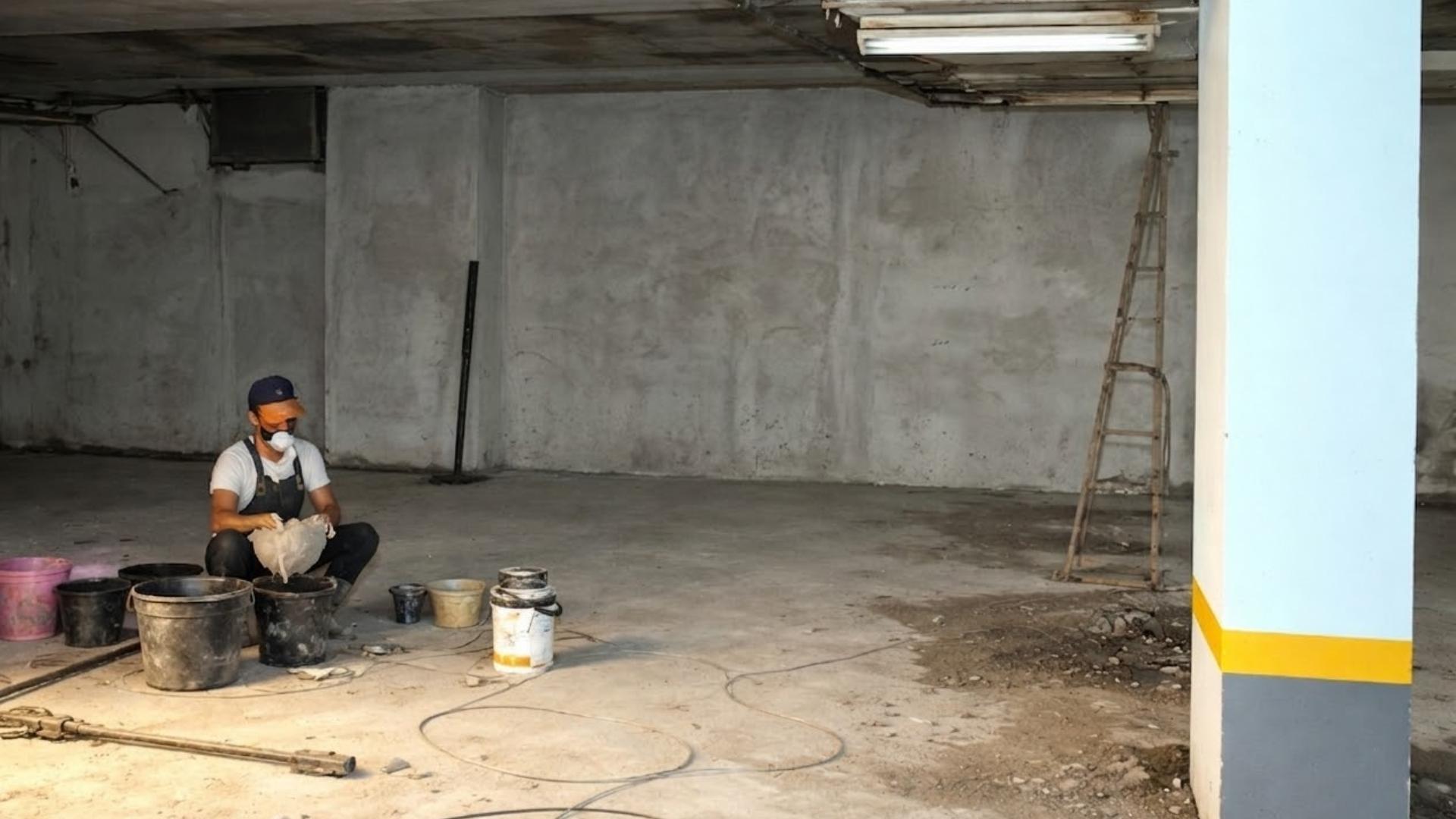
EURAS Technology has delivered large-scale underground garage leak sealing across Europe for 25+ years using EU-patented mineral gel injection — including the Marina Limassol underground parking garage in Cyprus, referenced throughout this article.
This article tells the story of a large-scale underground garage leak — persistent, chronic, and affecting the commercial viability of the facility — and how it was resolved using EURAS® Gel Type B injection without requiring the car park to be closed to users at any point during the repair.
If you manage an underground structure with active water ingress and a facility you cannot afford to take out of service, this is the article that shows you exactly what the solution looks like in practice. For symptoms and typical causes in similar assets, see water ingress in an underground car park.
The Limassol Marina development is one of the most prestigious marine infrastructure projects in Cyprus. The development includes an extensive underground parking garage — a multi-bay, multi-thousand-square-metre structure built adjacent to the sea.
Over time, the garage developed serious and widespread water ingress. The causes were layered:
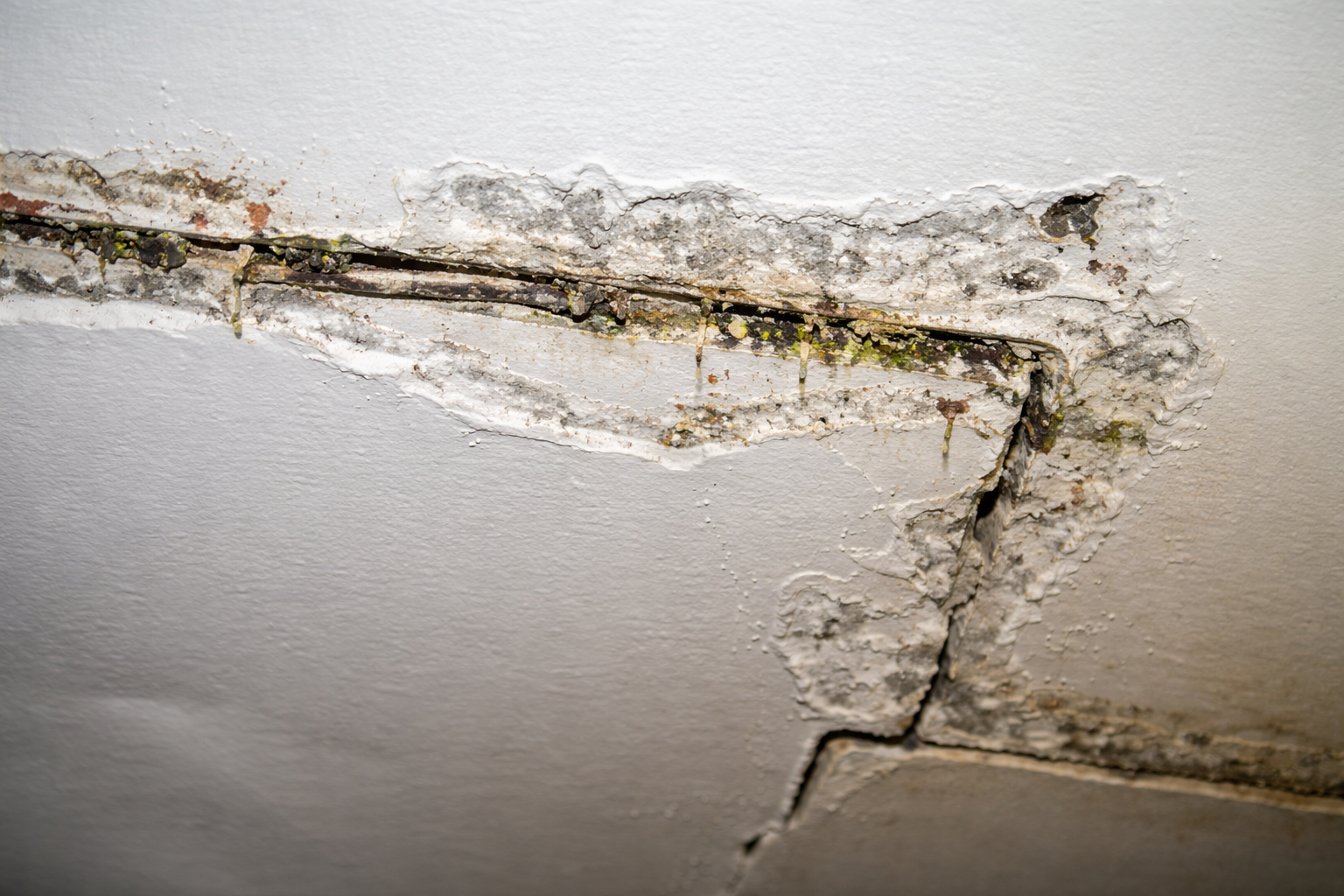
The visible effects were significant: standing water in multiple bays, damp patches across slab soffits, white efflorescence streaking down the walls, and visible rust staining at reinforcement bar positions.
Previous repair attempts using conventional cement grouting and membrane patch repairs had produced temporary results at best. Water was finding new pathways around the patches within weeks.
The facility management faced a specific operational constraint: Limassol Marina is a high-value commercial and residential development. The underground garage was in continuous daily use by residents and marina visitors. Taking it out of service for an extended period was not commercially viable.
The instinctive response to a failed waterproofing membrane is to replace the membrane. For an existing underground structure in active use, this is rarely practical:
Injection waterproofing — specifically high-pressure mineral gel injection — works differently. The gel is injected under pressure directly into the crack and void network within the concrete slab and wall. It fills the pathways within the concrete mass rather than coating the surface. It cannot be delaminated by hydrostatic pressure because the concrete itself provides the confinement.
BS 8102:2022 — Protection of below-ground structures against water ingress — explains why Type A internal barriers that rely on surface adhesion can struggle when water builds up behind them under sustained hydrostatic load; injection addresses the pathways within the concrete instead.
For a structure with multiple ingress pathways, high hydrostatic head, and aggressive marine groundwater attacking the original membranes, high-pressure mineral gel injection is the most reliable approach that addresses the problem at source without excavating the perimeter or stripping the shell — alternatives such as cavity drainage may be valid in some designs but require space, outfalls, and ongoing maintenance.
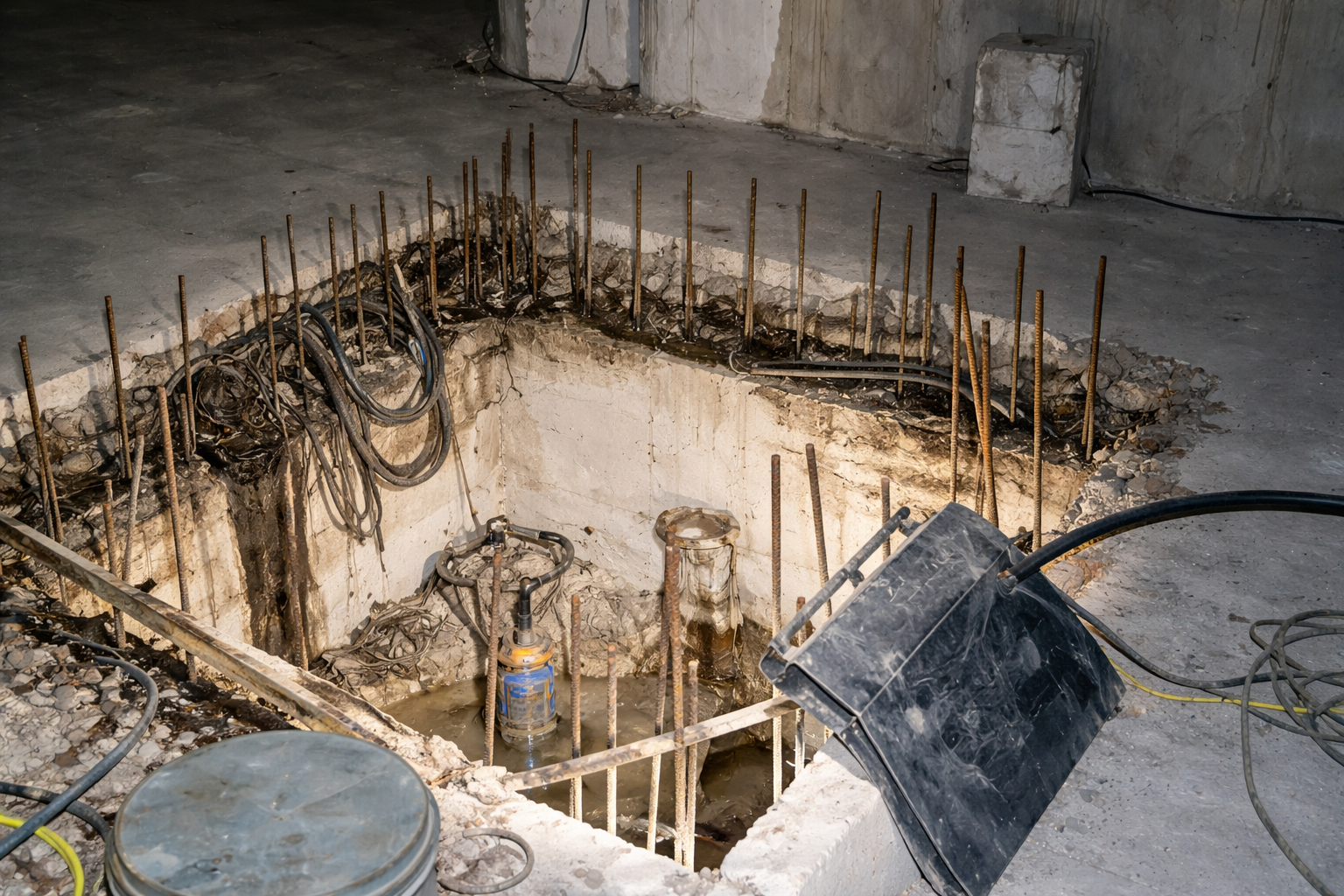
What made the Marina Limassol project unusual was its scale. This was not a contained repair of one or two identified leaks. The ingress was distributed across thousands of square metres of slab soffit and retaining wall surface.
The specification called for:
The total gel volume: over 12,000 kilograms.
This required a large-scale, highly coordinated operation — multiple injection teams working in parallel across different bays, with precise sequencing to ensure each bay was treated and verified before the team progressed.
The principle behind non-disruptive injection repair is straightforward: injection is localised. At any given moment, the injection team requires access only to the bay or zone they are actively working in. All other bays can remain in use.
At Marina Limassol, the programme was structured bay by bay:
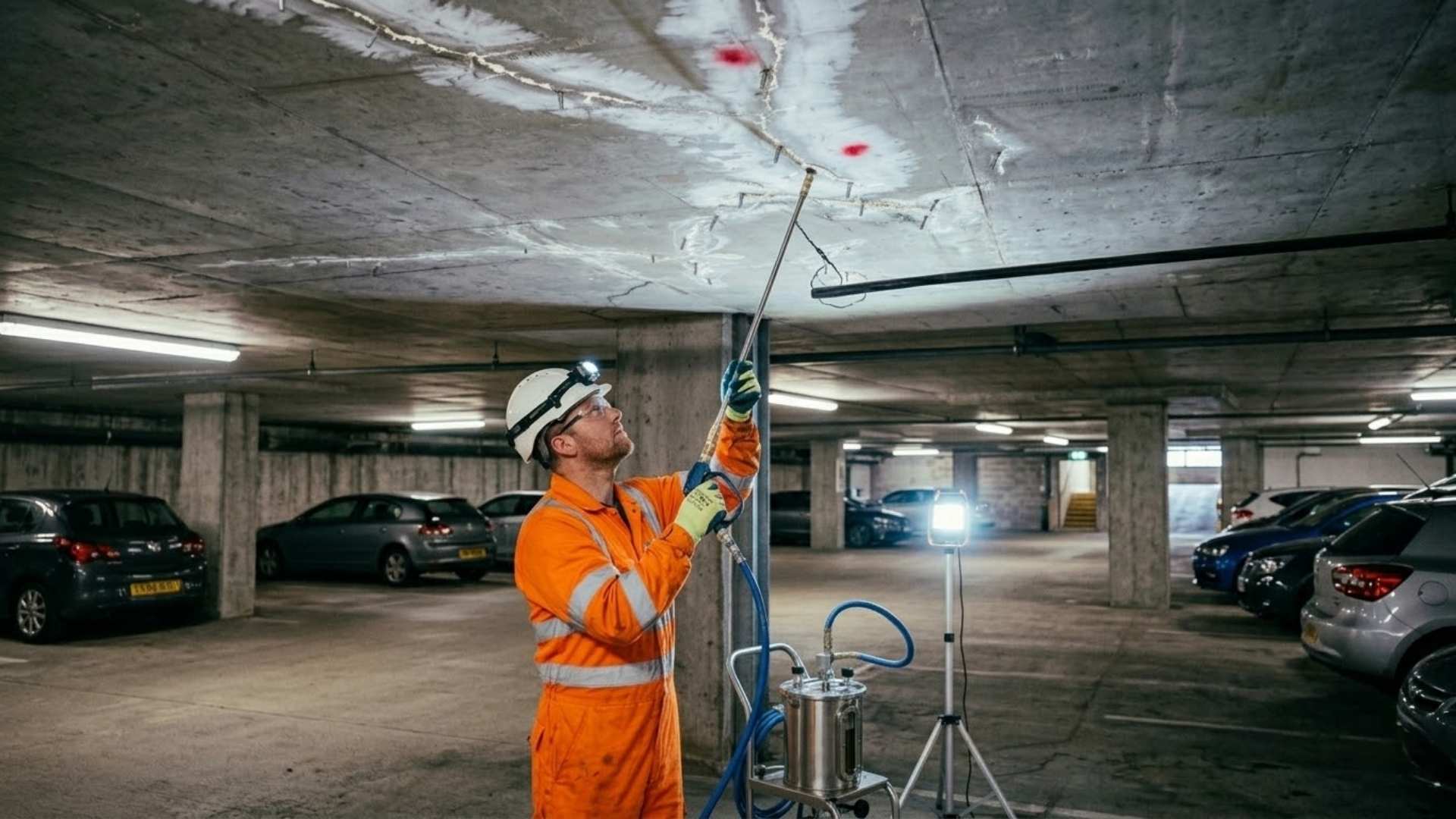
Phase 1 — Assessment and layout:
Each bay was assessed for ingress point locations. Drill port positions were marked. This was done with the bay open to users, without any equipment in the working position.
Phase 2 — Active injection:
When a bay entered the active injection phase, the bay was temporarily cordoned off with barriers — a standard vehicle exclusion that did not require emptying the adjacent bays. Injection drilling and pumping took place within the bay. The exclusion zone was typically one to two bays at a time out of a multi-dozen-bay facility.
Phase 3 — Bay clearance and resumption:
Once injection was complete and initial gel cure achieved, the bay was cleaned, barriers removed, and the bay returned to use. The team moved to the next bay.
Night working was used for the most sensitive bays or peak-traffic periods, minimising even the limited bay-level disruption to daytime users.
The outcome: throughout the entire large-scale repair campaign — injecting over 12,000 kg of gel across hundreds of bays — the overall facility never closed. Residents and marina visitors retained access to the garage at all times.
The choice of material for a marine-adjacent underground structure matters. The saline environment at Limassol Marina created specific requirements:
Compatibility with saline water: EURAS® Gel Type B is hydrophilic — it absorbs and displaces water, including saline water, rather than being repelled by it. The gel performs in marine groundwater conditions where surface-applied coatings may be chemically compromised.
Non-toxic for enclosed commercial spaces: The car park is an enclosed space with regular vehicle and pedestrian traffic. EURAS® Gel Type B is a mineral-based, non-toxic, non-flammable material — no hazardous vapour, no evacuation of adjacent areas during injection.
Elasticity under settlement and movement: Marina infrastructure is subject to ongoing minor settlement and seismic micro-movement. EURAS® Gel Type B remains permanently elastic after cure — it absorbs minor movement without losing its seal integrity.
Protection against chloride ingress: By filling the crack and pore network within the concrete, the gel substantially reduces the pathway for chloride migration toward the reinforcement bars. This slows the electrochemical corrosion process that was producing the rust staining visible on the surfaces — a durability benefit beyond simply “stopping the drip.”
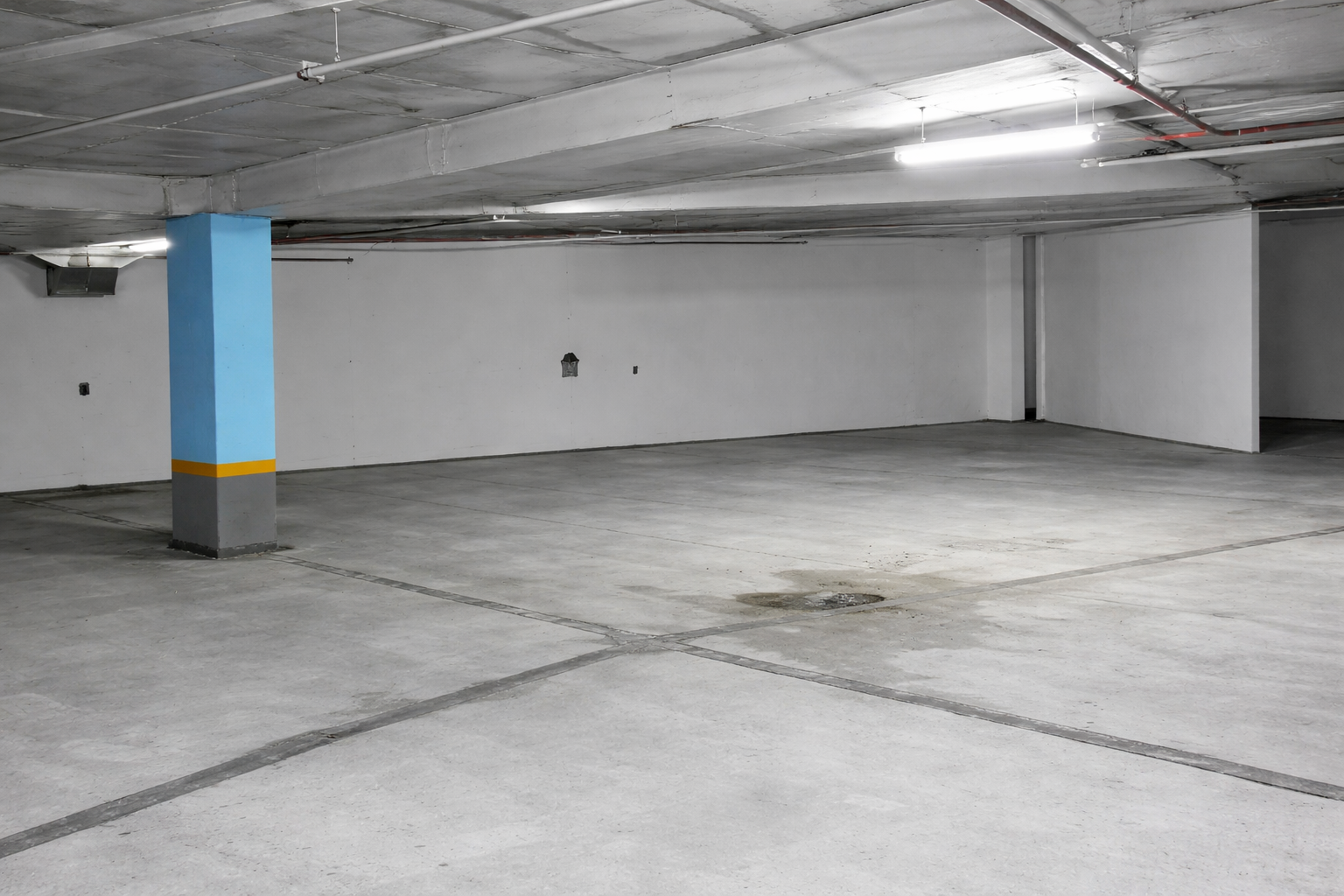
At the conclusion of the Marina Limassol repair:
The combination of non-disruptive delivery, durable sealing performance, and chemical compatibility with the marine environment distinguished this injection programme from earlier cement- and patch-based attempts at the site.
EURAS Technology combines 25+ years of critical-infrastructure injection experience with EU-patented mineral gel chemistry — the Marina Limassol programme is one of the largest published examples of bay-by-bay garage sealing without facility closure. A comparable commercial approach was used at the New Belgrade underground garage (injection at up to 130 bar, no full closure).
If you manage an underground parking facility or basement structure that is experiencing active water ingress, the Marina Limassol project demonstrates several points directly relevant to your situation:
You do not need to close the facility. Injection waterproofing can be programmed bay by bay or zone by zone, keeping the majority of the facility in operation throughout.
Conventional membrane patch repairs will not hold. If you have had repeated patch repairs that have failed within weeks or months, the reason is that the approach does not address the ingress at its source. Injection into the concrete addresses the source.
Scale is not a disqualifying factor. Even a large-scale distributed ingress problem — thousands of injection points across a large facility — can be addressed in a single programmed campaign.
The material matters in chemically aggressive environments. In coastal, marine, or saline groundwater conditions, confirm the injection material's compatibility with the specific water chemistry at your site before specification.
EURAS can carry out a pre-injection survey of your underground structure to assess the scale and nature of the ingress, propose the correct specification, and programme the works to minimise operational disruption. Request a site survey | Explore concrete crack injection for how programmes are specified after survey.
Q: How long does injection waterproofing in an underground car park typically take?
A: Depends on the scale. A small single-level car park with limited ingress points: 2–5 working days. A large multi-bay facility like Marina Limassol: several weeks of phased bay-by-bay treatment. The programme is designed around minimising disruption — the timeline reflects the scale, not the technique.
Q: Will the injection smell affect car park users in adjacent bays?
A: EURAS® Gel Type B is odourless and non-toxic. There is no chemical smell associated with the injection process that would affect adjacent users.
Q: Can the injection be done in a car park with a low headroom slab soffit?
A: Yes. Drilling into the slab soffit for upward-angle injection is standard practice. Low headroom affects the access equipment (compact MEWPs or tower platforms rather than standard scissor lifts) — not the injection method itself.
Q: How do I know the injection was done correctly?
A: Post-injection documentation includes port-by-port injection records (pressure and gel volume per port), post-injection moisture mapping, and a completion certificate. Visual inspection confirming dry conditions across the treated bays provides the day-one verification; long-term performance verification is a follow-up moisture meter survey at 3–6 months.
Q: Will the injection hold in a car park where vehicles are constantly driving over the slab above?
A: Yes. EURAS® Gel Type B remains elastic after cure and accommodates minor load-induced flexure in the slab. Vehicle loading on the slab above an injected underground structure is not a constraint on the gel's long-term performance.
Q: What if the leak comes back after injection?
A: If a specific injected location re-opens, it is typically because of ongoing structural movement beyond the gel's elastic range, or a new ingress pathway opening adjacent to the treated area. Re-injection is possible — the drill ports can be re-drilled and the area re-injected. A warranty on the completed works covers the scenario where re-injection is needed within the warranty period.
Q: Can the same approach be used in an occupied basement or utility tunnel?
A: Yes. The non-disruptive approach demonstrated at Marina Limassol applies to any occupied or operational underground space — basements, utility tunnels, occupied residential garages, or any structure where closure is not acceptable.
The Marina Limassol project is a direct demonstration that active, widespread water ingress in a large underground car park can be permanently resolved using EURAS® Gel Type B injection — without closing the facility, without excavation, and without the repeated failure cycle of surface-applied patch repairs.
The technique is applicable to any underground structure experiencing similar conditions. The non-disruptive delivery model is achievable wherever injection can be programmed in zones, as it can be in almost every underground garage or basement structure.
If your underground car park or basement has active leaks that previous repairs have failed to stop, request a site survey to get a permanent solution assessment.Request a site survey | Underground infrastructure repair | How much water ingress repair can cost


